Architecture & History (80 photos)
(click image to open slideshow)
**For the rest of the albums, please CLICK THE IMAGE to go to a new page, then click the image AGAIN to open the slideshow. I've got over a thousand lines of code on this page alone & had to break it up**
Engineering (35 photos)
(click image to go to new page)
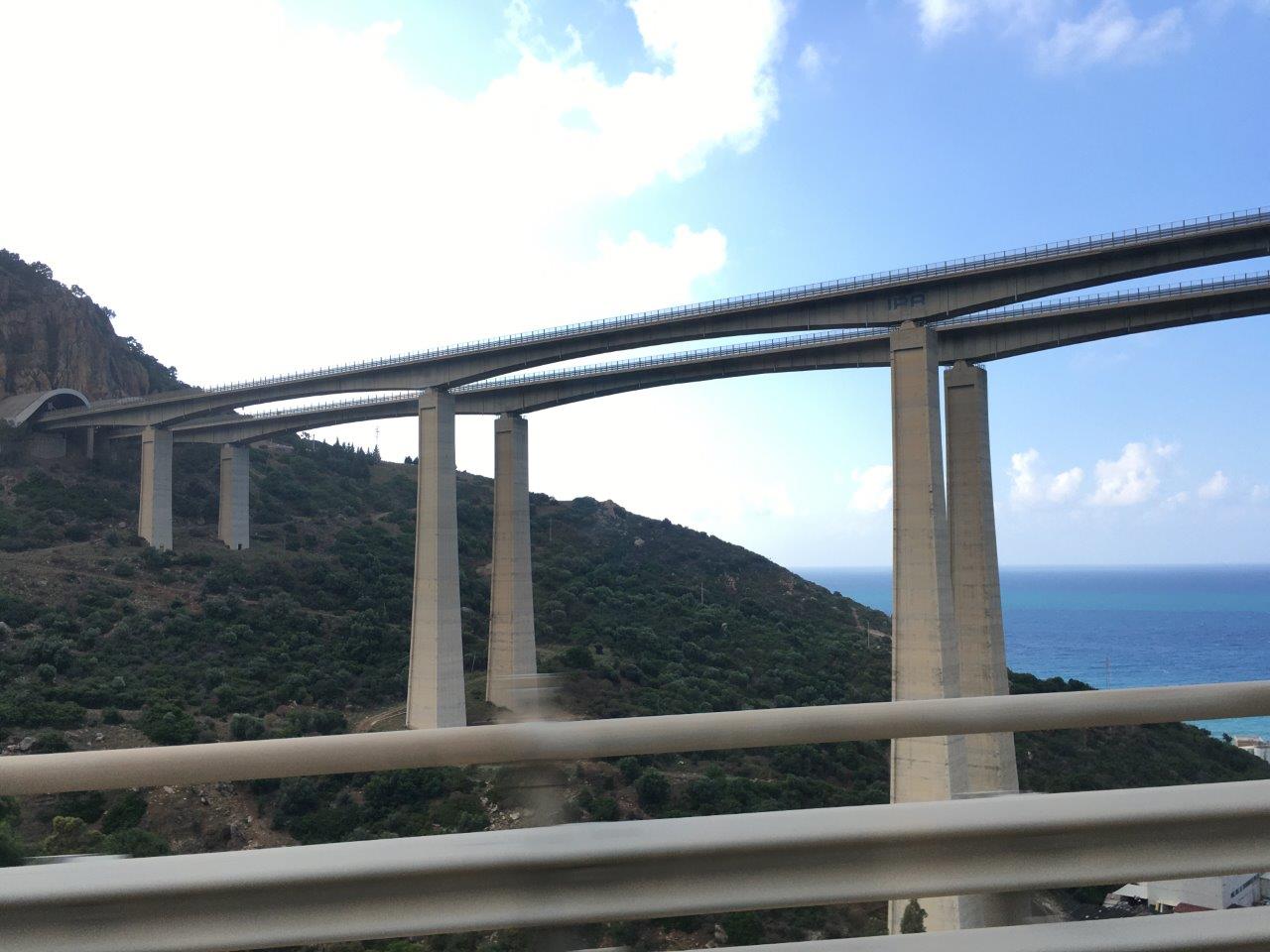
→
Streets, Beaches, & Countryside (60 photos)
(click image to go to new page)
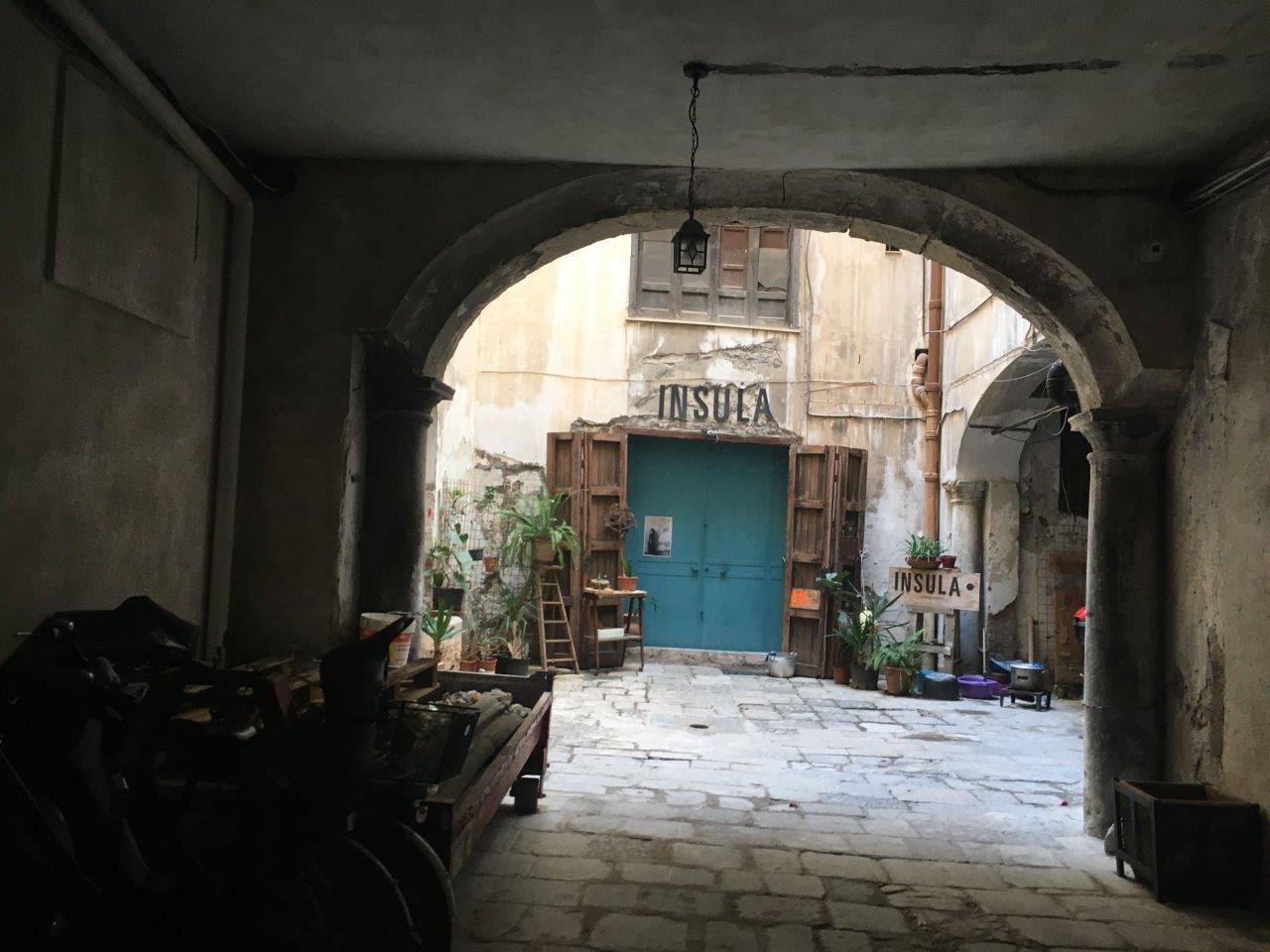
→
Plants (50 photos)
(click image to go to new page)
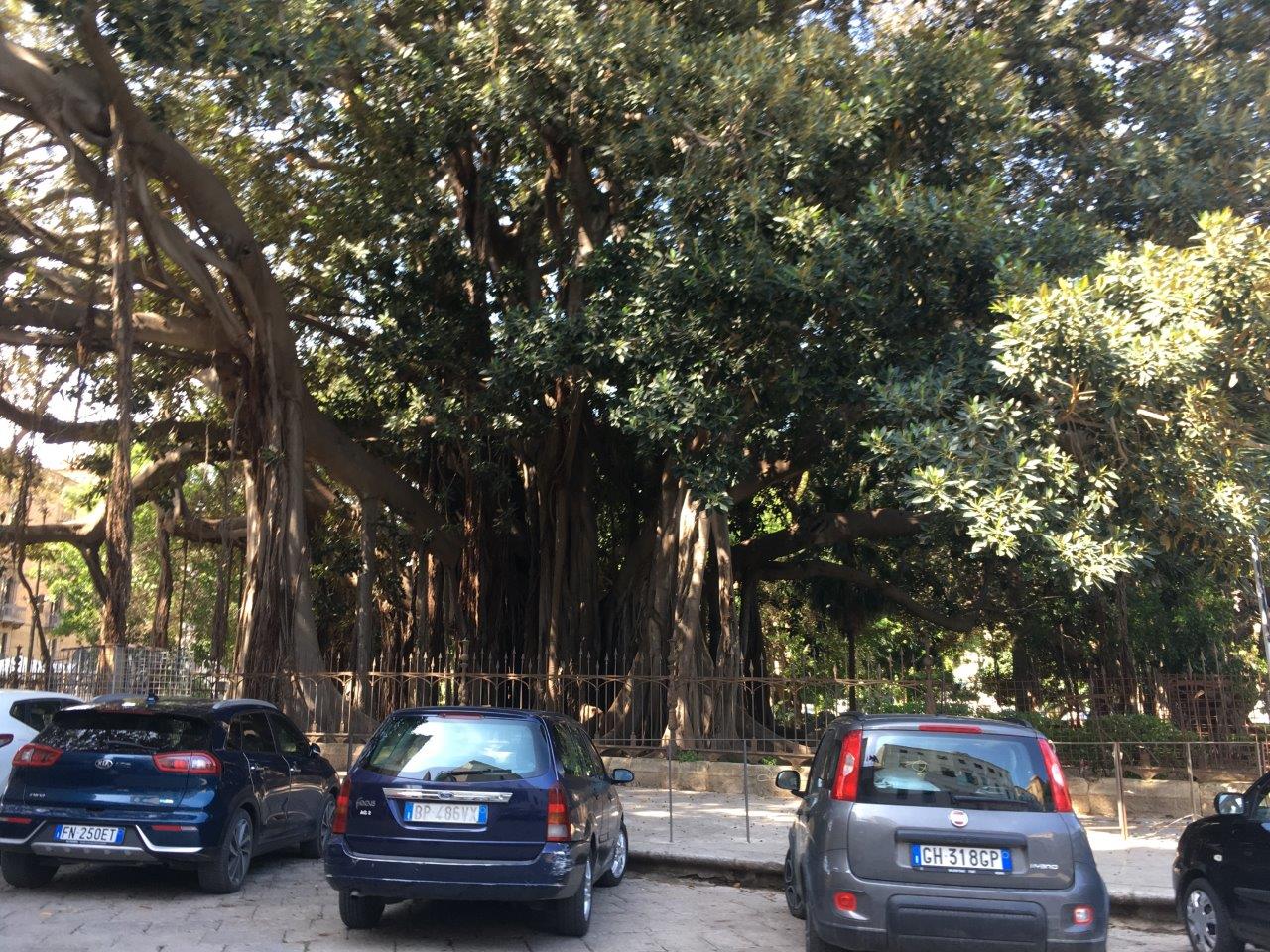
→
Art (20 photos)
(click image to go to new page)
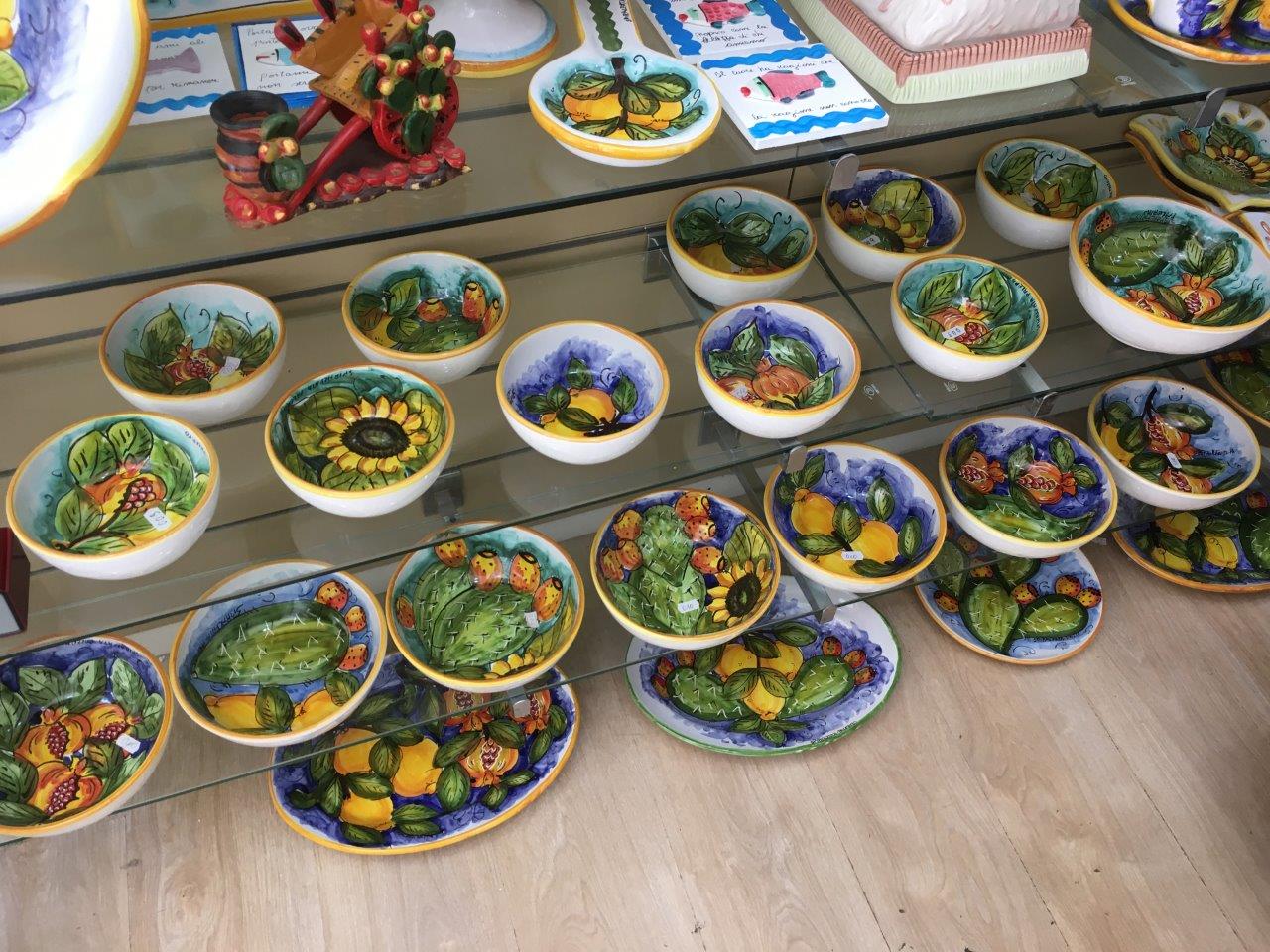
→
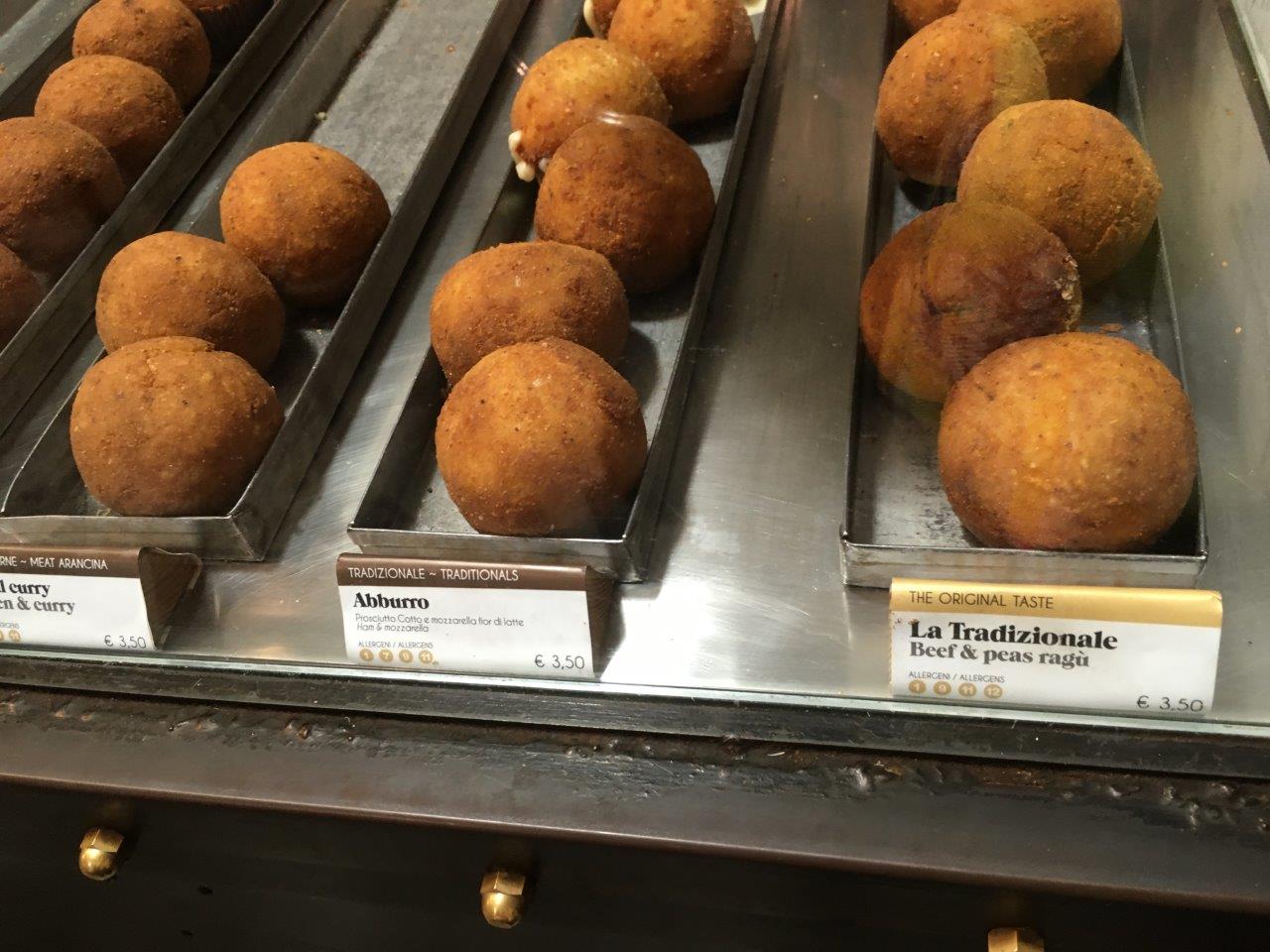
Food (60 photos)
(click image to go to new page)
→
Street Style (6 photos)
(click image to go to new page)

→
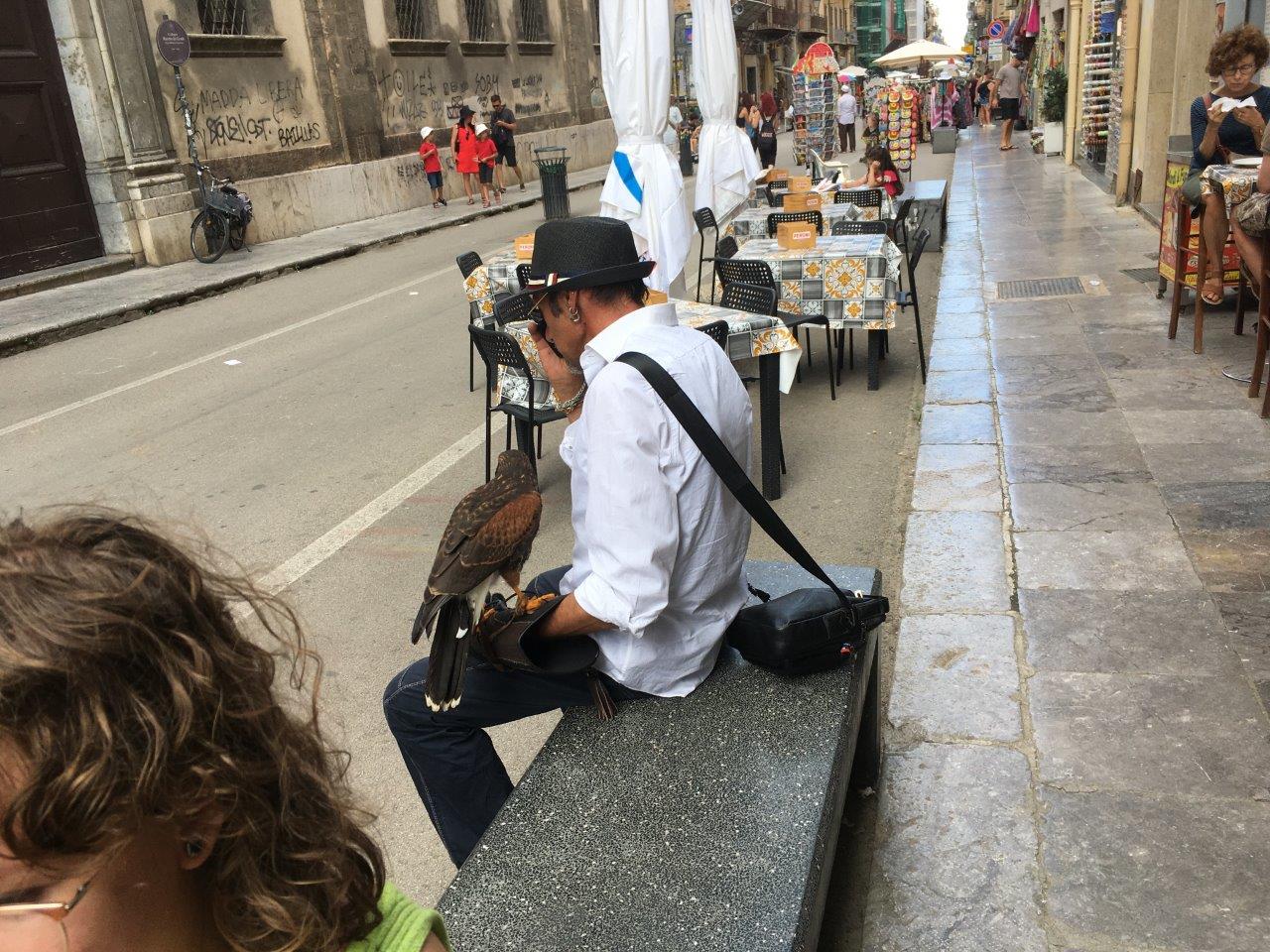
Unexpected (50 photos)
(click image to go to new page)
→
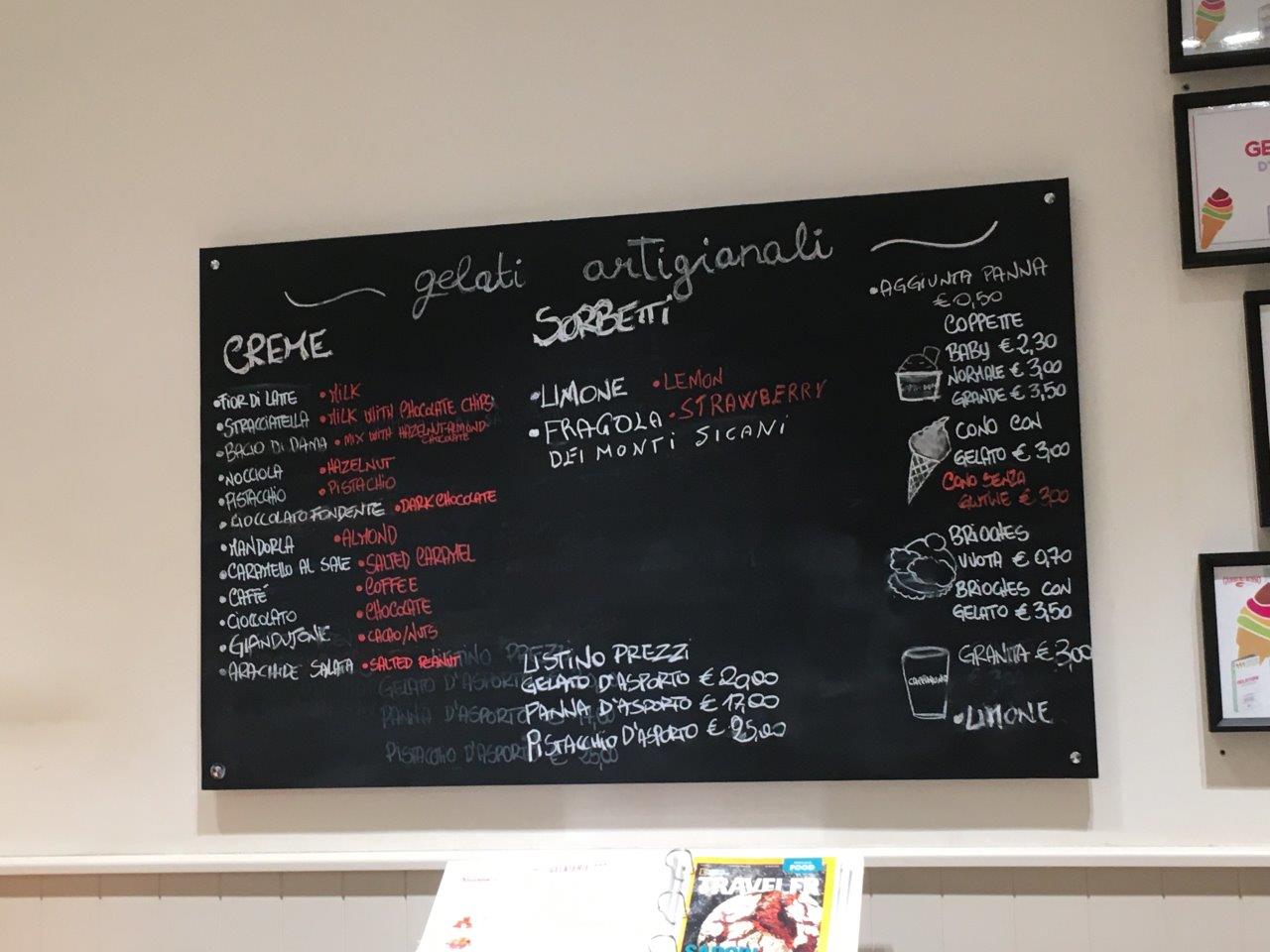
Menus (45 photos)
(click image to go to new page)
→
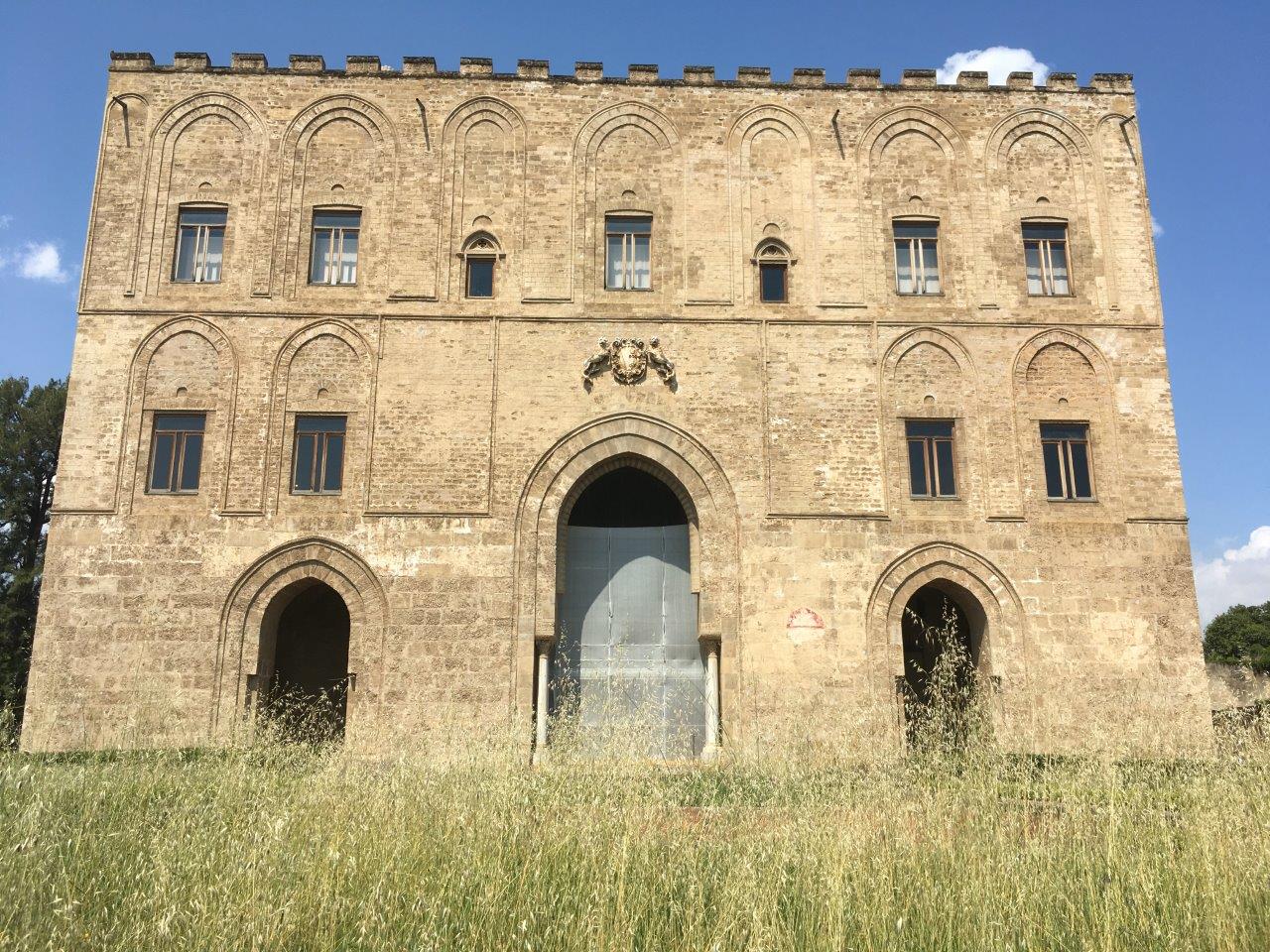
La Zisa castle in Palermo. Got it's name from the Arabic "Aziz" which was Italianized to "Zisa." Did not originally have the crenallations on top; it was modified later because tourists want to see a castle that "looks more medieval." But if you zoom in on the crenallations, you can see that they have Arabic writing on them. The gaps in the writing are annoying! Also, the front is decorated with lions, which King Roger used as his symbol.
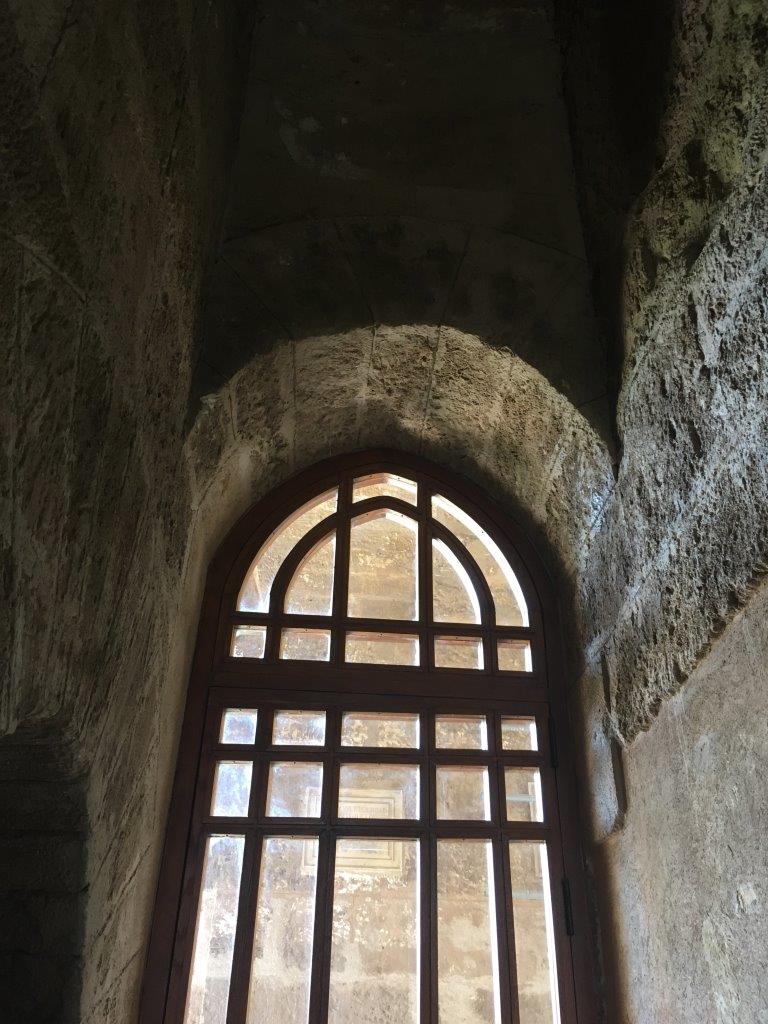
A window in La Zisa
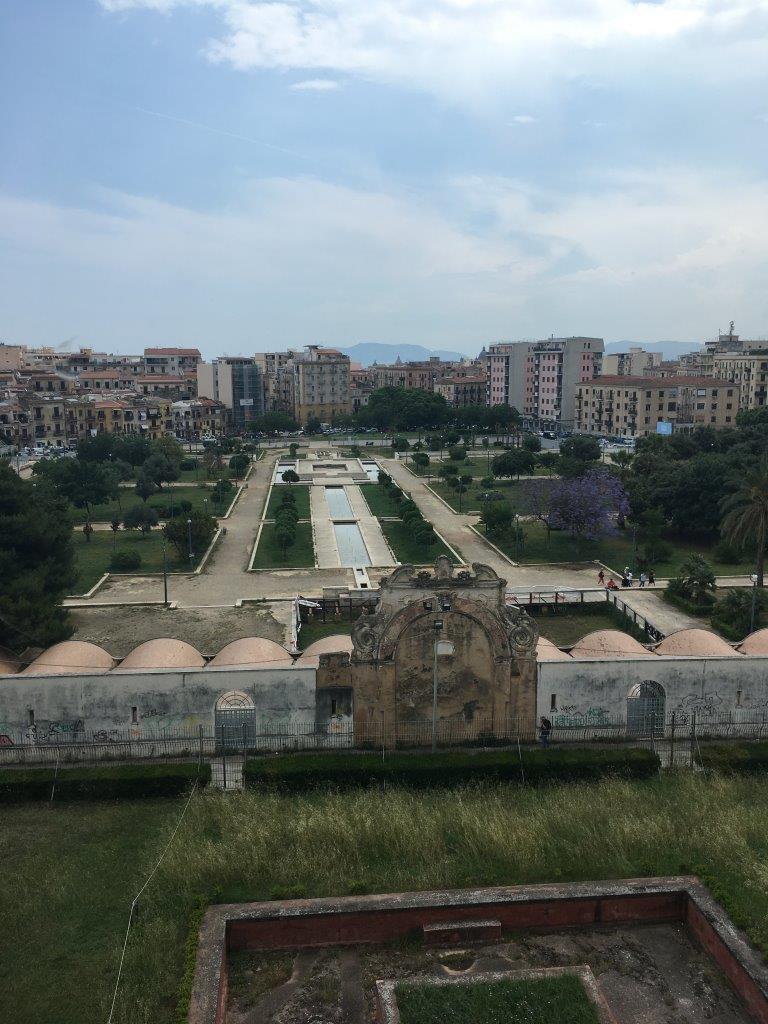
The view from the top middle window in the first picture
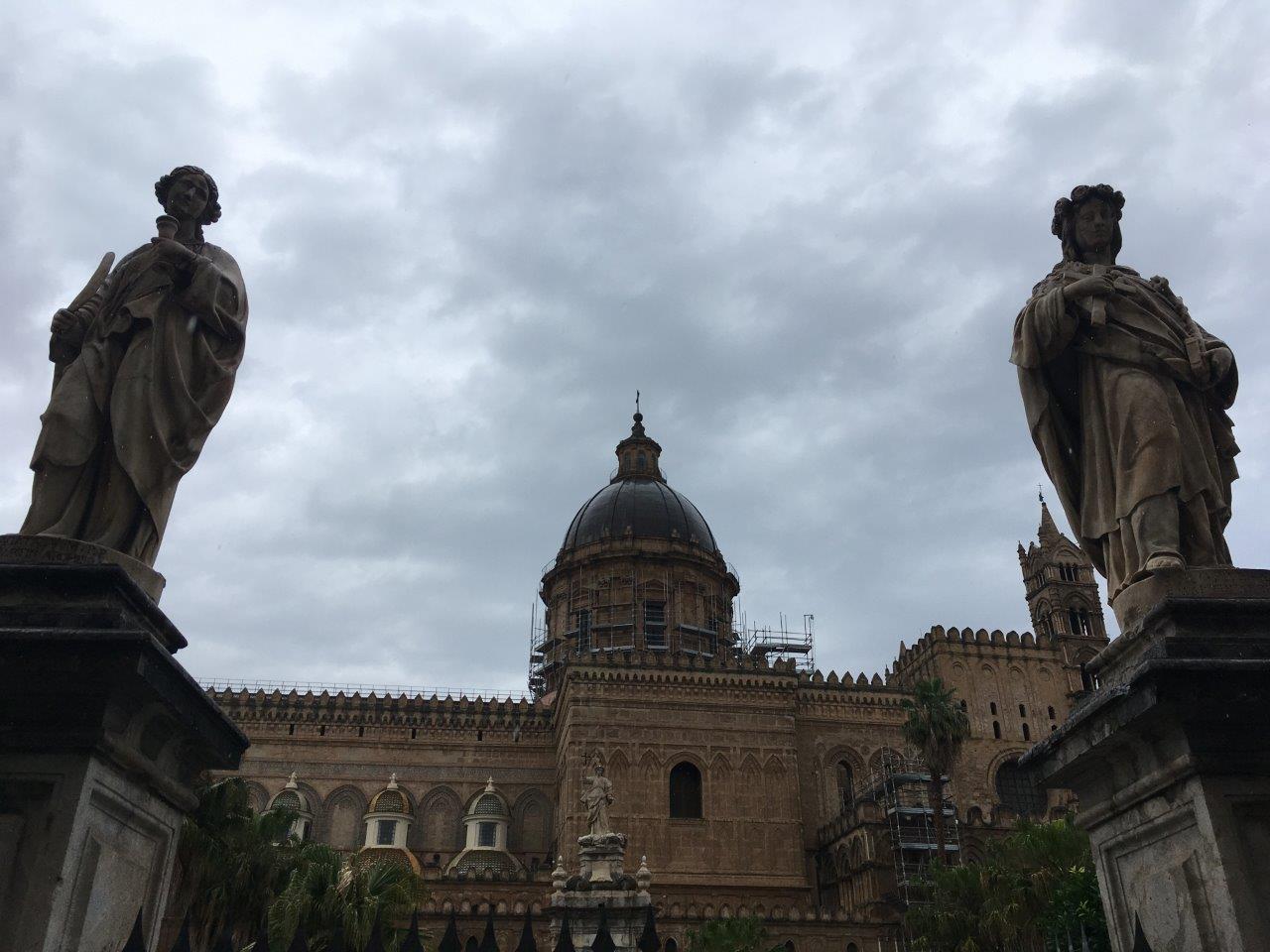
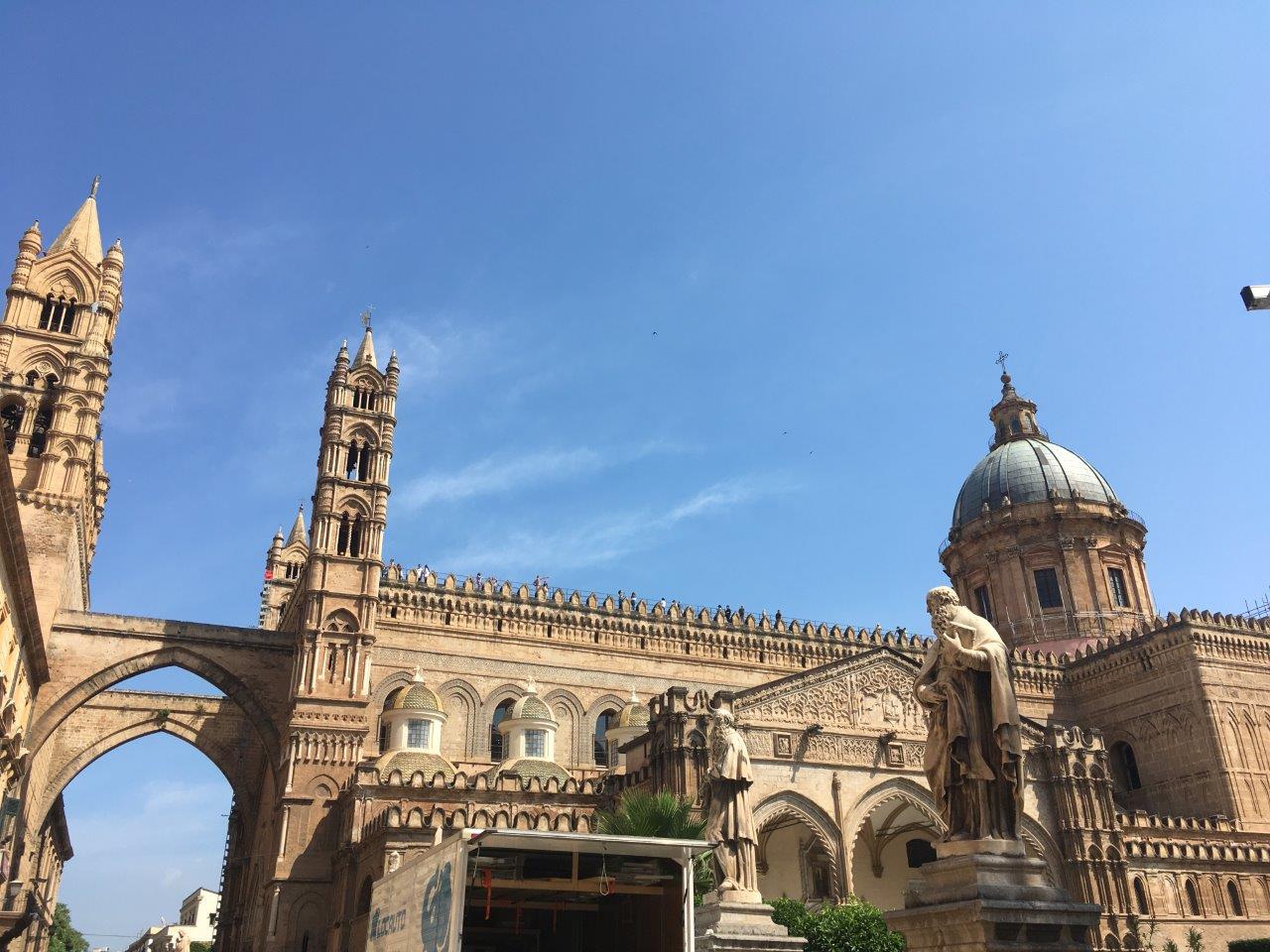
Palermo cathedral
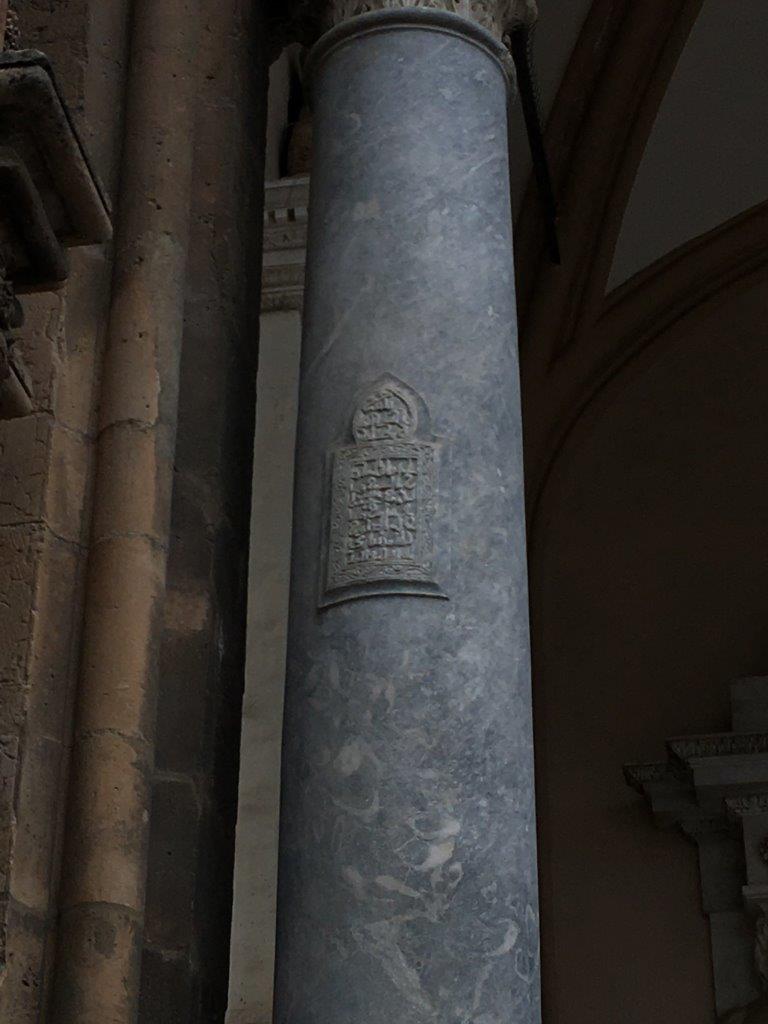
A column by the entrance of Palermo cathedral with a Qur'anic inscription. Probably repurposed from an old mosque in the area because monolithic columns were expensive.
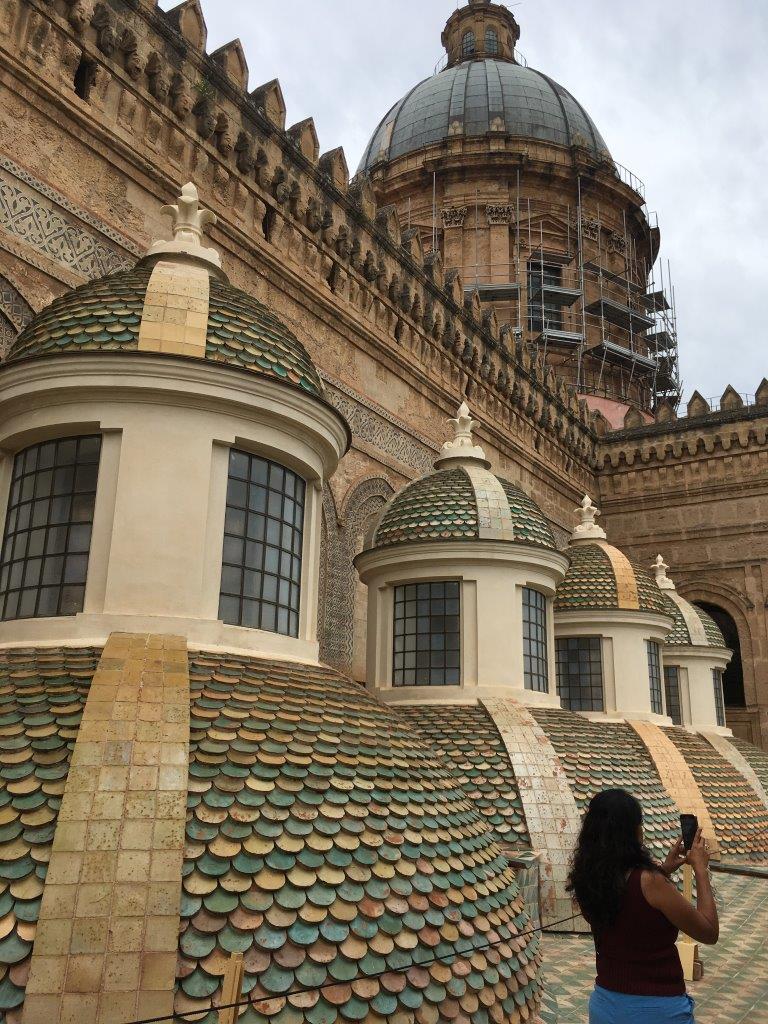
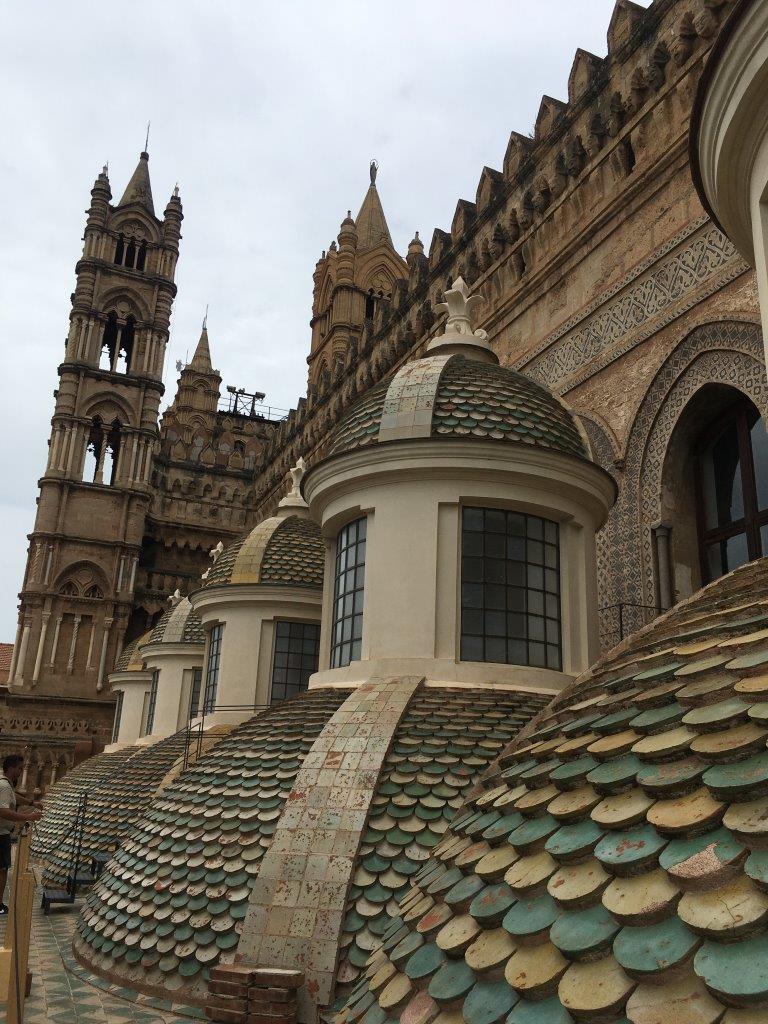
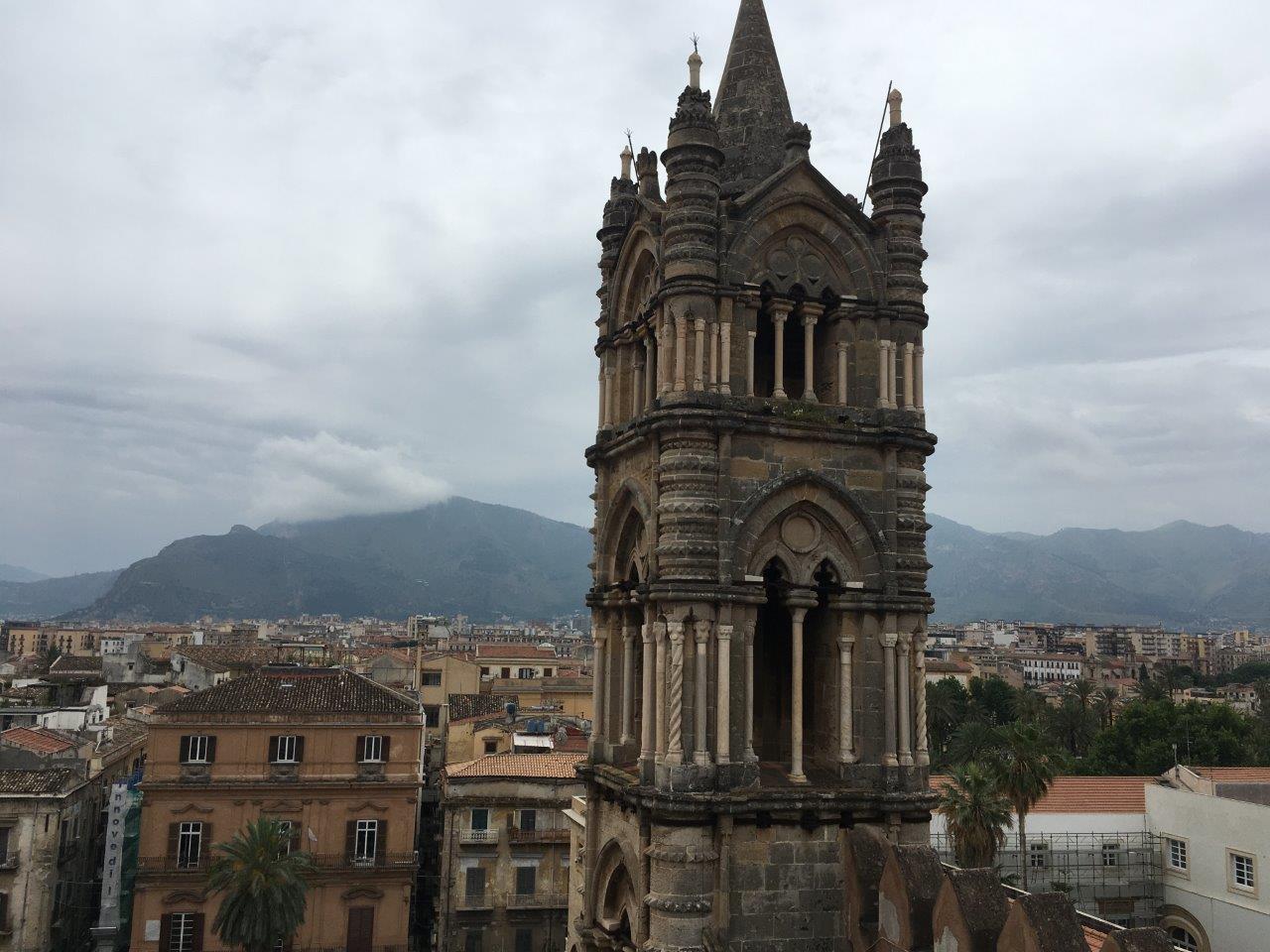
You can walk on the roof of Palermo Cathedral!
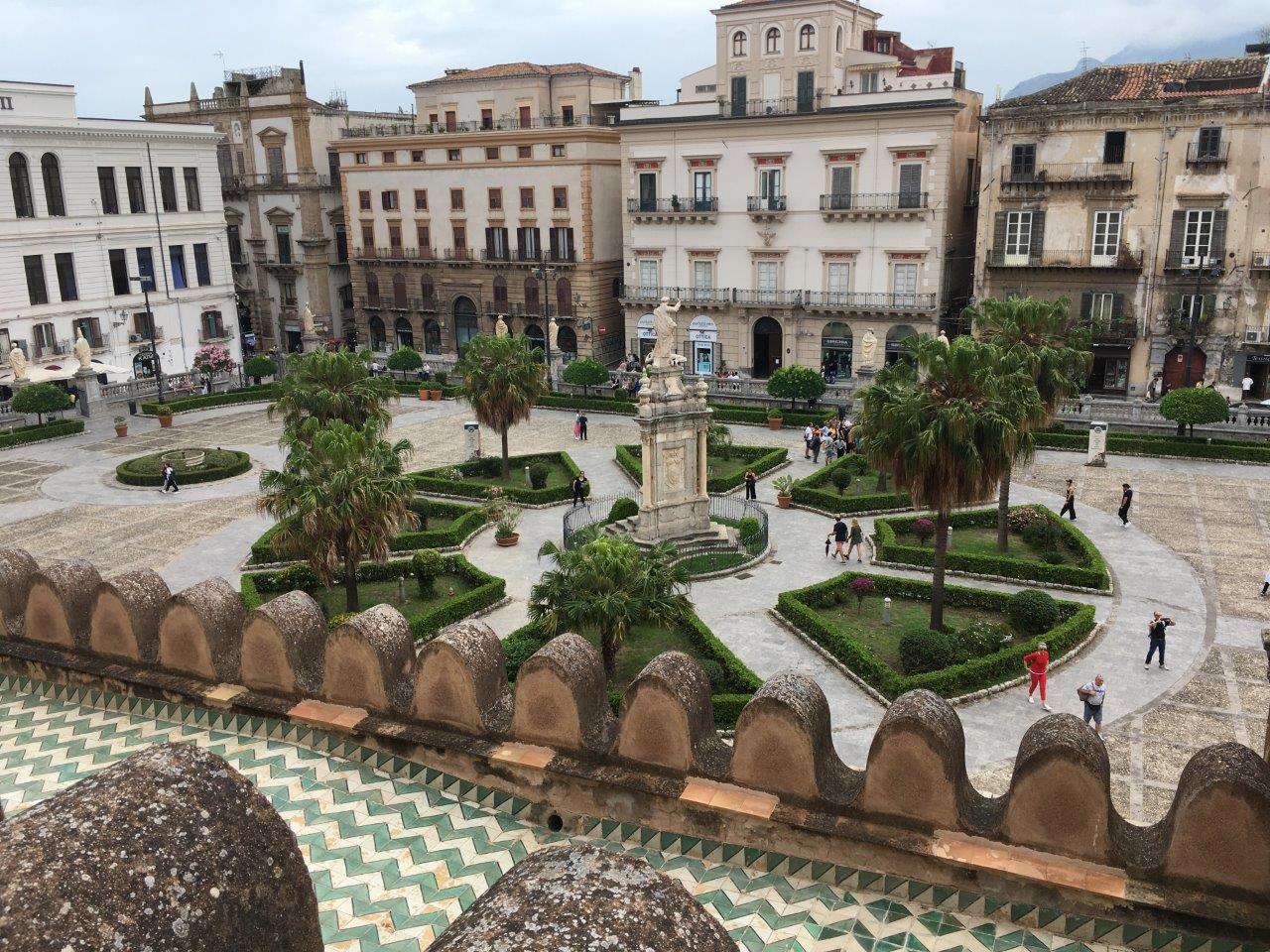
Overlooking the square
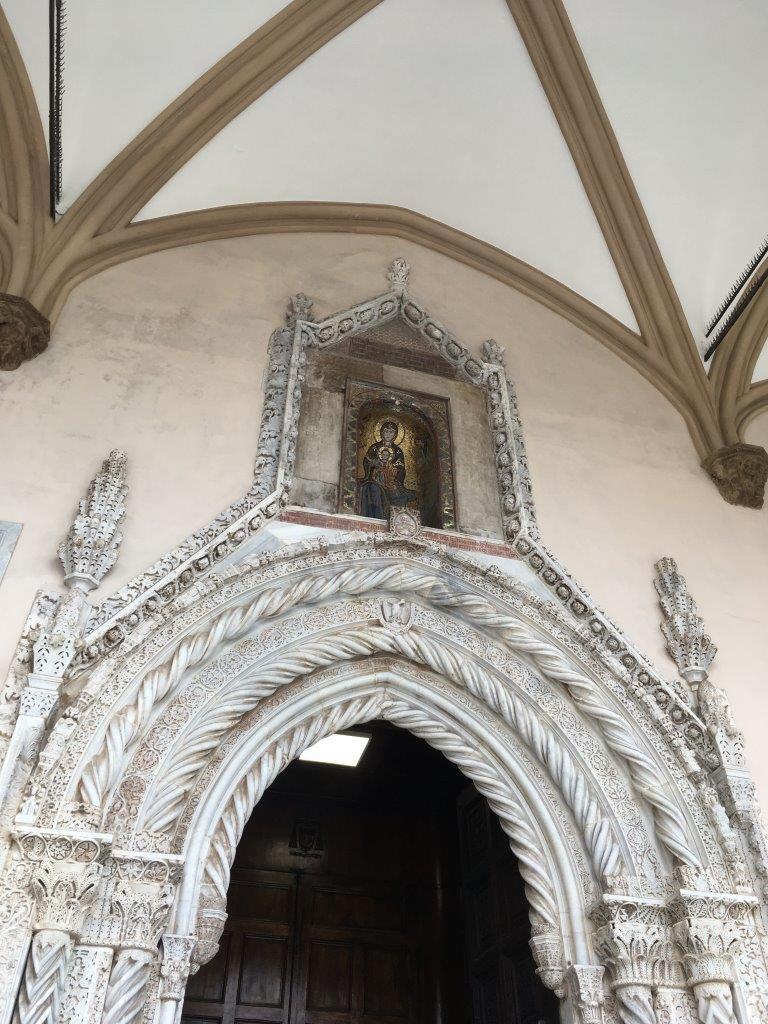
Entrance to Palermo Cathedral
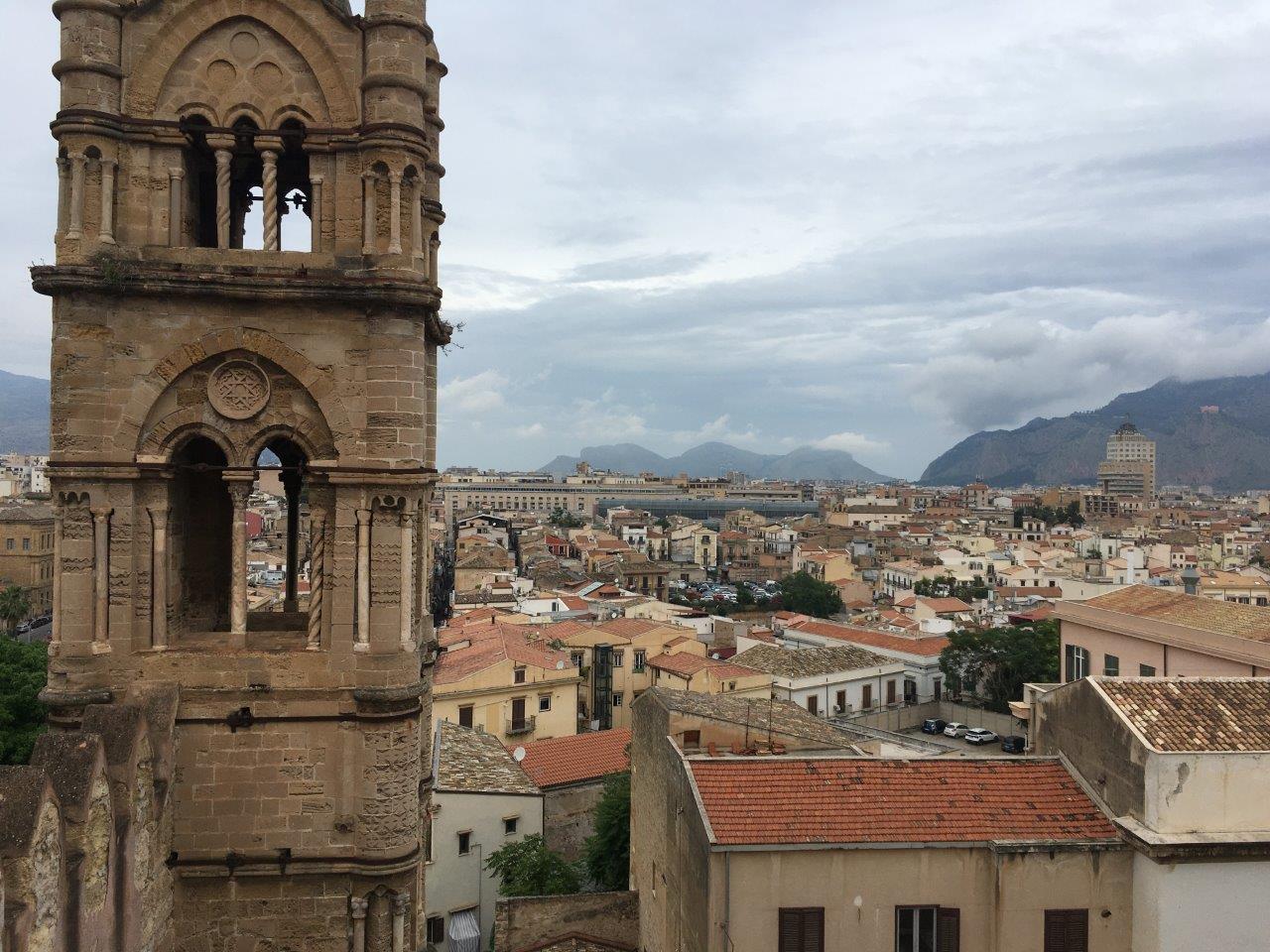
On the top roof level of Palermo Cathedral
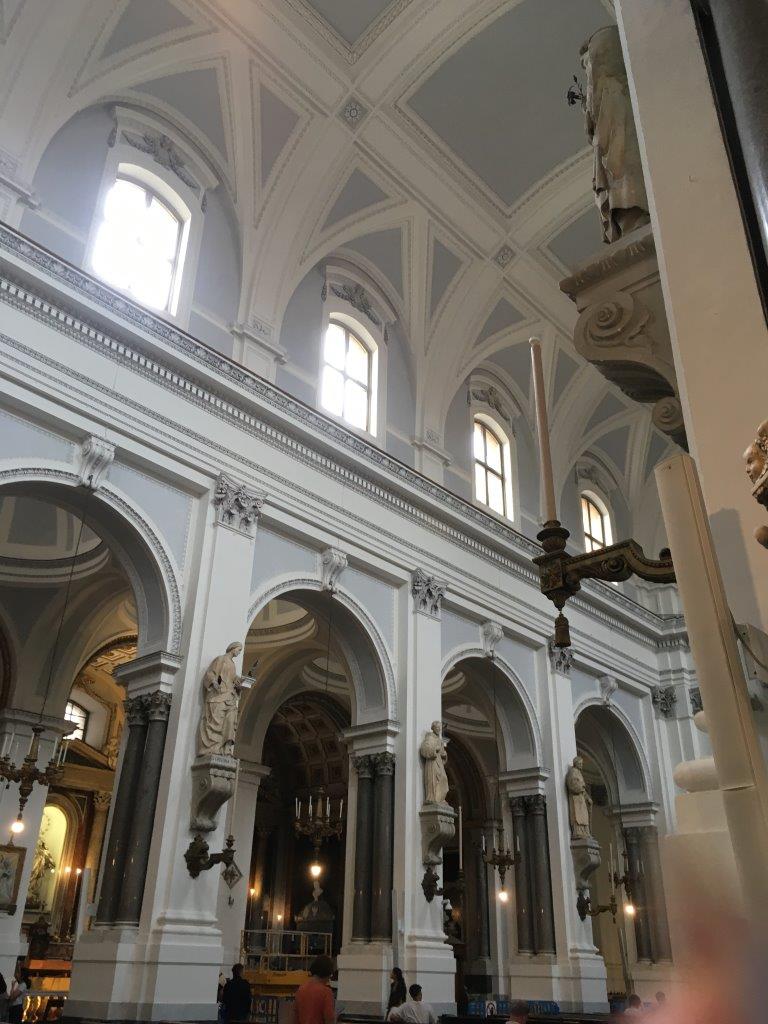
Inside Palermo Cathedral. This isn't the medieval decor but a restoration. I still like the baby blue and the domes though.
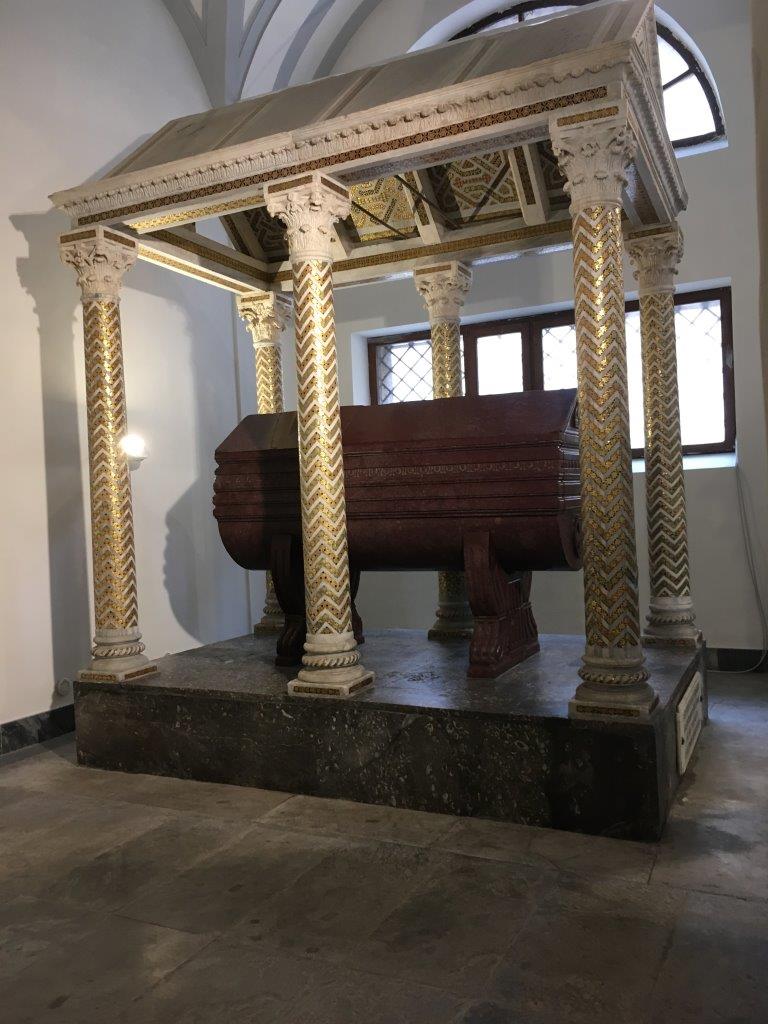
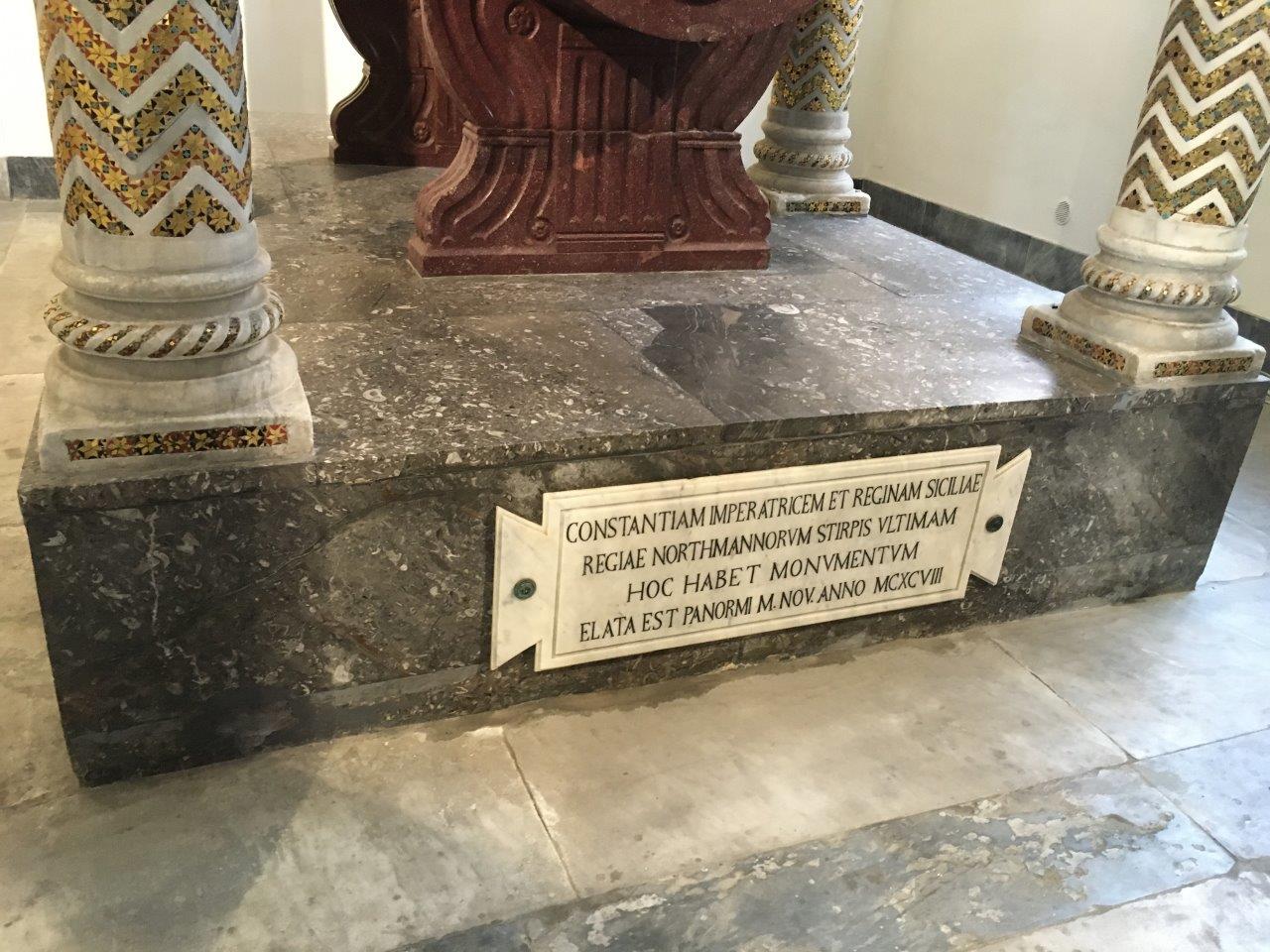
There are four of these royal tombs in the cathedral, including Roger and his mother Costanza (Constance in English)
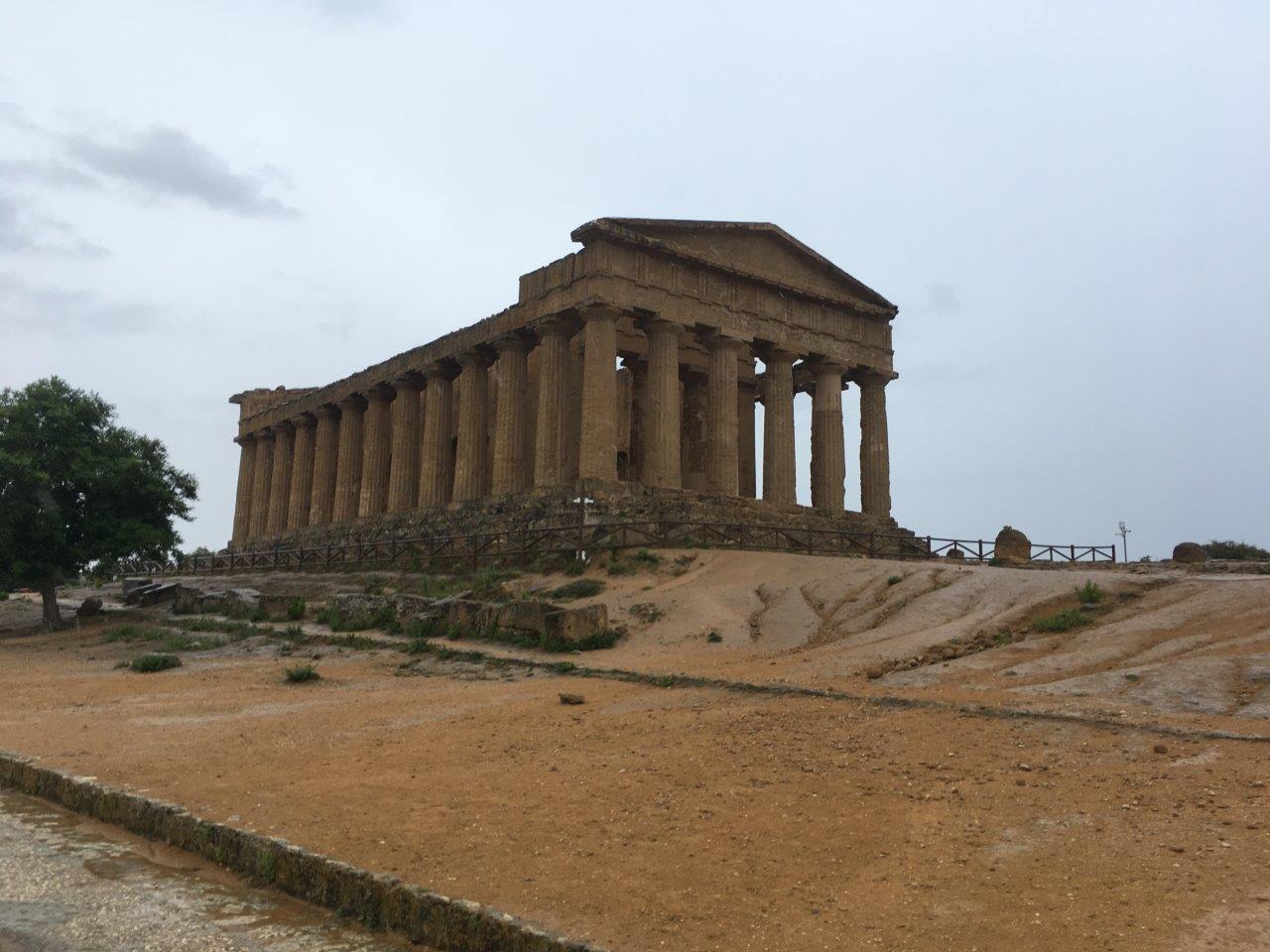
Valley of the Temples in Agrigento -- Concordia Temple. The Greeks were another group that lived in Sicily! But they didn't have marble like in Athens so they had to use sandstone, hence why these temples are more tan and crumbled
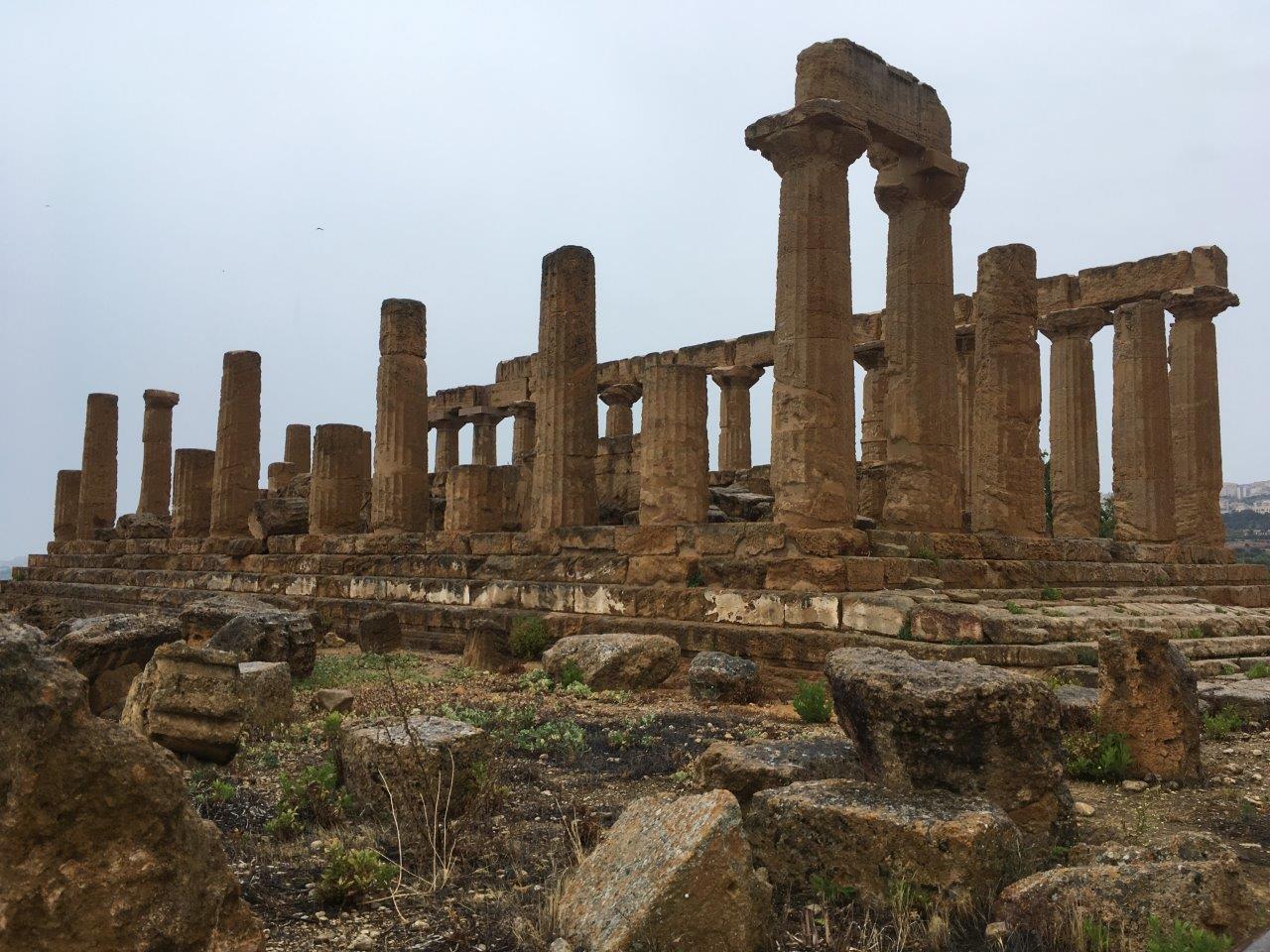
Hera temple
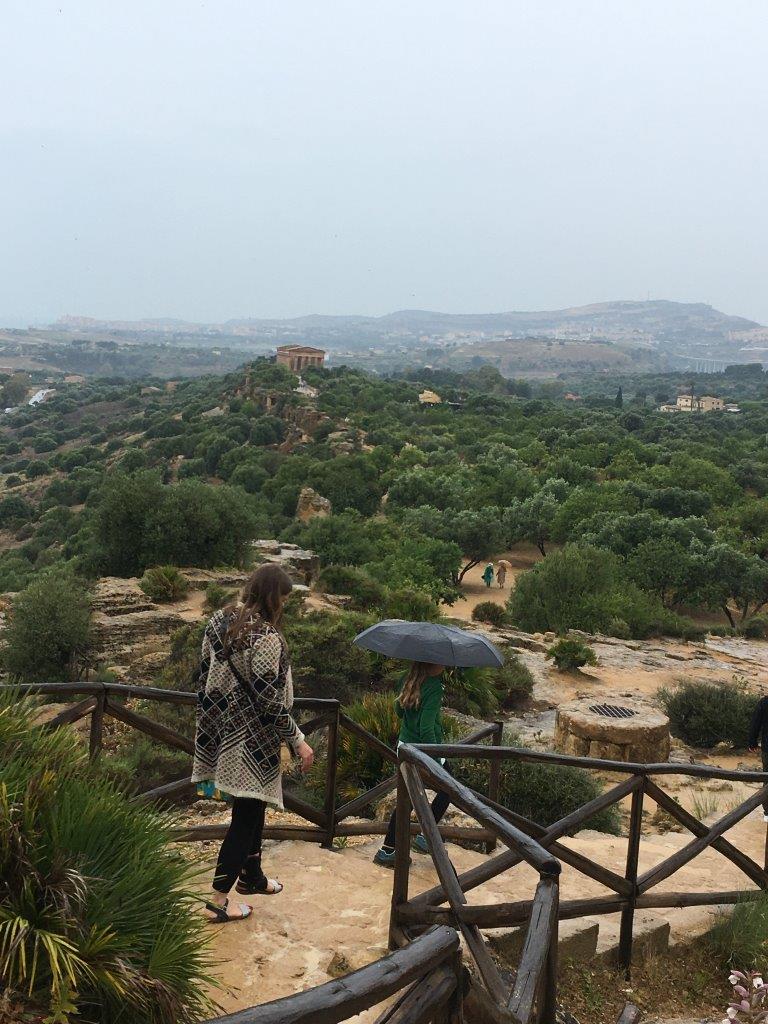
View from one of the temples

So evidently the Greek temples actually looked like THIS, with the garish blue and red paint! But they don't always want tourists to realize that, heehee. Kinda changes the mood!
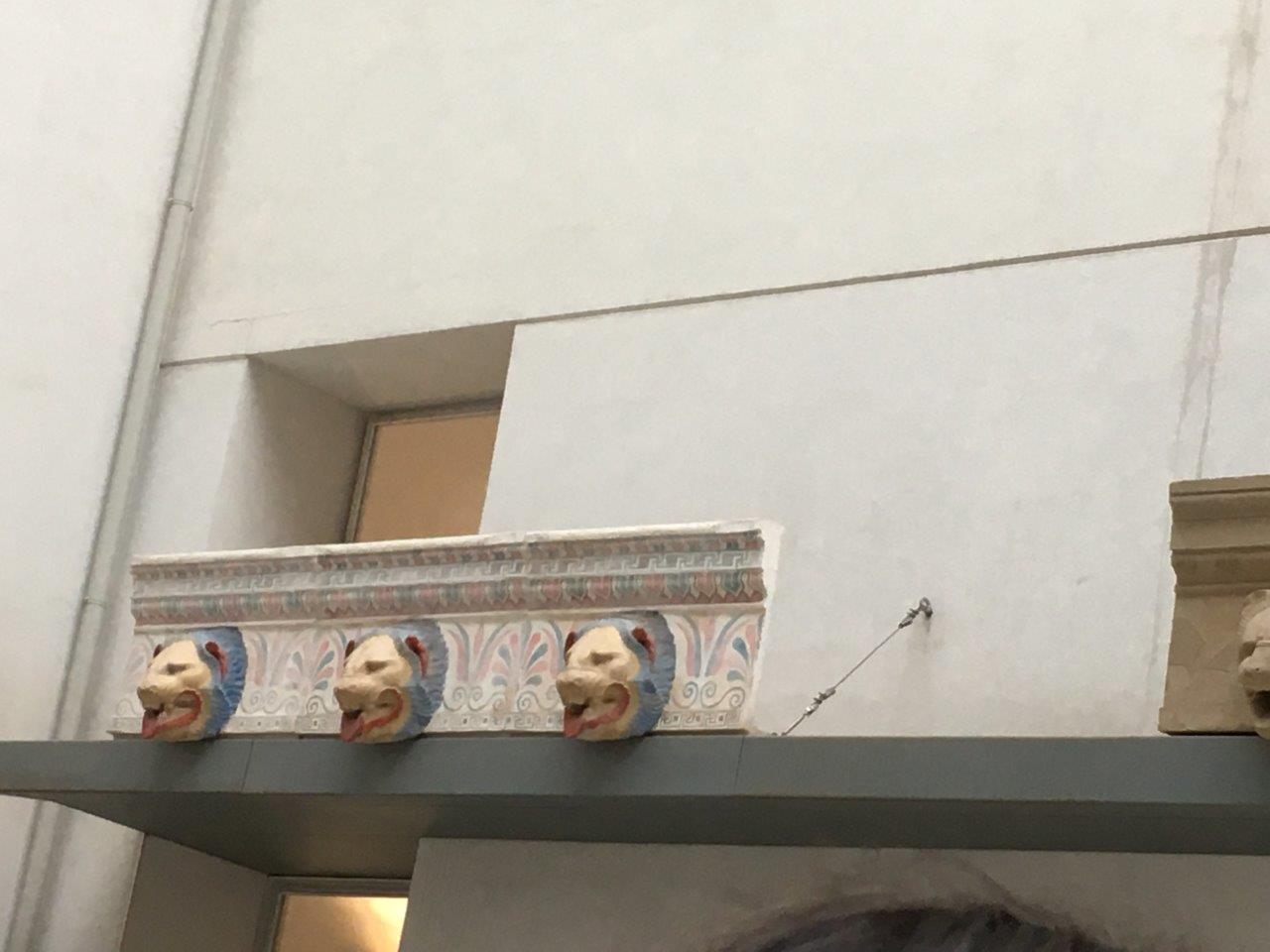
Example painted lions from a temple top, preserved in the Archeological Museum in Palermo
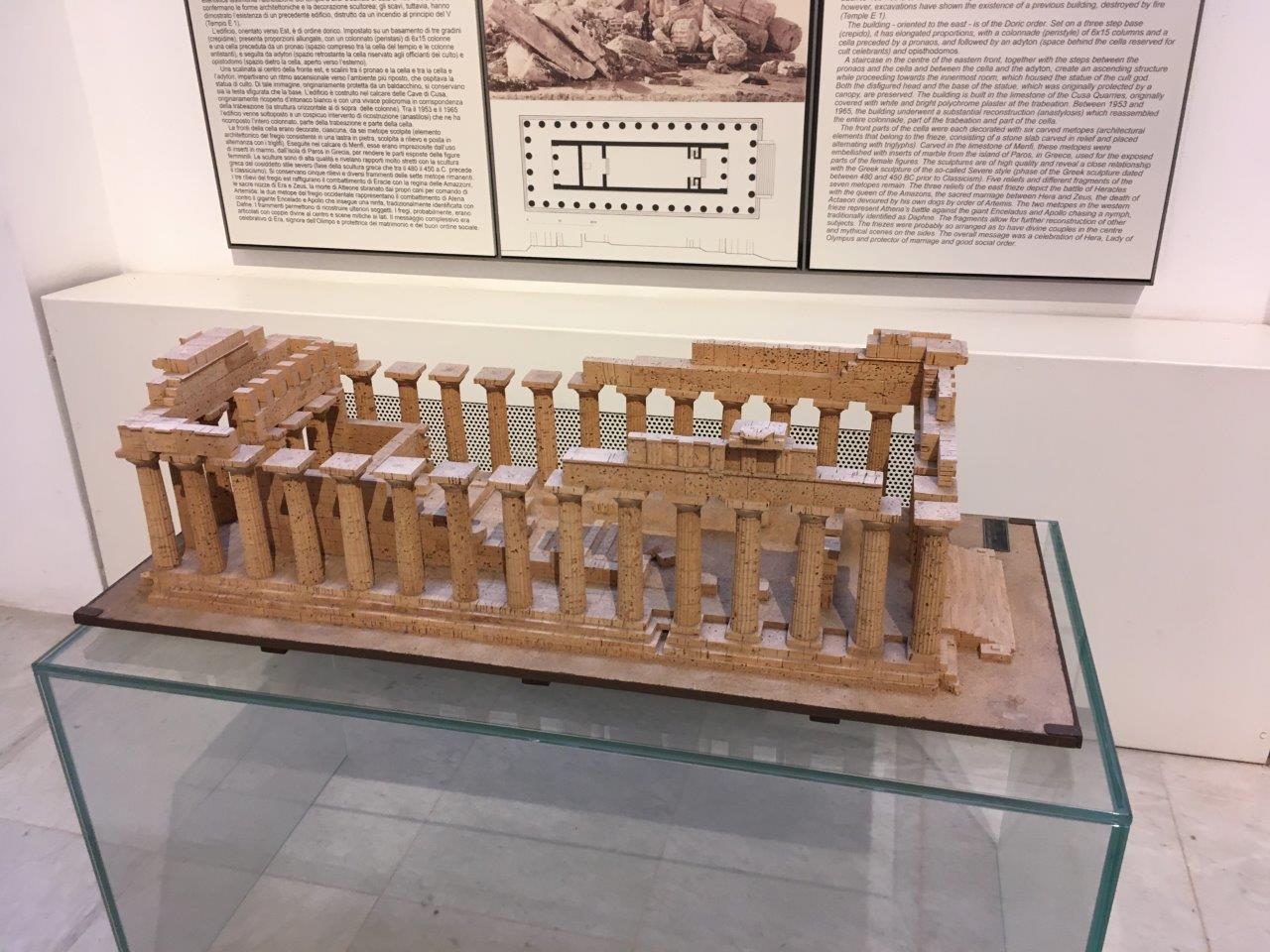
A model of a temple in the Archeological Museum
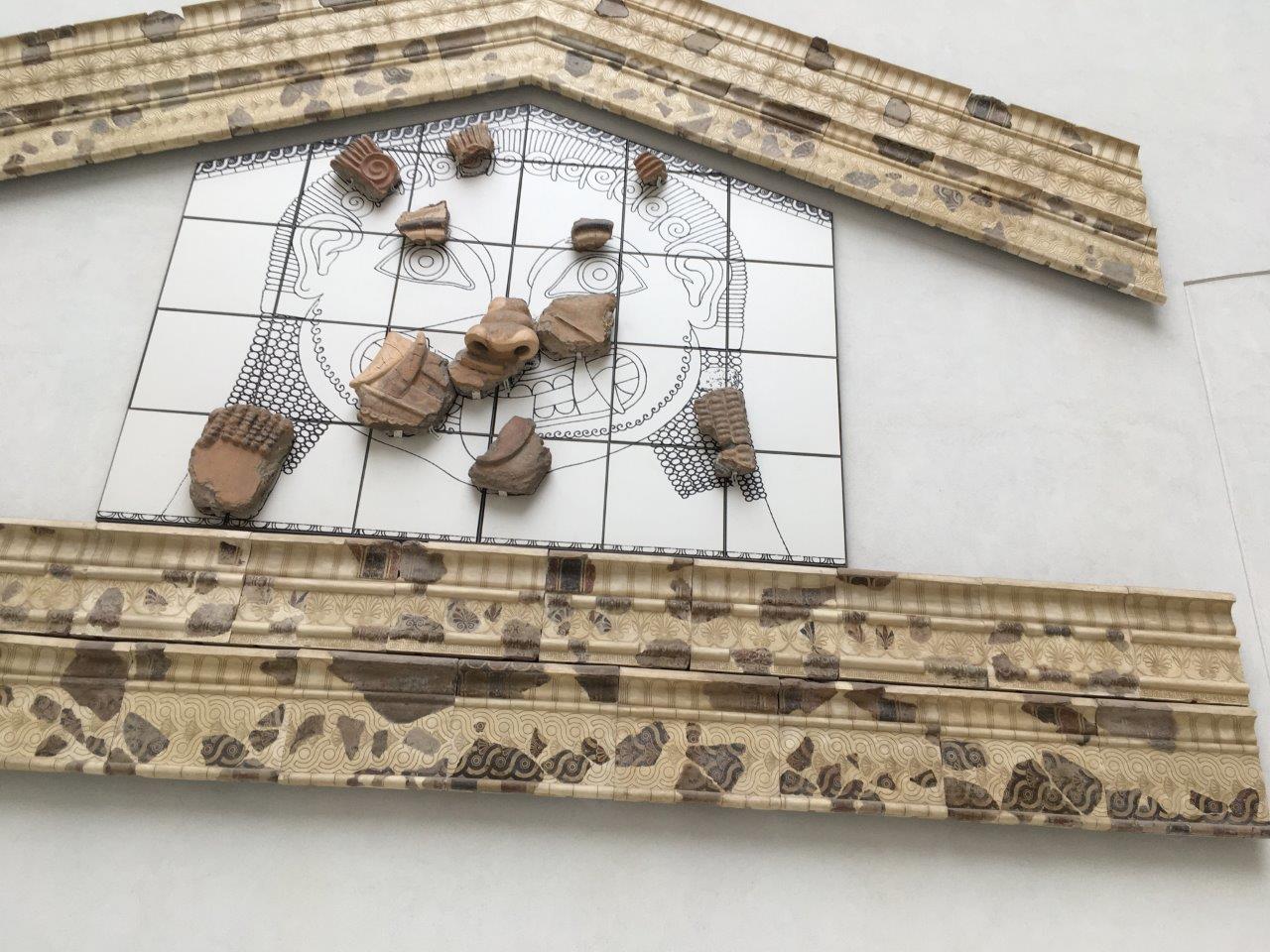
Ruins of the front of a temple to the Gorgons (like Medusa)
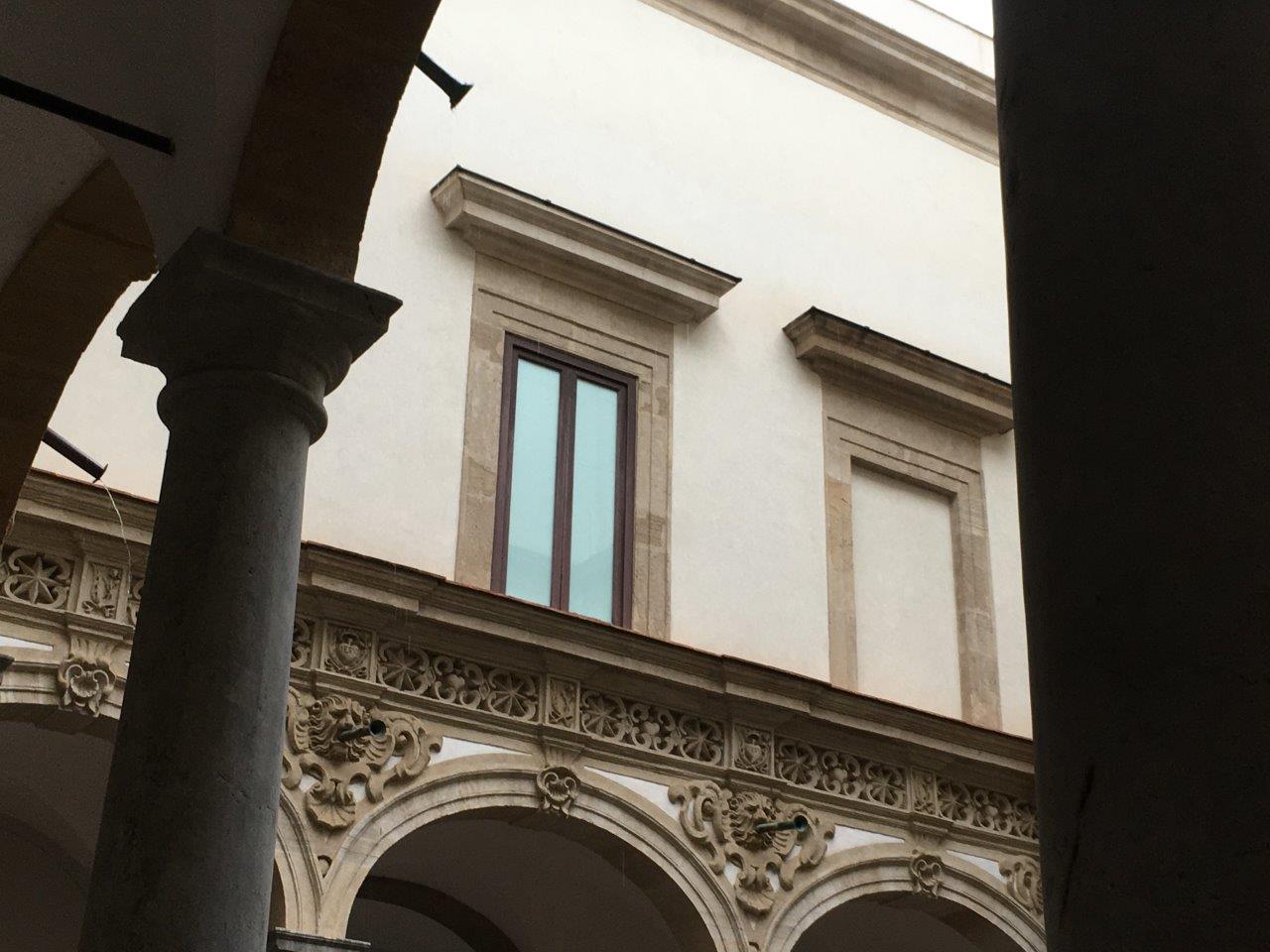
Lion gutters in the Archeological Museum
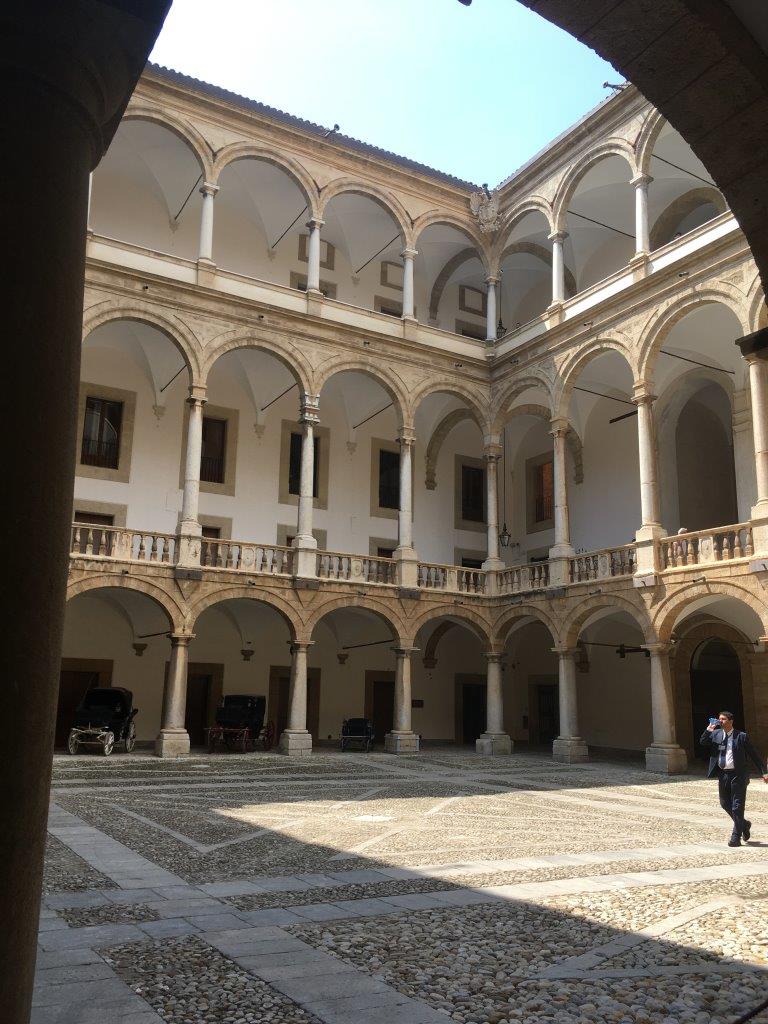
Rounded archs in the royal palace in Palermo adjacent to the Cappella Palatina
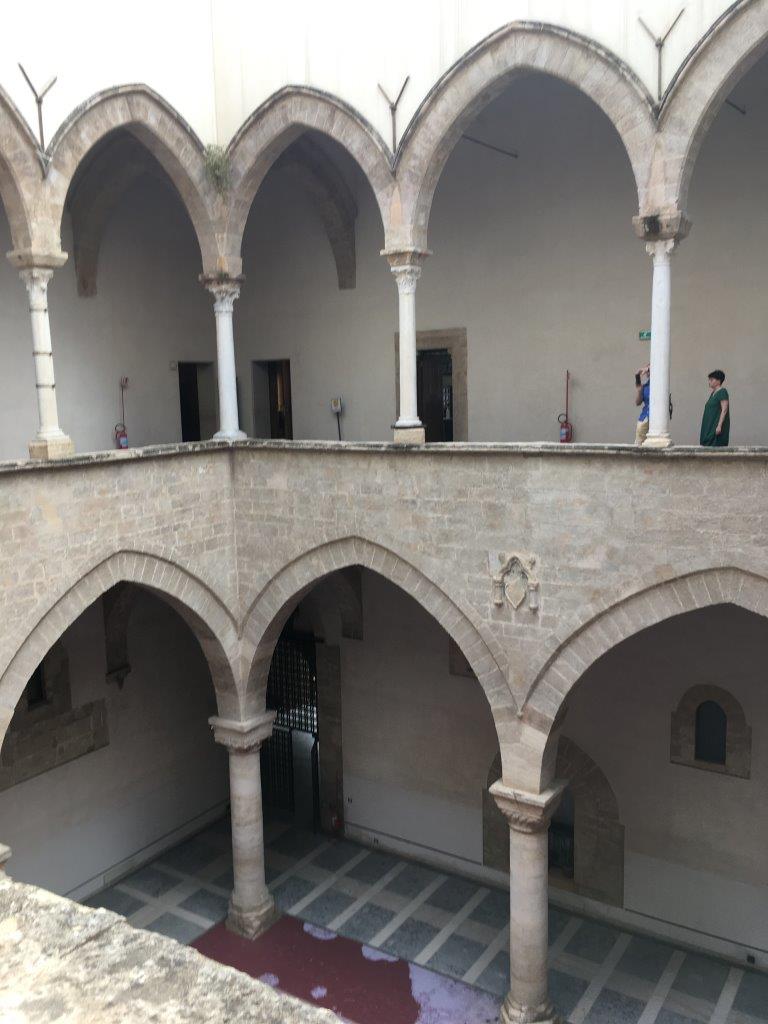
Pointed archs in the Palazzo Chiaramonte Steri in Palermo. This was built a few centuries after Roger's palace but they took inspiration from that "Sicilian" style. Except, the pointed arch technology was an influence from Arab engineers and is harder to pull off.
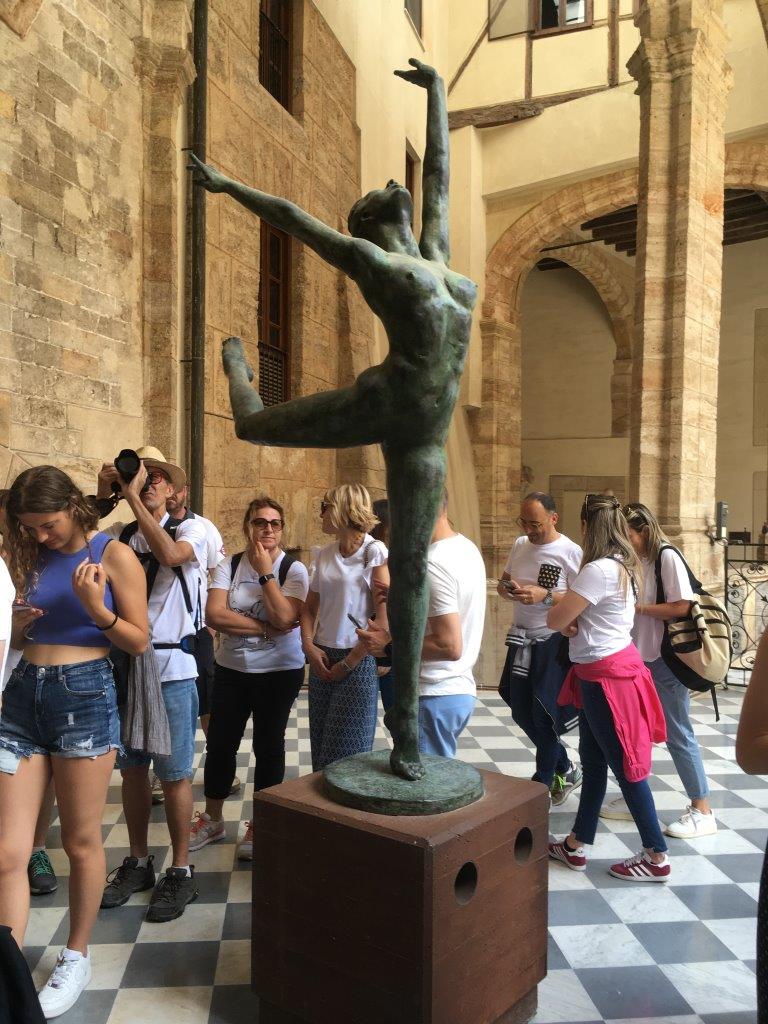
Waiting to get in the Cappella Palatina, the Italians put a random statue of a naked woman. I think it works! But my professor noted that again, not medieval and very random, just entertaining for tourists.
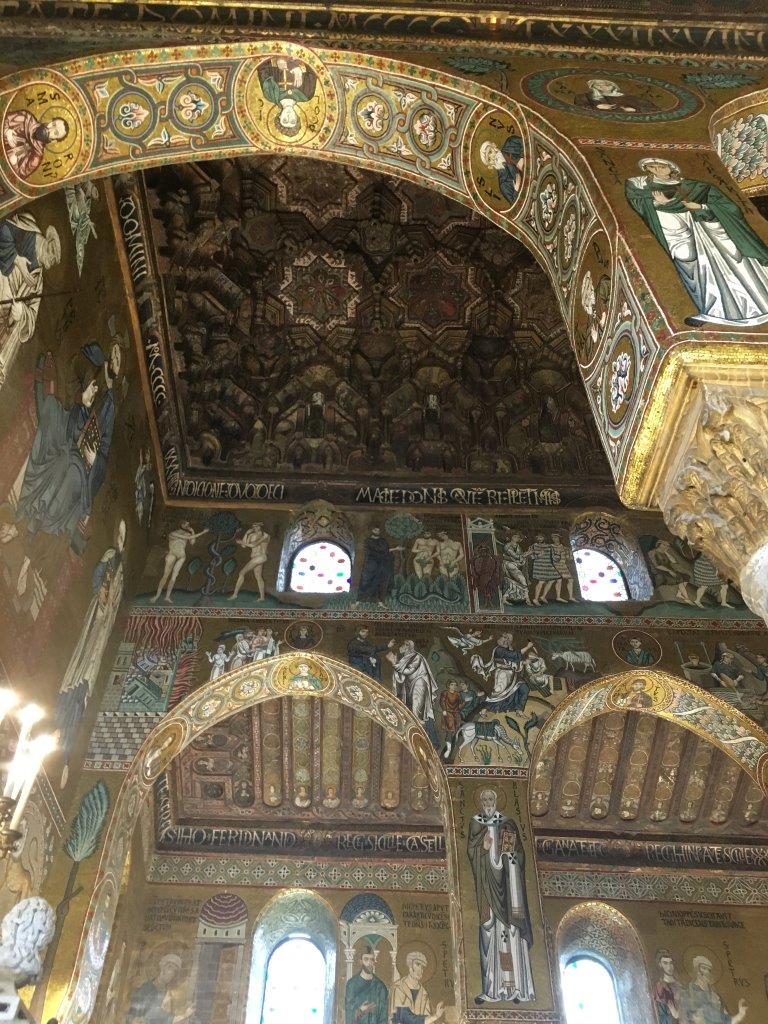
Inside Roger's Palatine Chapel, the Cappella Palatina! Byzantine gold mosaics depicting Biblical stories but a Arab muqarnas ceiling, the only surviving wooden one left in the world! Looks like painted stalactites. They are also covered with Biblical figures but done by Muslim artists who painted them like their own figures. They also wrote Arabic on the ceiling in white, and it reads things like, Roger the Magnificent, he's so great and Allah loves him!
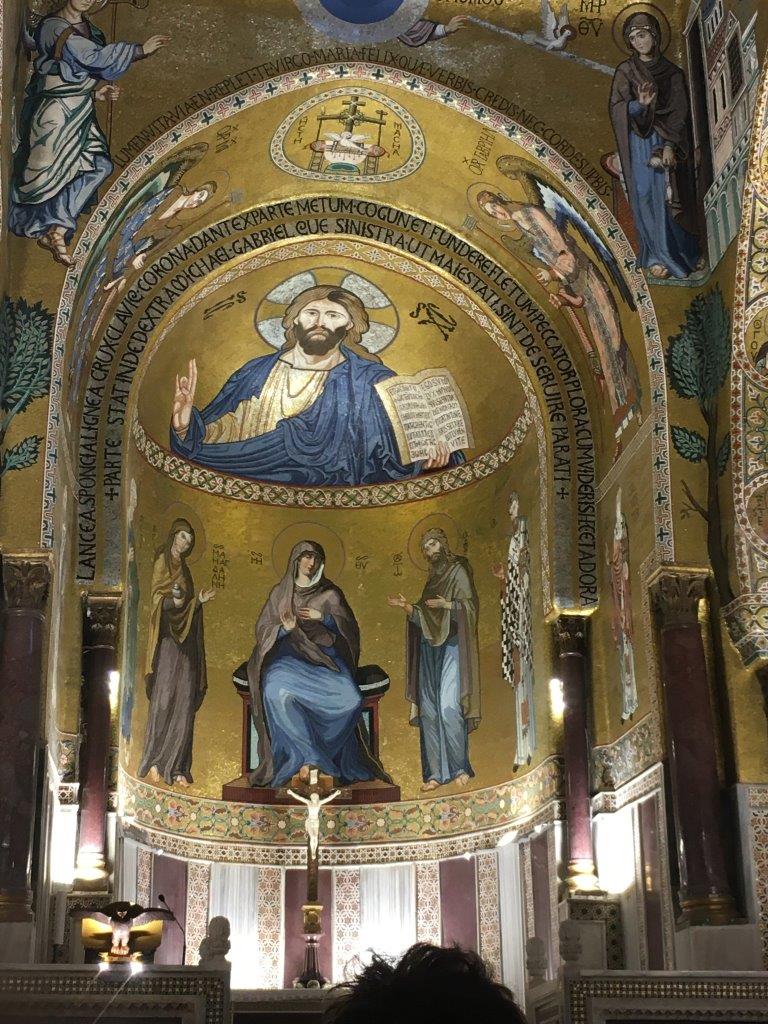
IC XC was evidently code for Jesus, from when Christians had to be discrete about being monotheistic. Also, blue was a very expensive color to make in a mosaic (besides gold, which was made by sandwiching gold leaf between two pieces of glass), so that's why Jesus and Mary were dressed in blue!
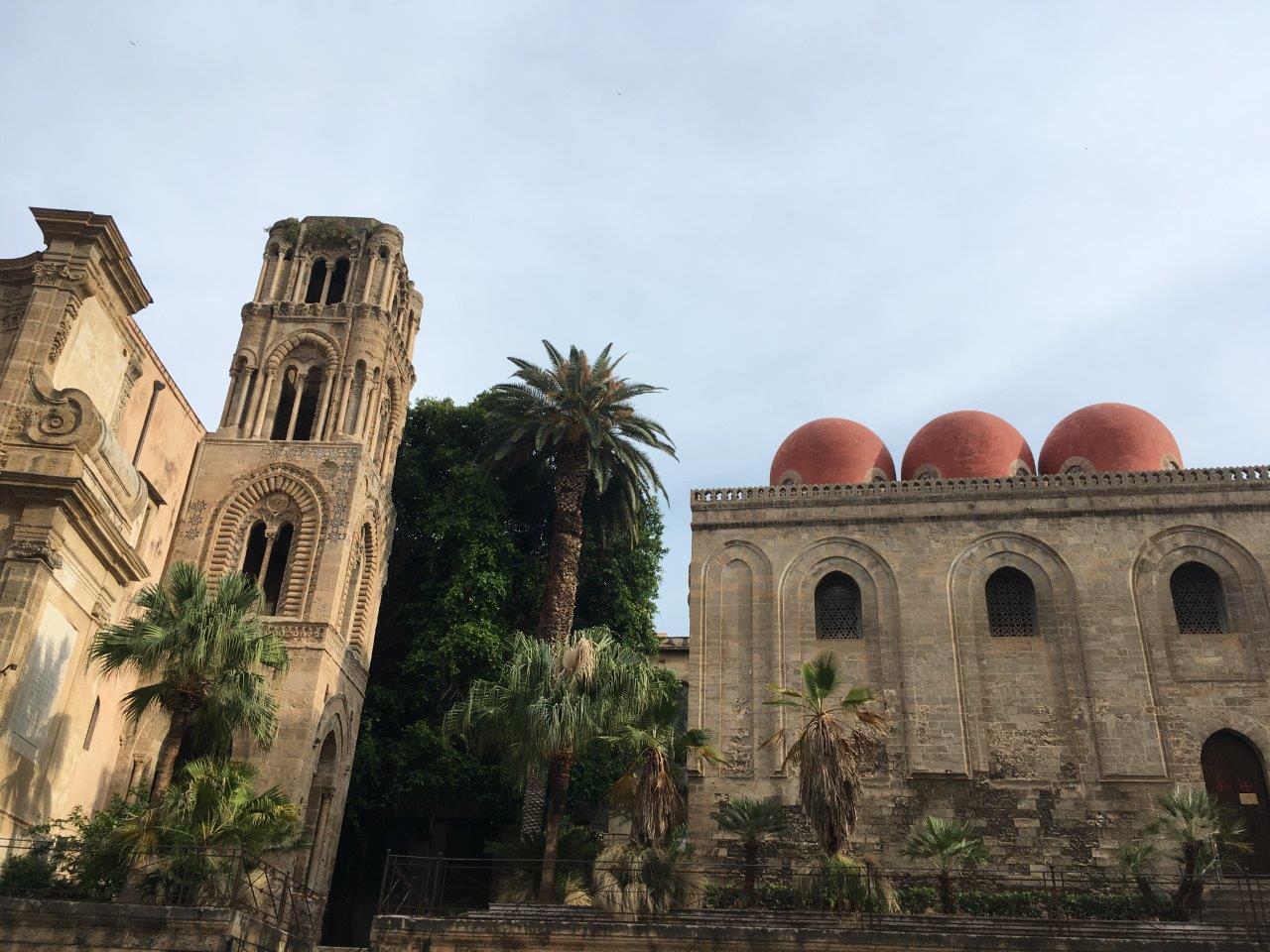
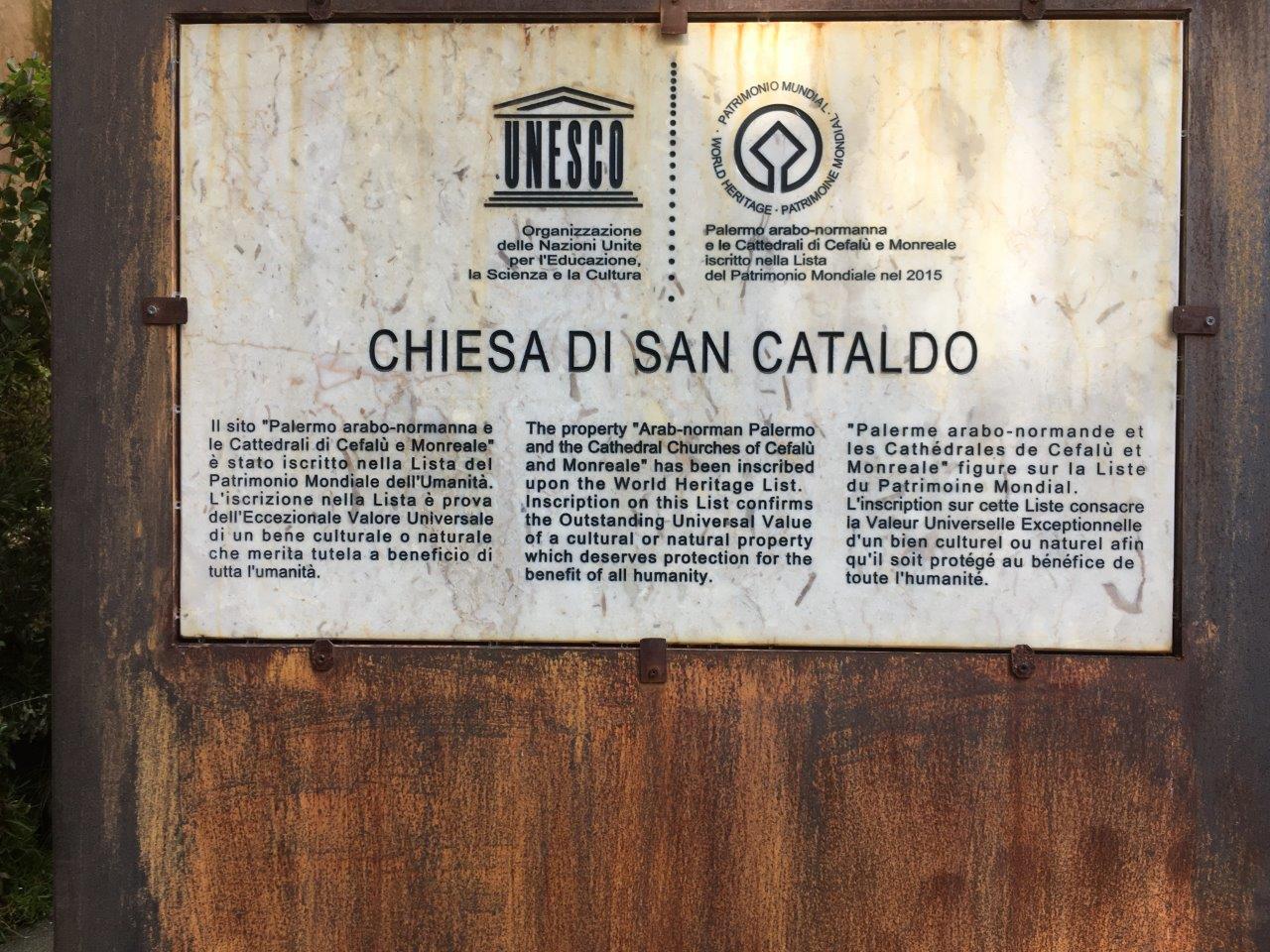
Not far from the Cappella Palatina are these two churches, La Martorana (left) and San Cataldo (right)
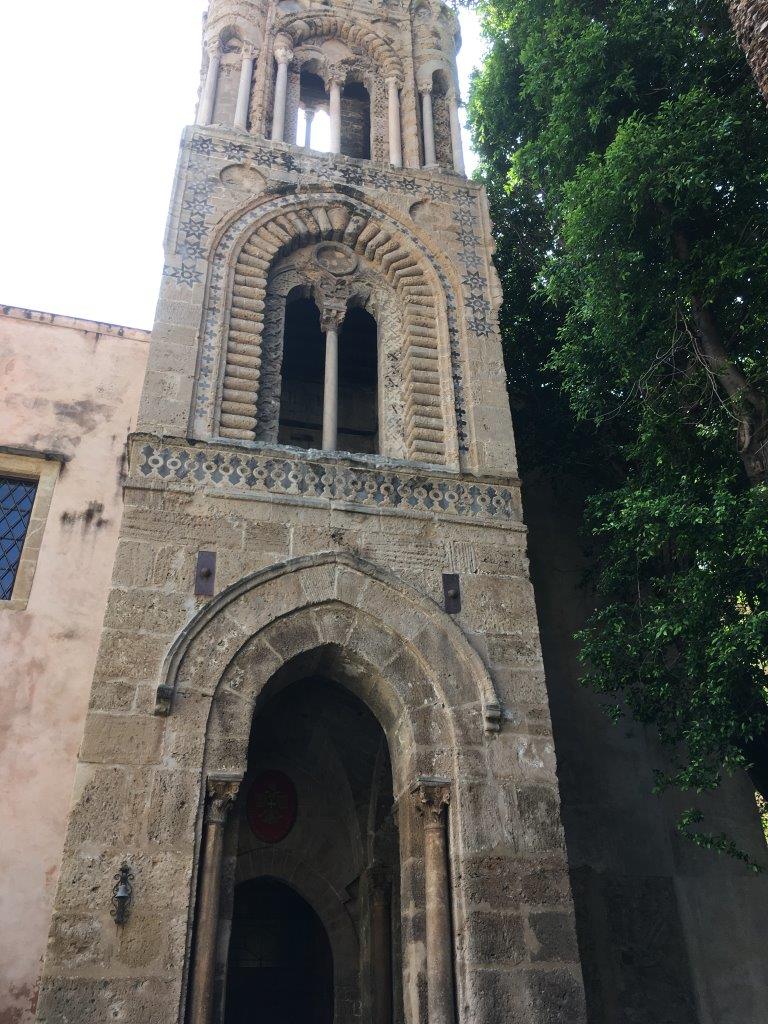
We read the journal of a medieval Muslim traveler, Ibn Jubayr, who visited this church on Christmas and noted the Christian women wore veils like their Muslim peers in the city. He hoped it would one day be Islamic.
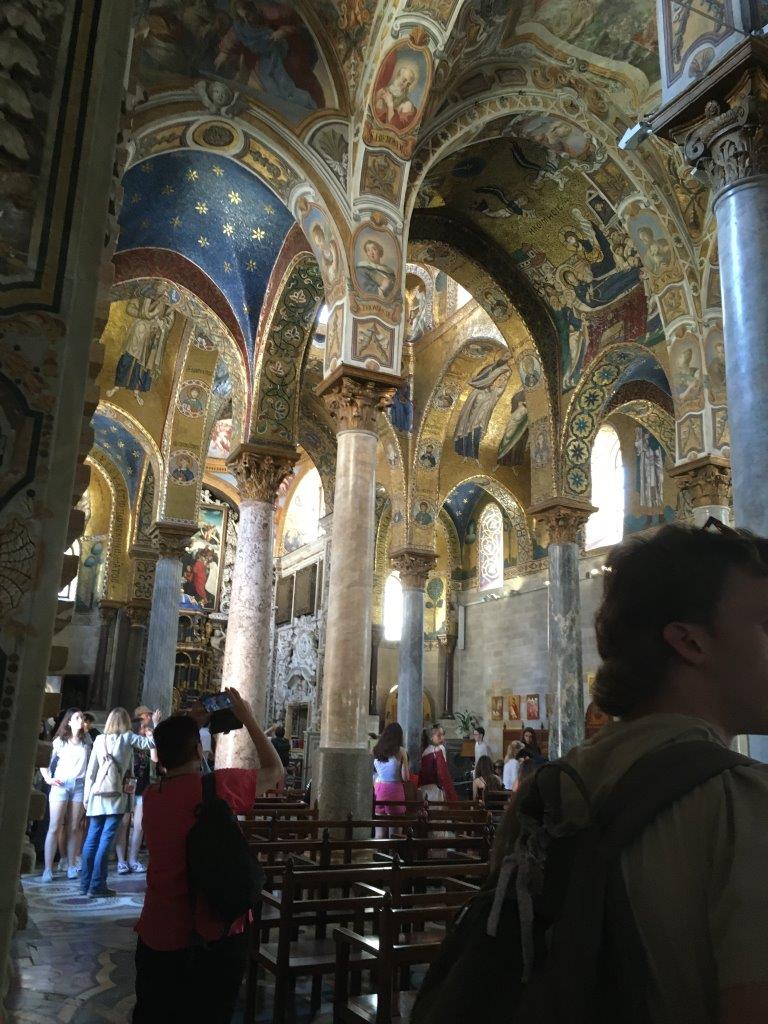
Inside La Martorana! Medieval churches were evidently less about hearing the speeches by the priests and more about the magical atmosphere. The ceiling is such that the choir's voices got echoed around so it seemed like angel ghosts were present. The dark blue represents the sky, as if a portal is opening in the ceiling to connect with the divine.
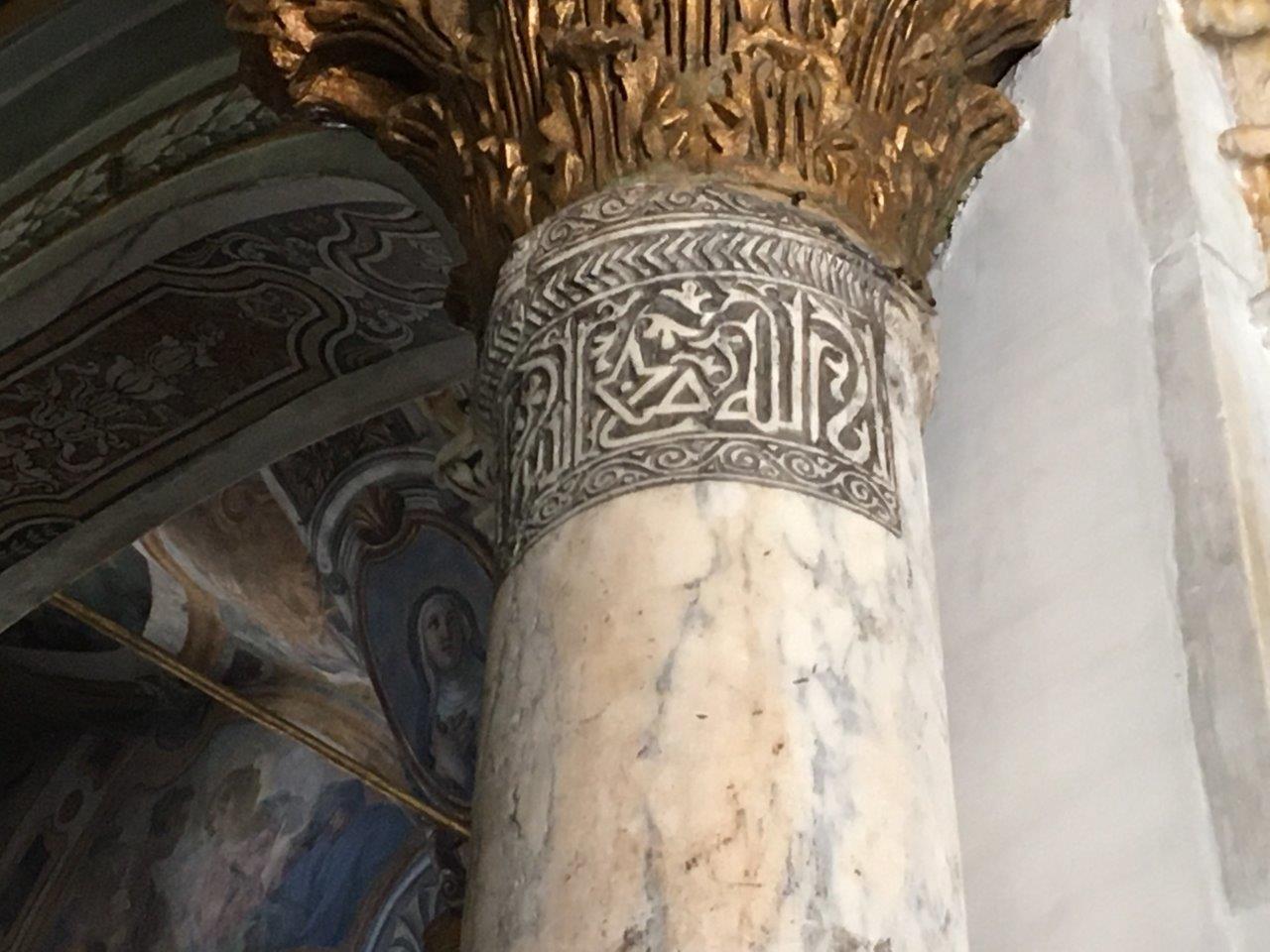
Another repurposed column in La Martorana
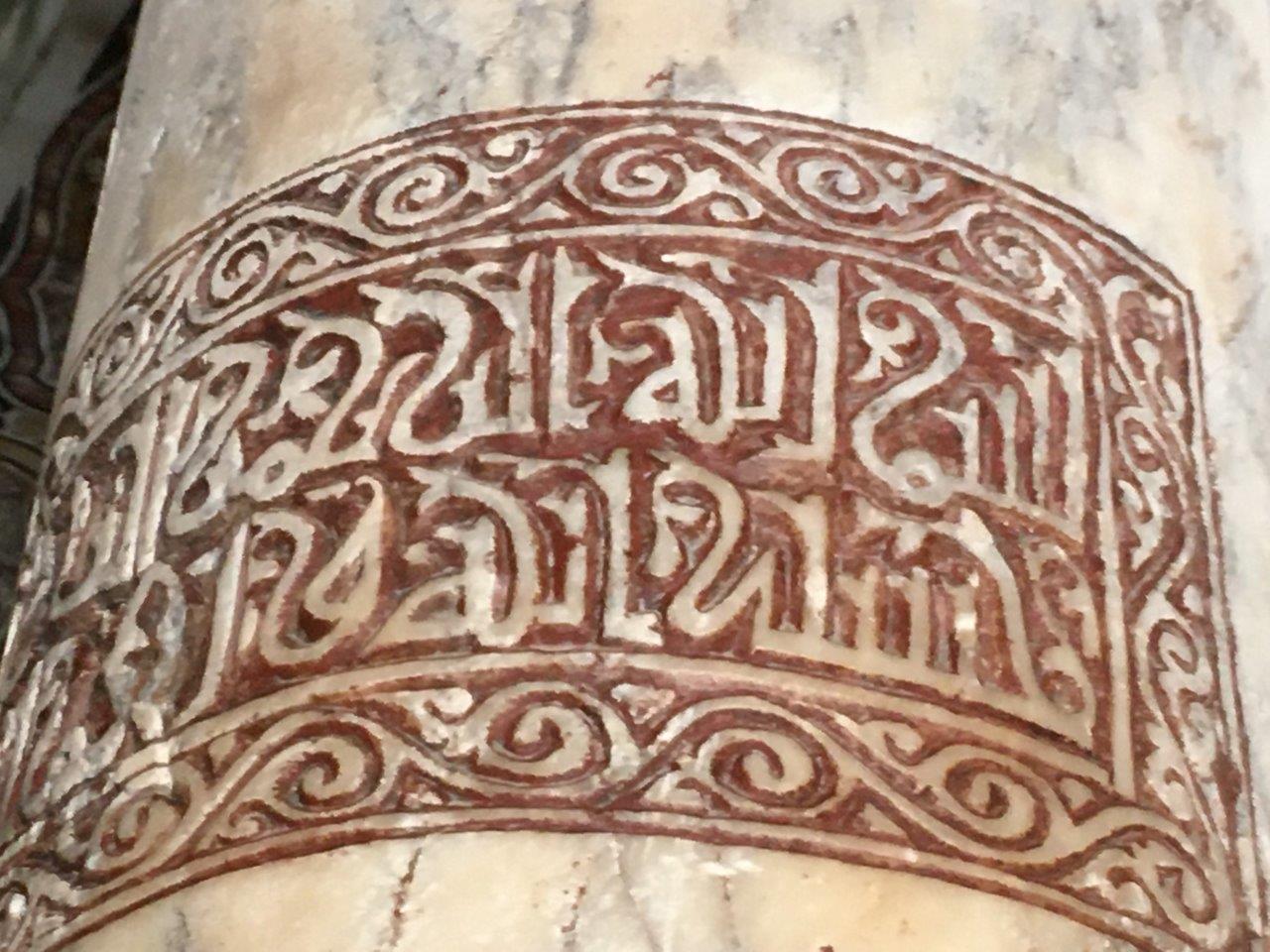
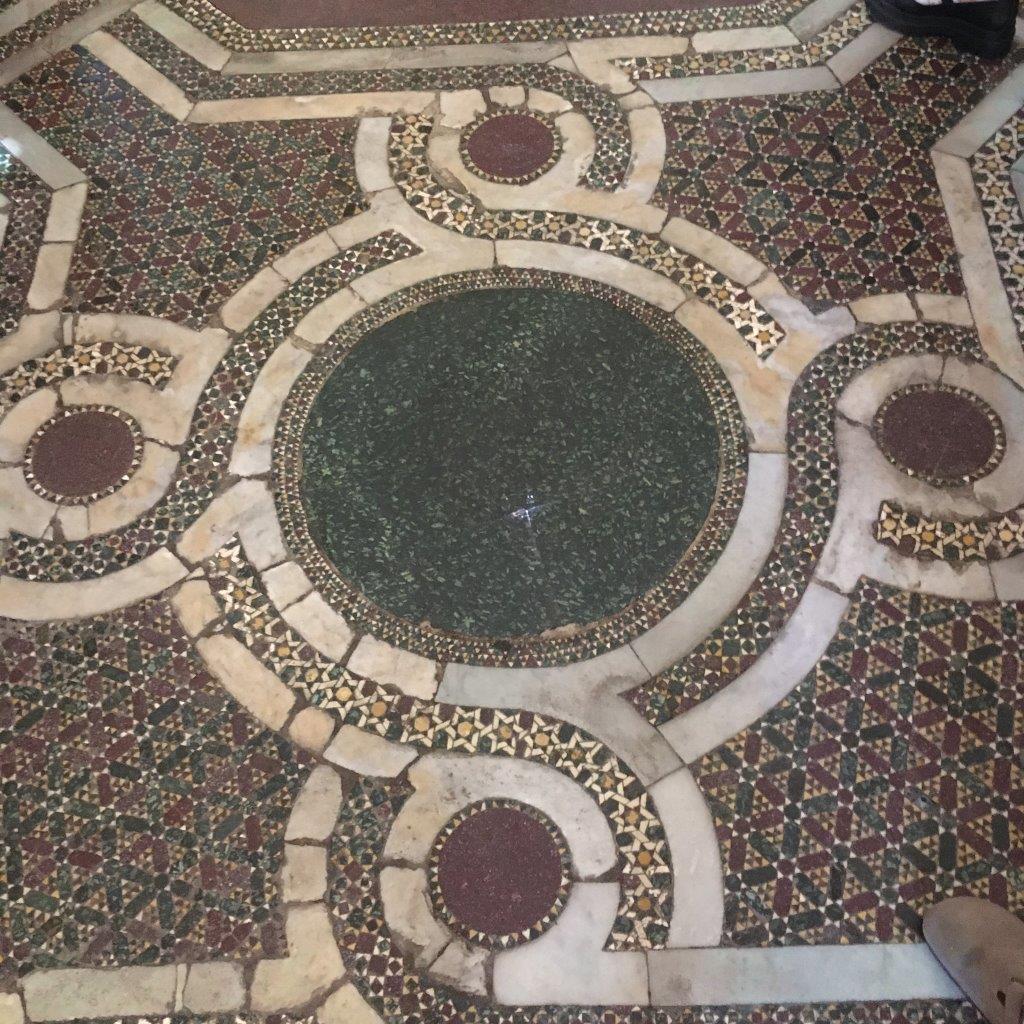
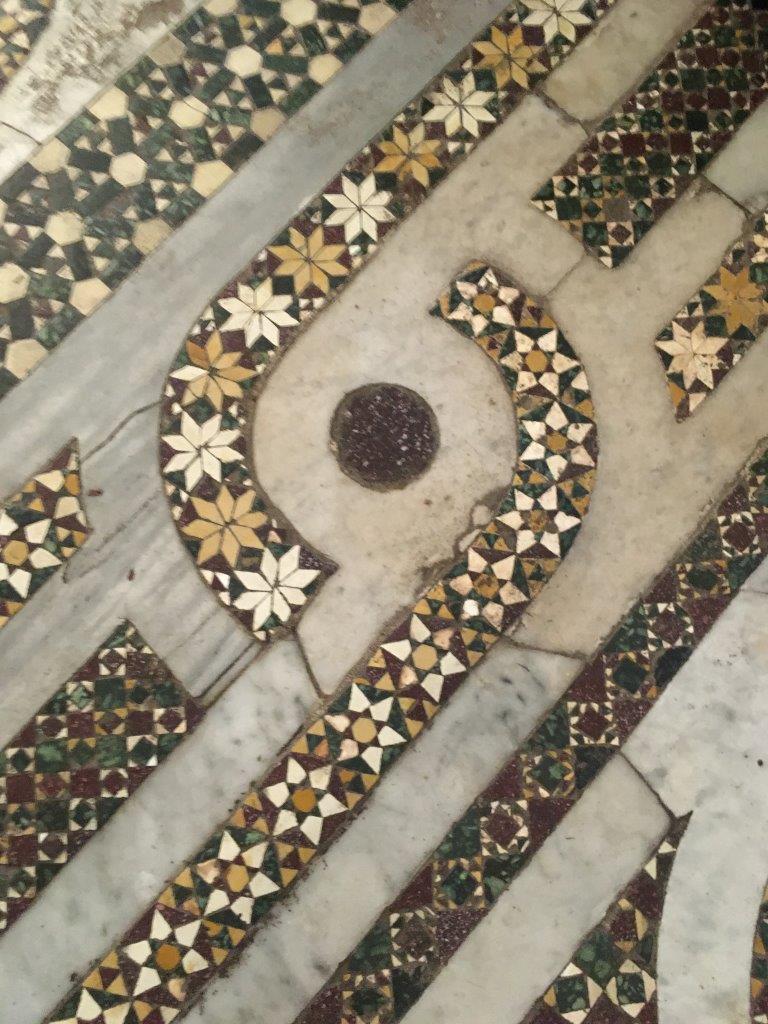
The floor of La Martorana. San Cataldo and the Cappella Palatina look the same, with the Arabic style mosaic. Evidently medieval people thought marble was hardened water! So the floor mosaics could be thought of as rivers and tributaries cutting through the fields of flowers, forests, etc.
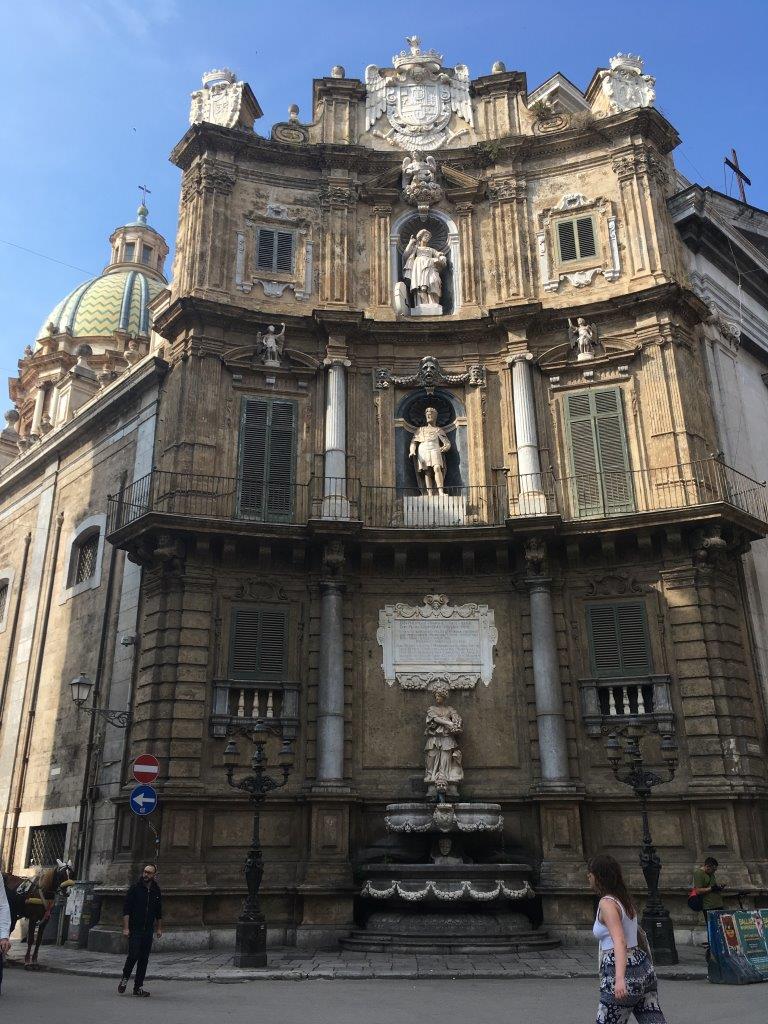
The main crossroads on the walking street, Via Maqueda, where we stayed. It's called the Quattro Canti. There are four of these imposing buildings surrounding you when you stand in the center of the intersection.
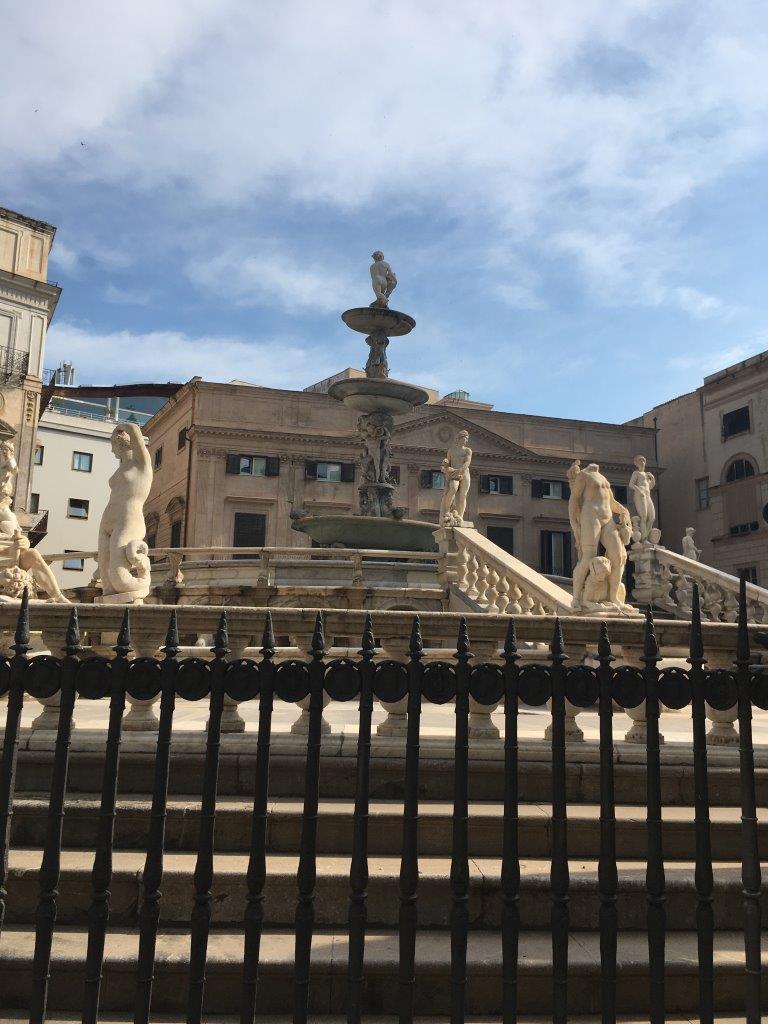
A tourist spot for most in Palermo, this 1500s Florentine fountain in the Piazza Pretoria (near the Quattro Canti) was too new and Northern to be relevant to our classes. But still beautiful!
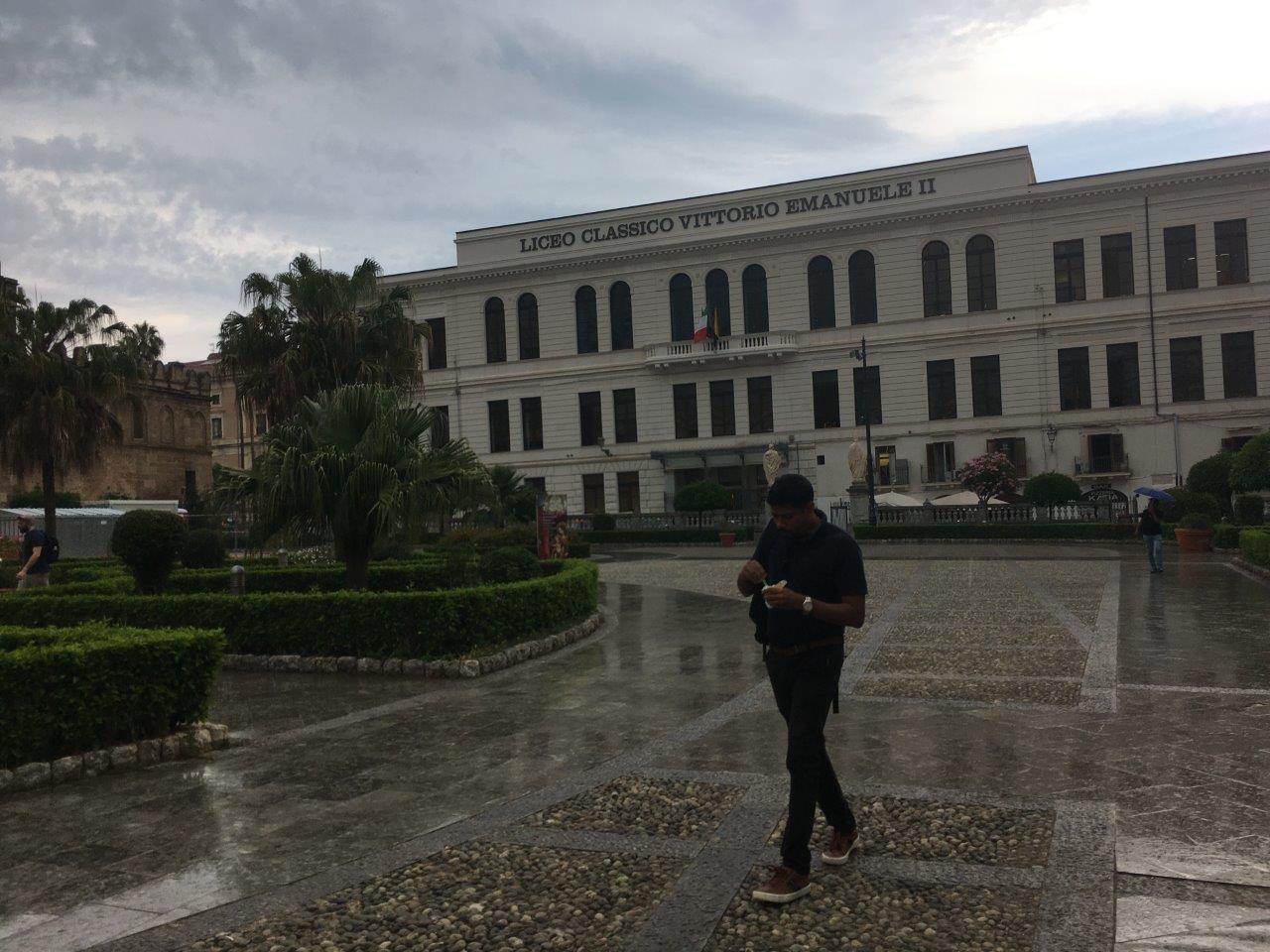
The high school for this part of Palermo -- my ancestors had to pledge that they were no longer loyal to this Victor Emmanuel when they applied for citizenship in the US!! He was king in the early 1900s.
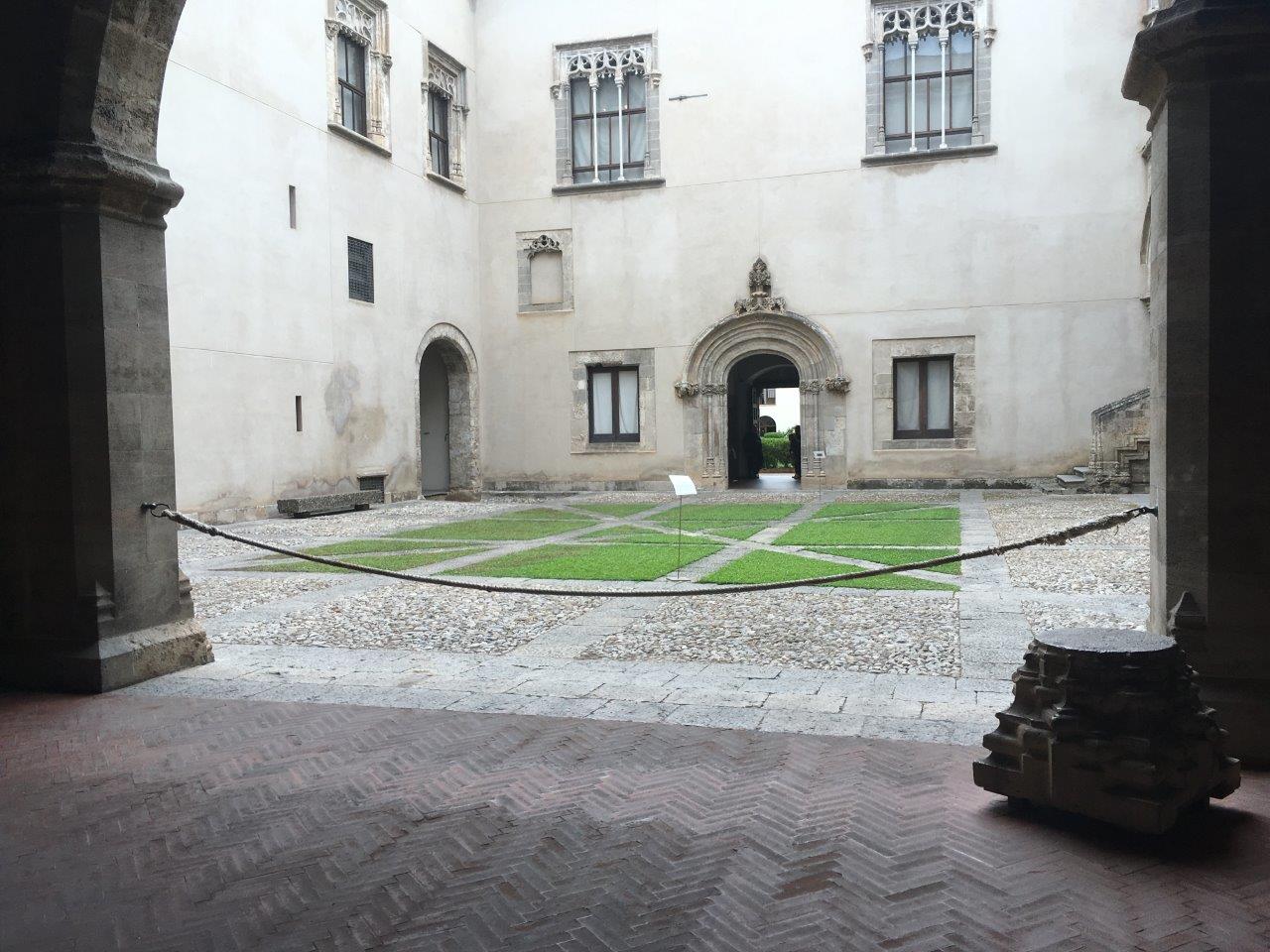
Another museum in Palermo with a beautiful courtyard...
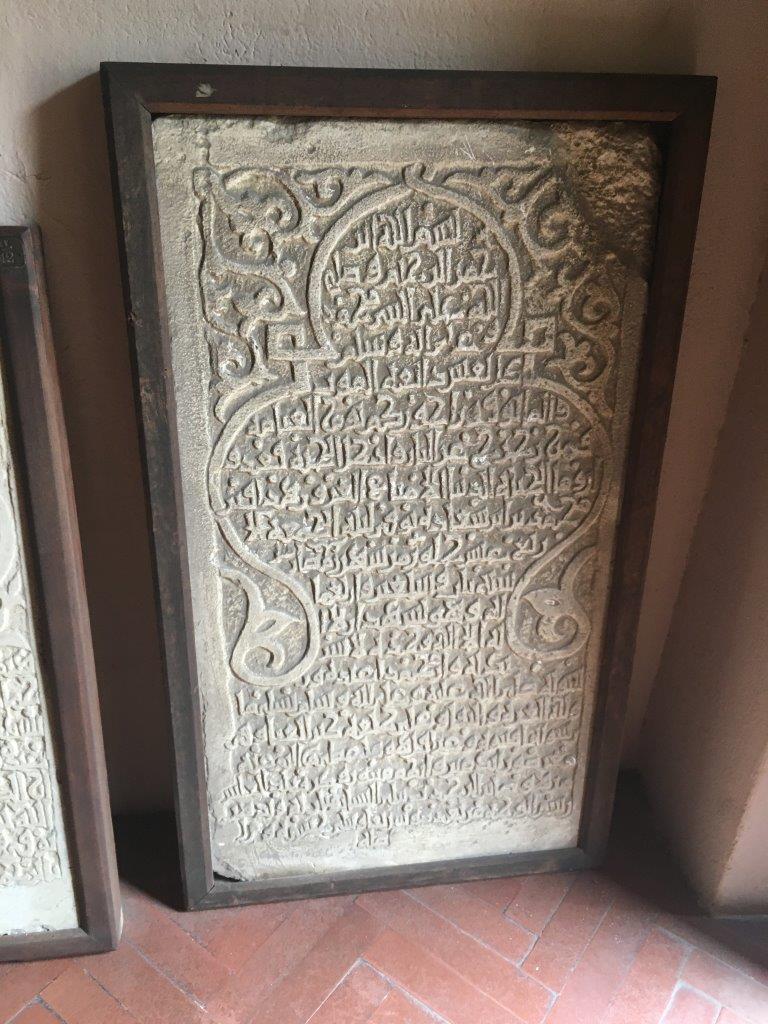
... and more Arabic tablets!
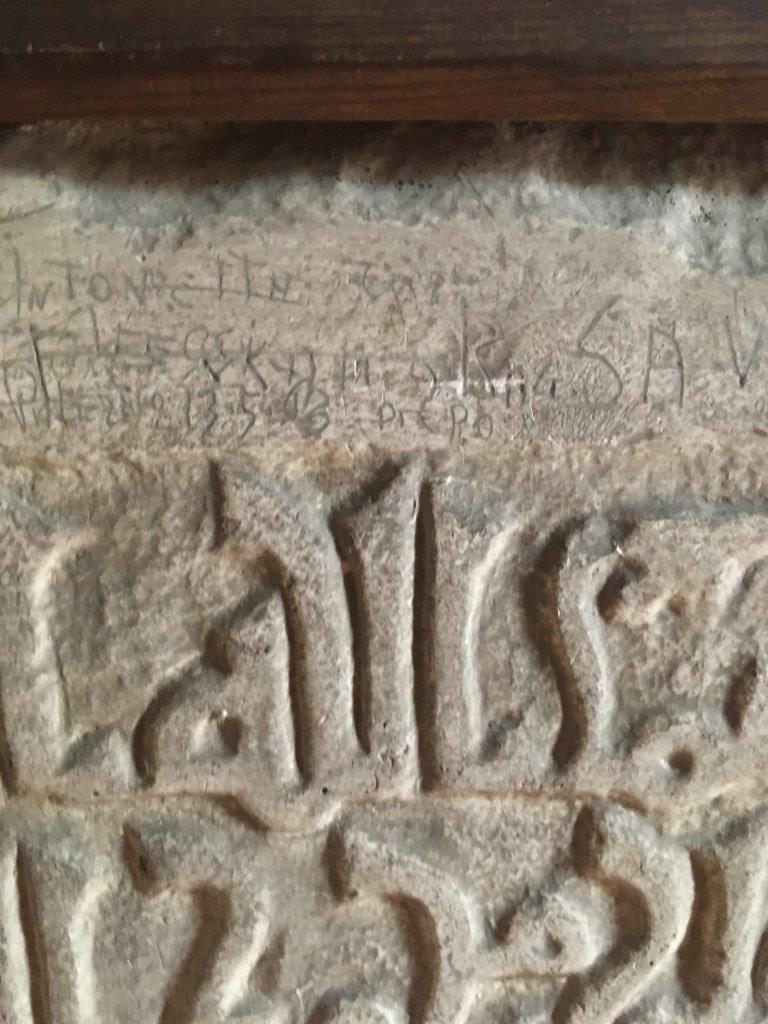
That's the symbol for Allah, or God
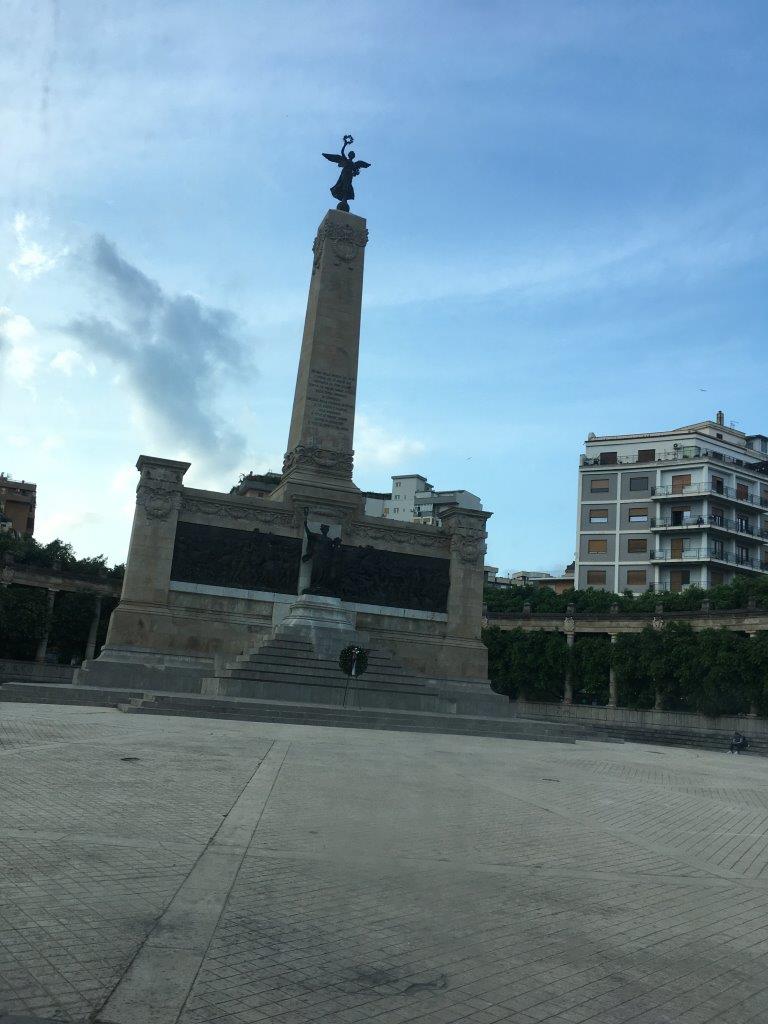
A war memorial on Via Maqueda. They laid the wreath on it on June 6, Italy's Republic Day.
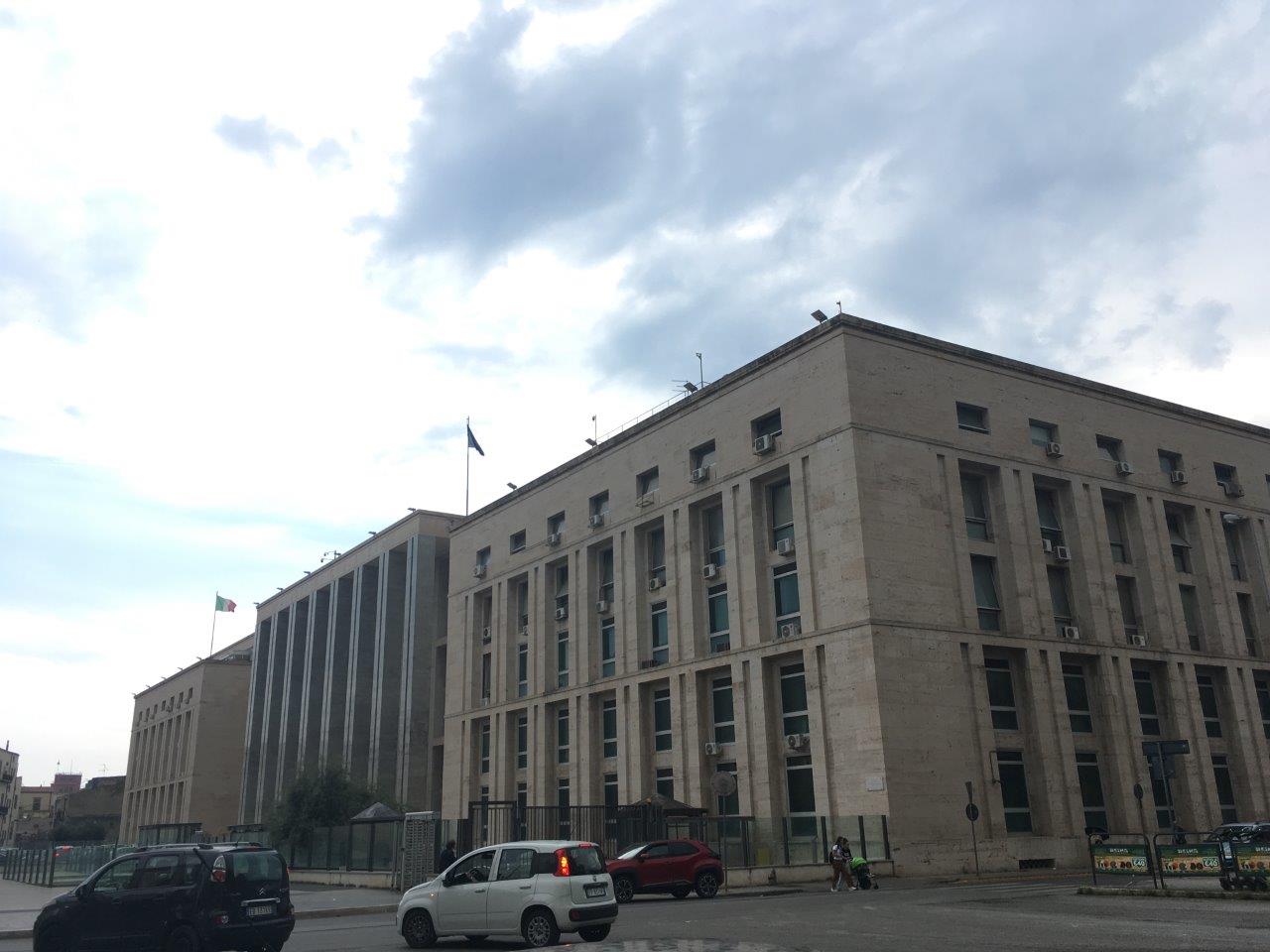
I think this is the Palermo courthouse that we rushed by! It reads "Palazzo di Giustizia" like Palace of Justice. Link to interesting site. Palermo IS the capital of Sicily. It caught my eye because it looks more modern than official government buildings in Washinton D.C., but I guess that makes sense in a place where everything else looks so historic.
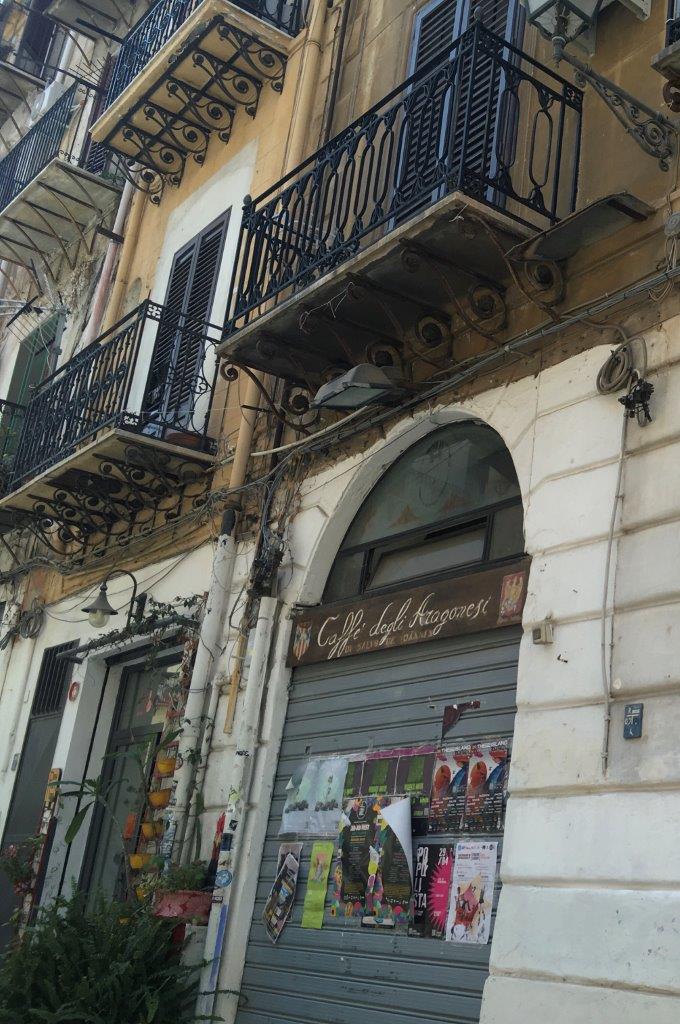
A cafe named after the Spaniard Aragons, who ruled Sicily after Roger and the French Normans.
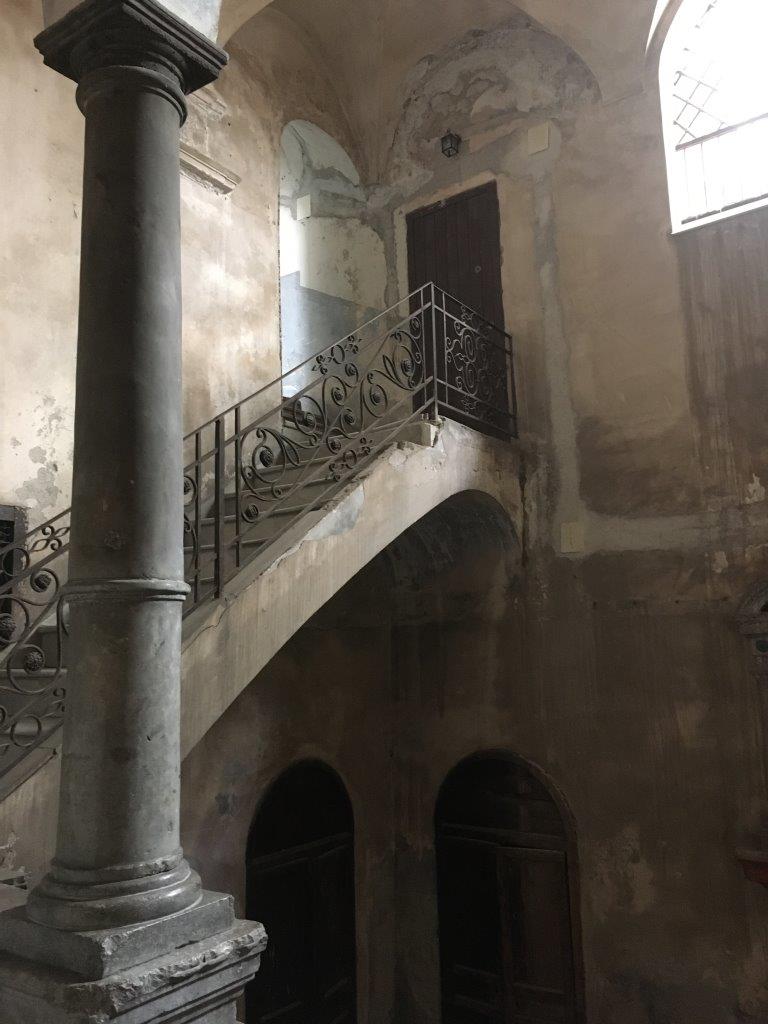
We had class sometimes in a room in a dance studio... well this beautiful stairwell was out in the hallway. Everything looks so old/historic/important; it's a random building with a totally mundane purpose.
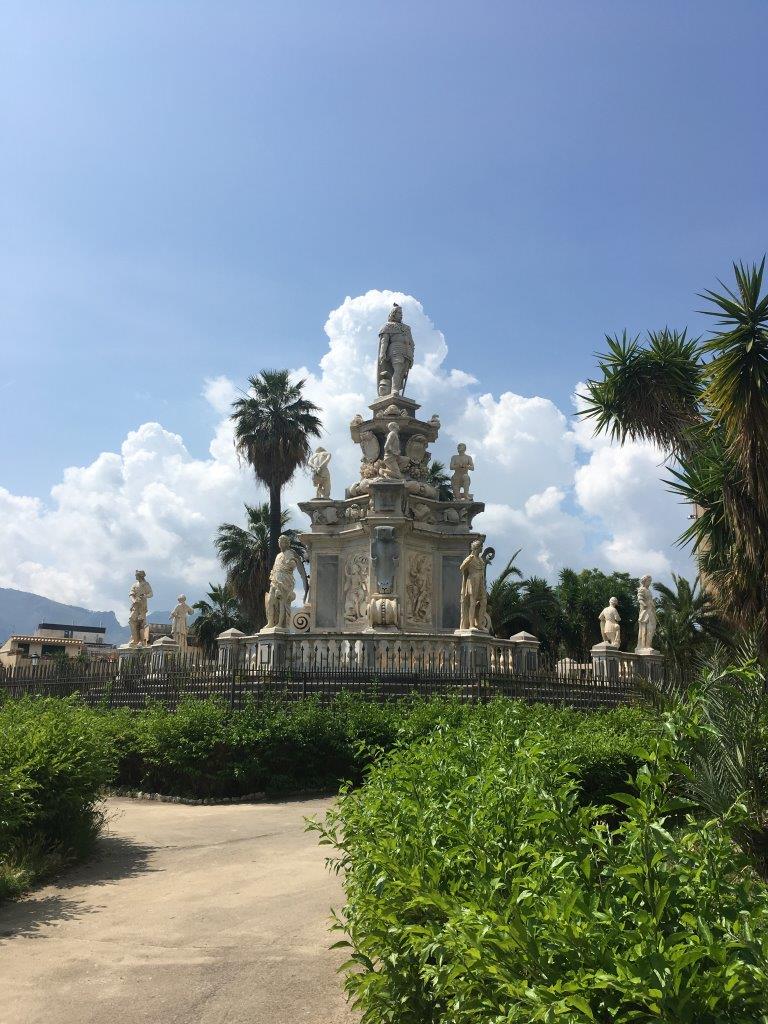
Statue outside the Cappella Palatina
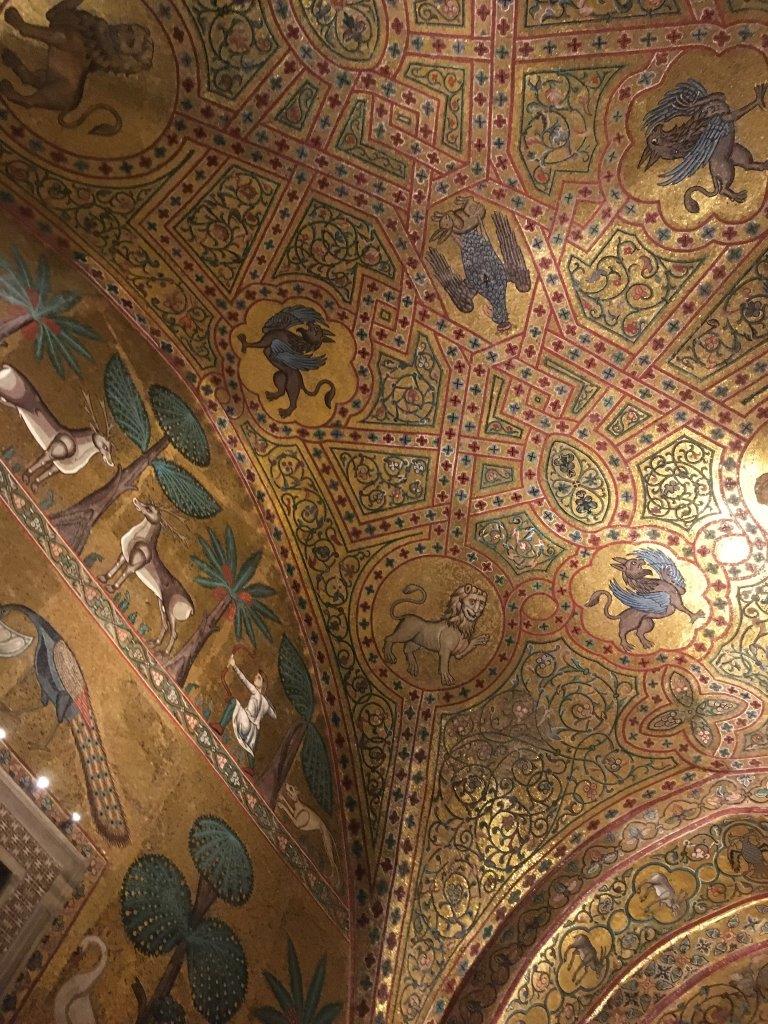
King Roger's bedroom. Sleepy? Me neither. There's the lion again. Also mystical animals being hunted, old royal pastime.
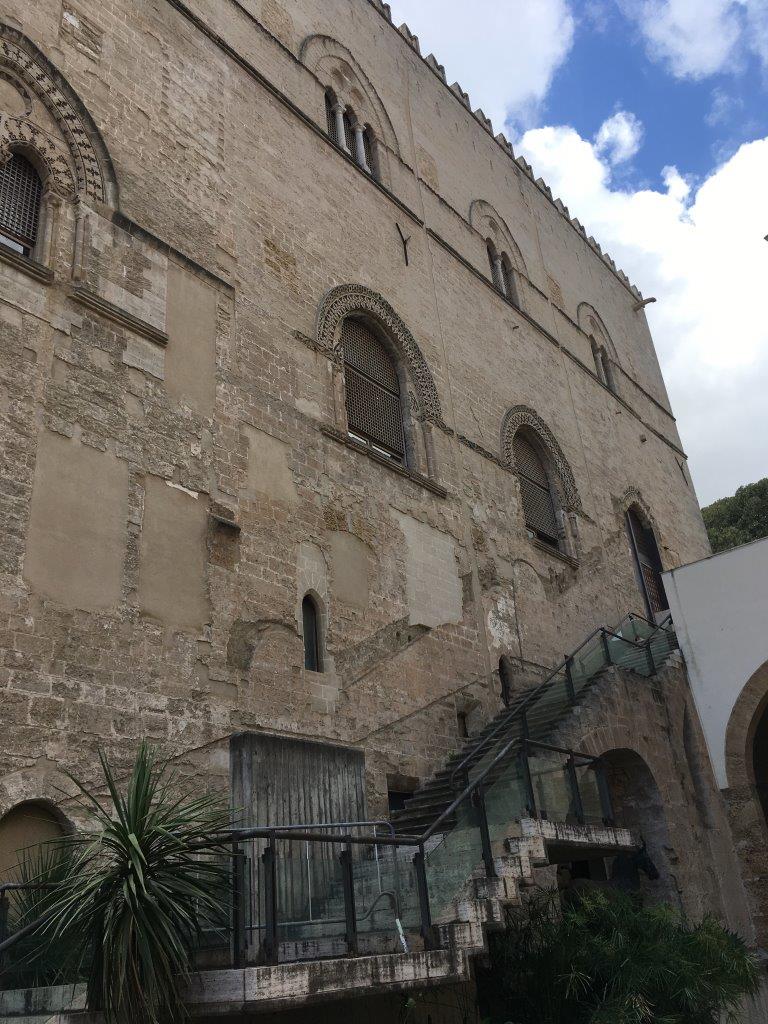
The front of the Chiaramonte-Steri Palace. Note the giant staple-like brackets holding the stones together, and more fake crenallations. Again, this was built centuries after La Zisa, but this Aragonese family wanted it to look like the old royal palace to corroborate their authority.
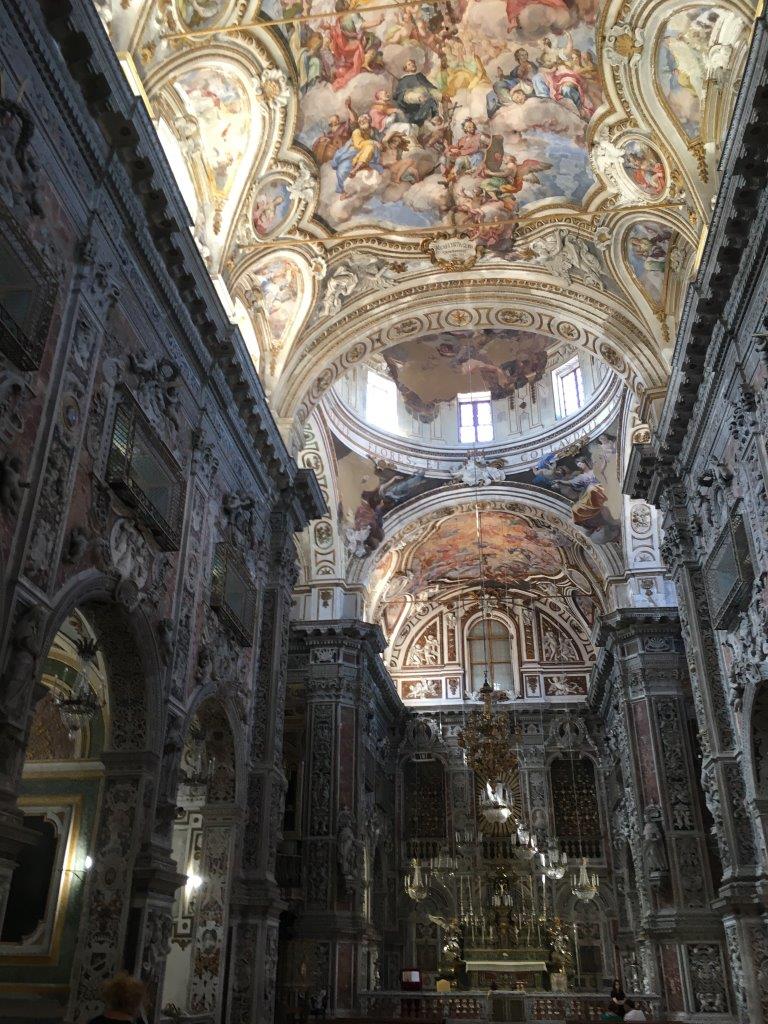
Inside a random church across the street from La Martorana. More Renaissance style. The density of churches in this city...
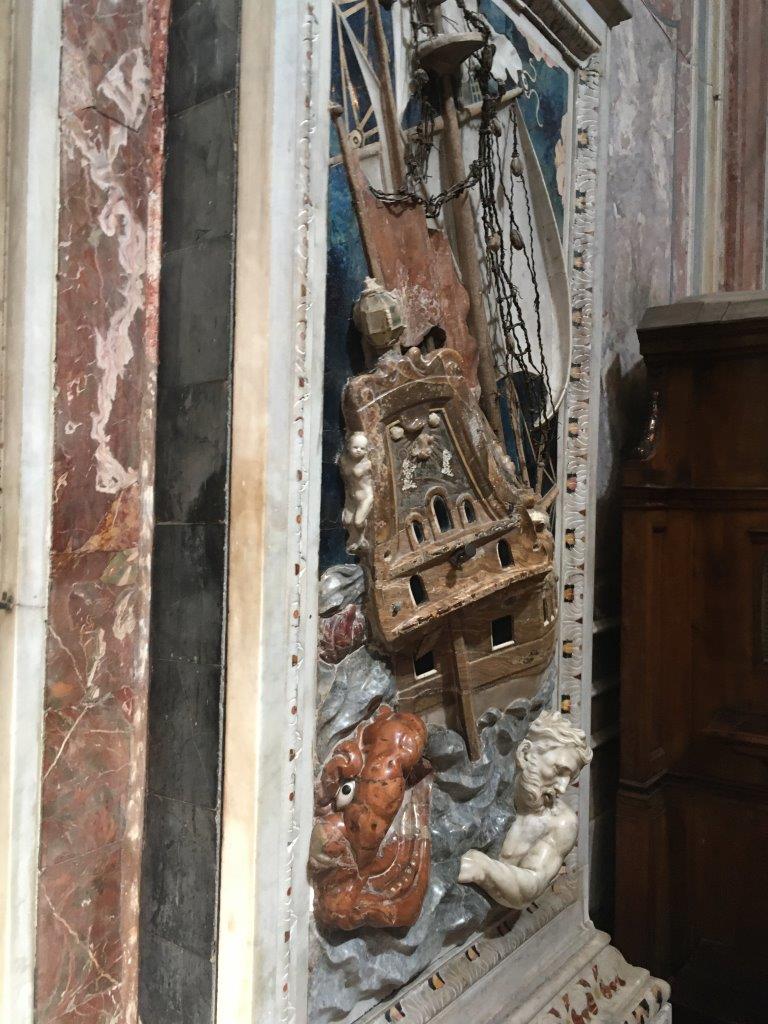
I love this 3D ship!
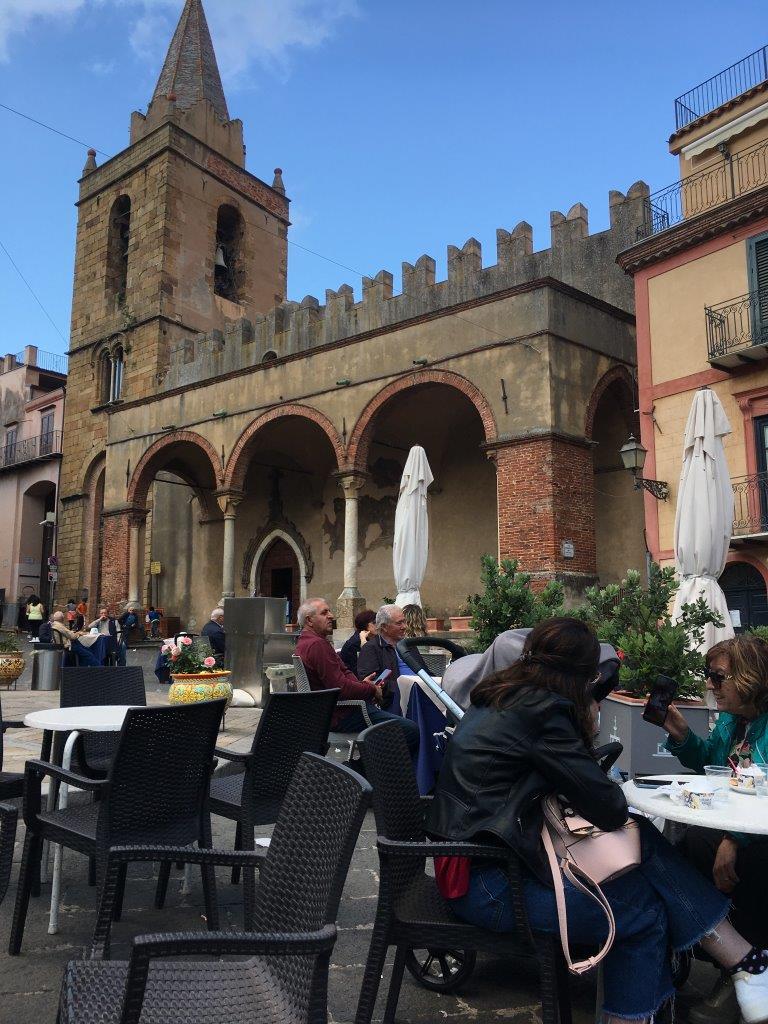
A random town square in a small town a ways away.
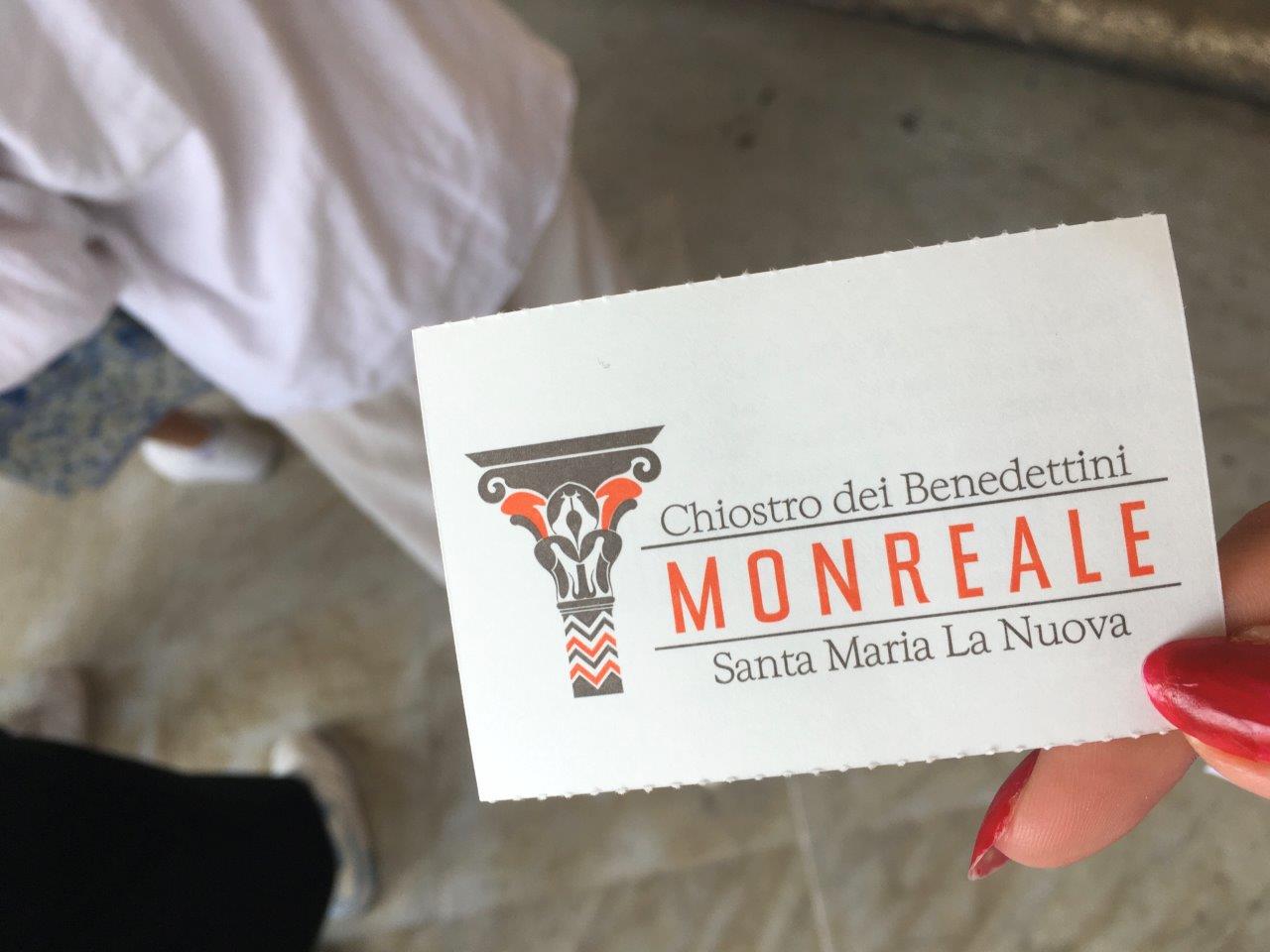
Ticket to the Moreale church, which the Normans wanted to be larger and somehow grander than the Cappella Palatina for coronations, so it's up in a mountain overlooking Palermo.
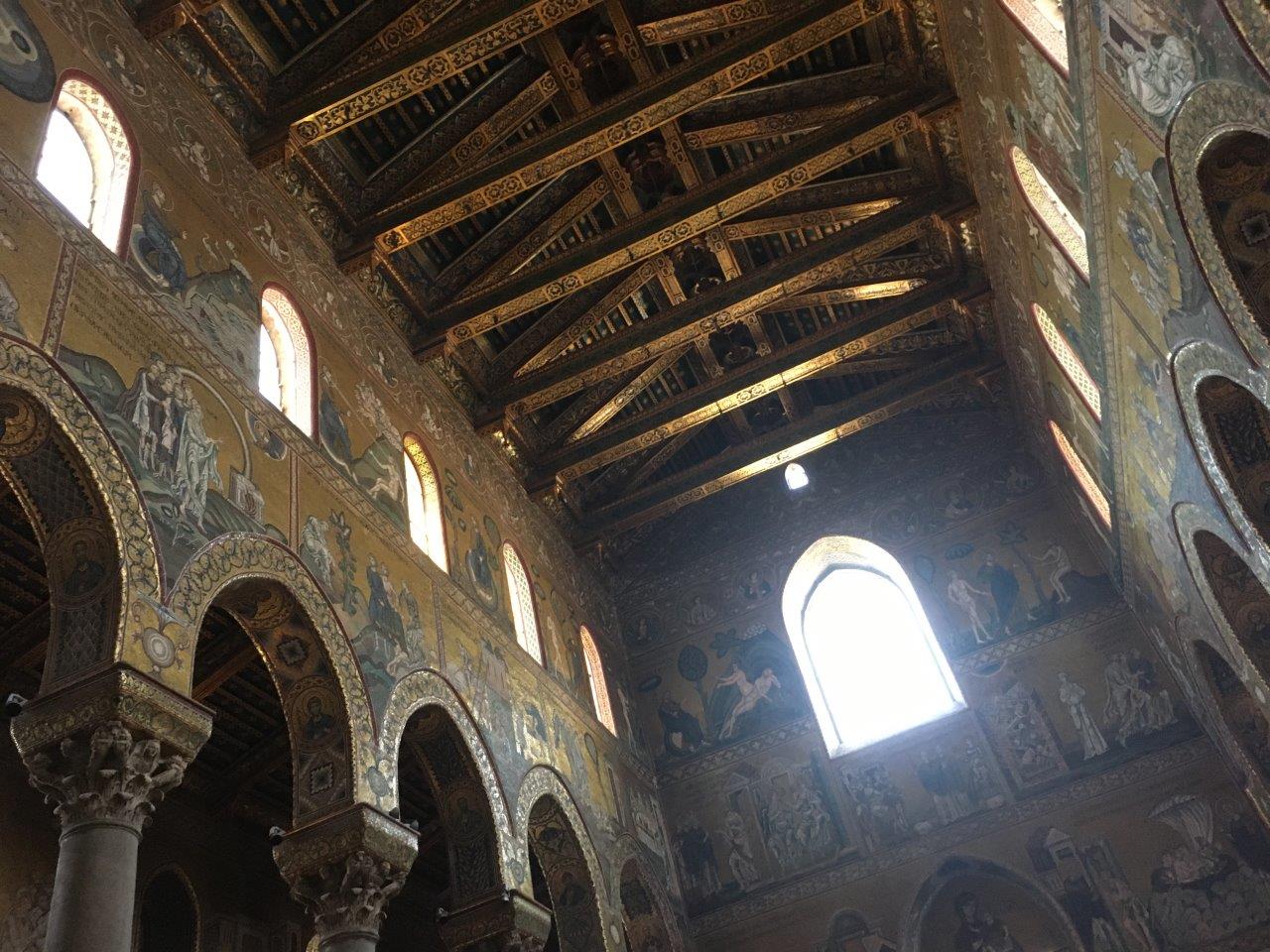
Inside Monreale church
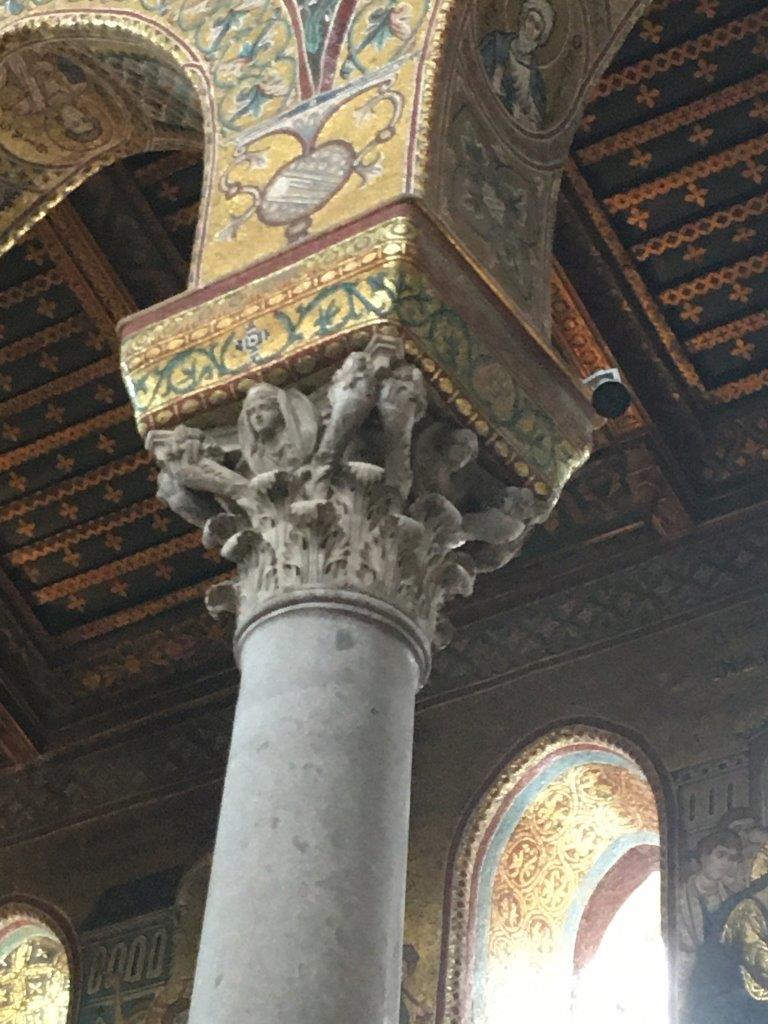
There are FACES on that Corinthian column! Didn't learn that in elementary school, we thought they all looked fancy but pretty much the same, with leaves.
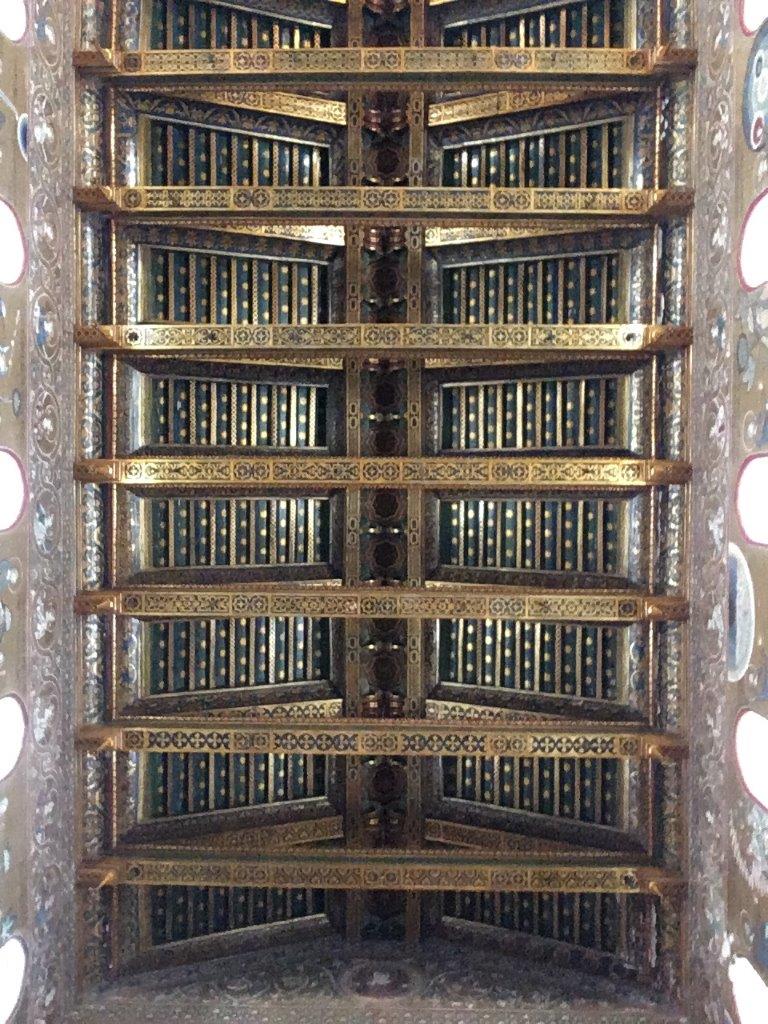
Well, by this point, they didn't have the traveling Muslim artists to make a muqarnas ceiling anymore. This is what they came up with instead. Sicilian style now included this idea of the ornate ceiling because it was so beautiful and unique in Europe.
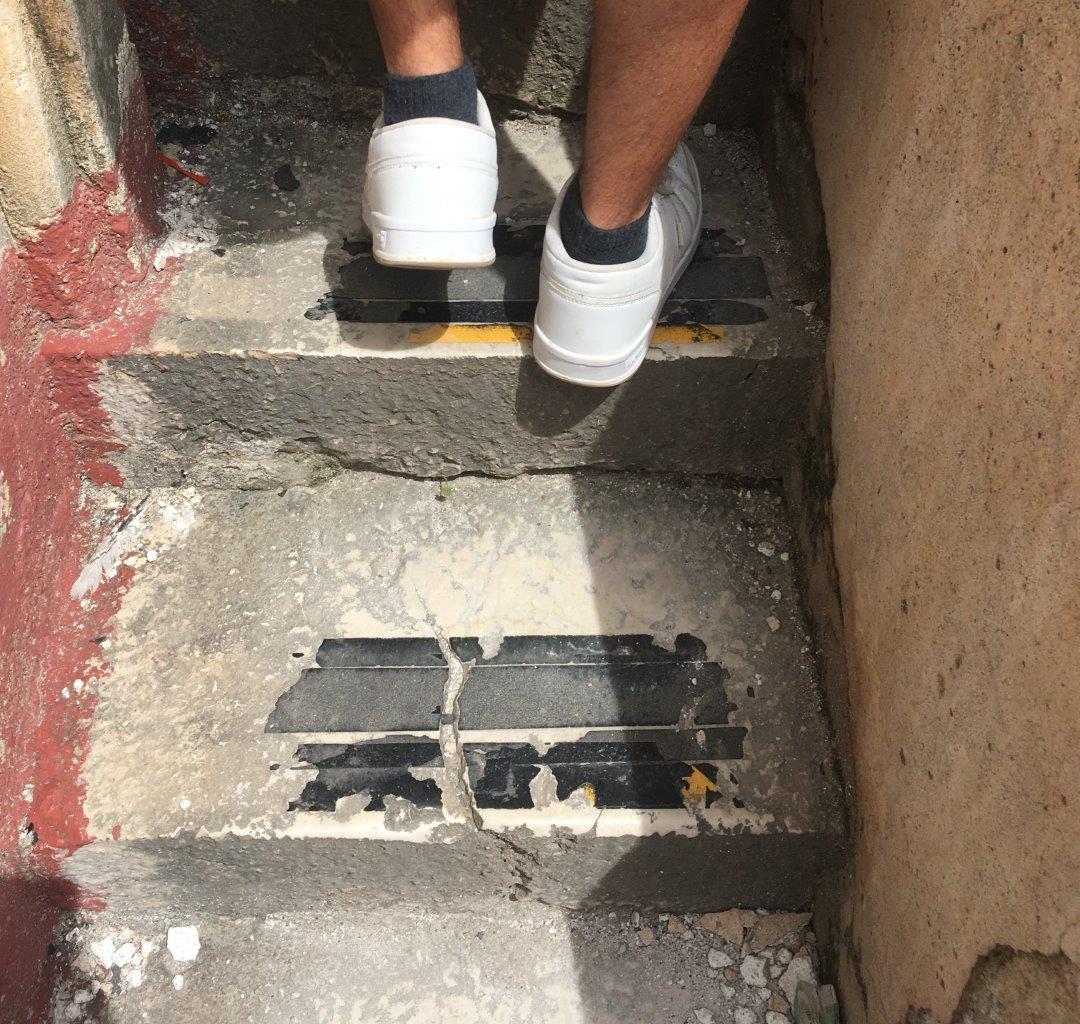
Climbing stairs to go on this roof too
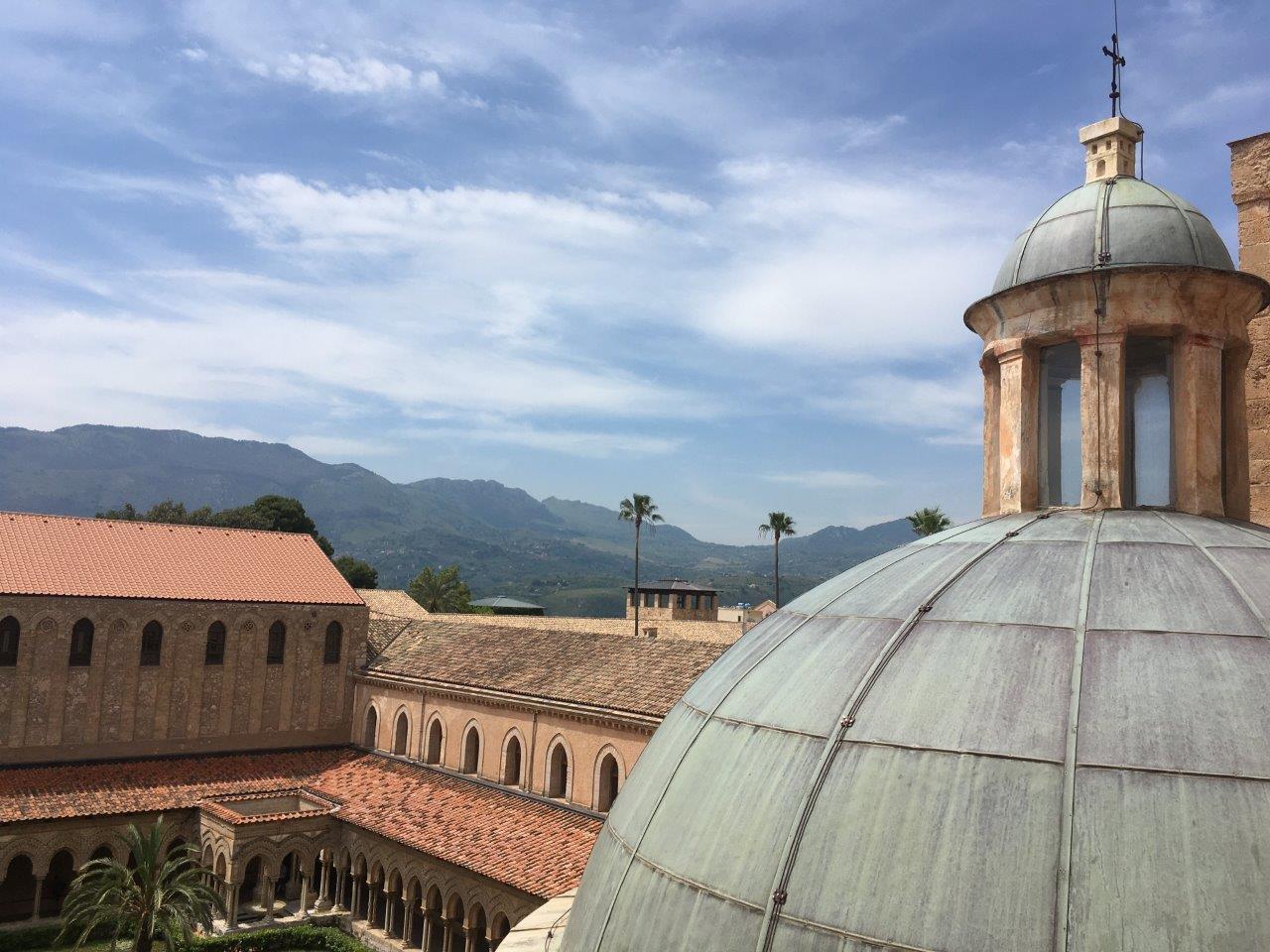
View!
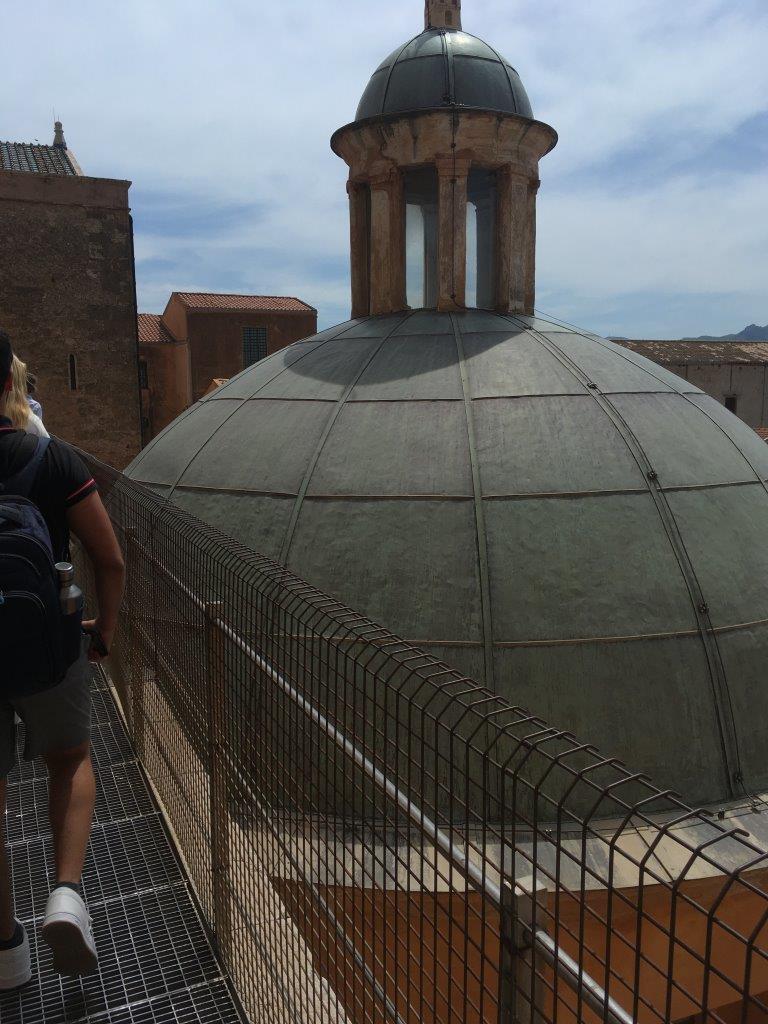
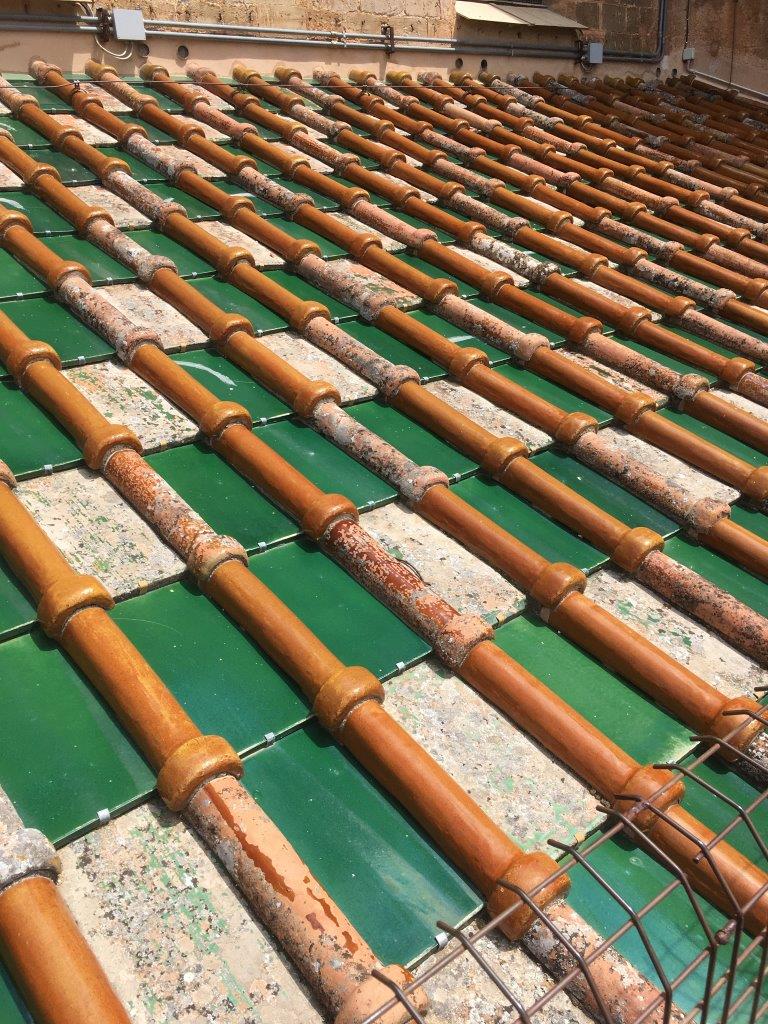
Cool shingles!
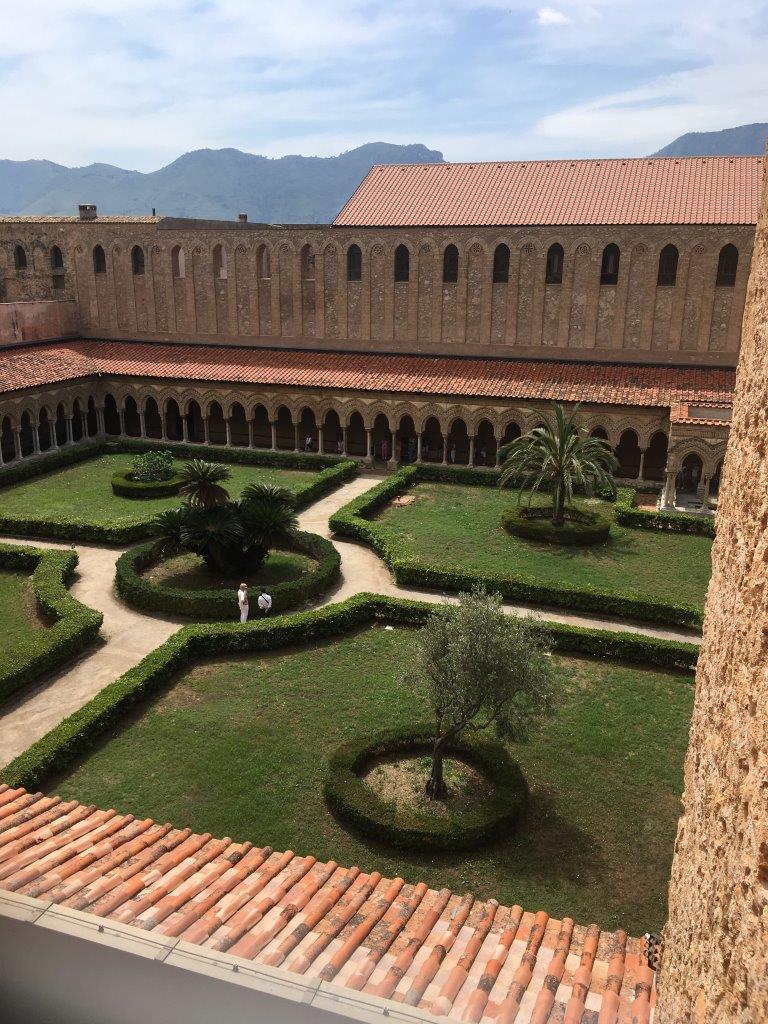
The cloister, or courtyard of the church, where nuns and monks would spend outside time, particularly if they couldn't leave the convent/monastery.
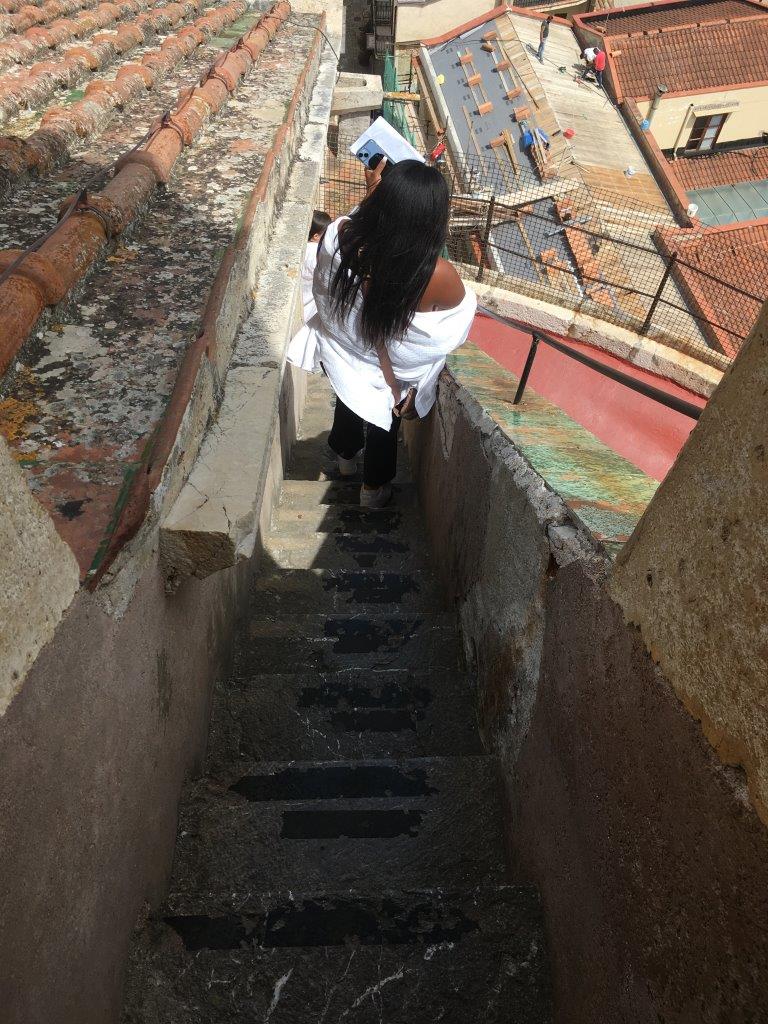
Back down
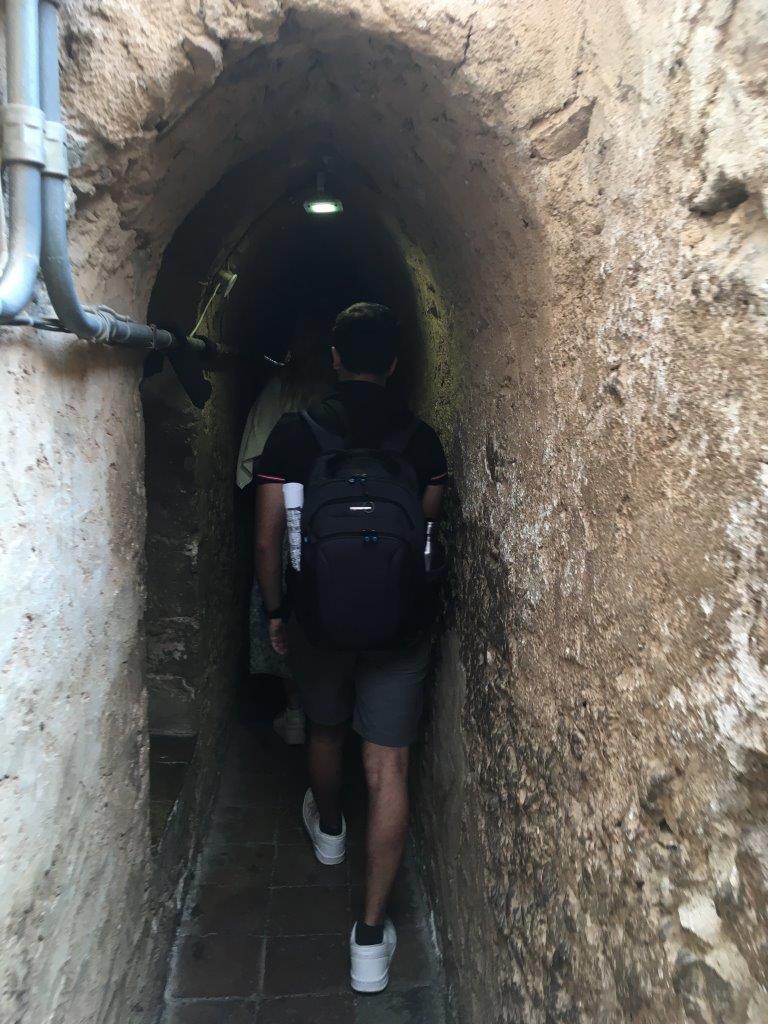
This passages were for the nuns to sneak around
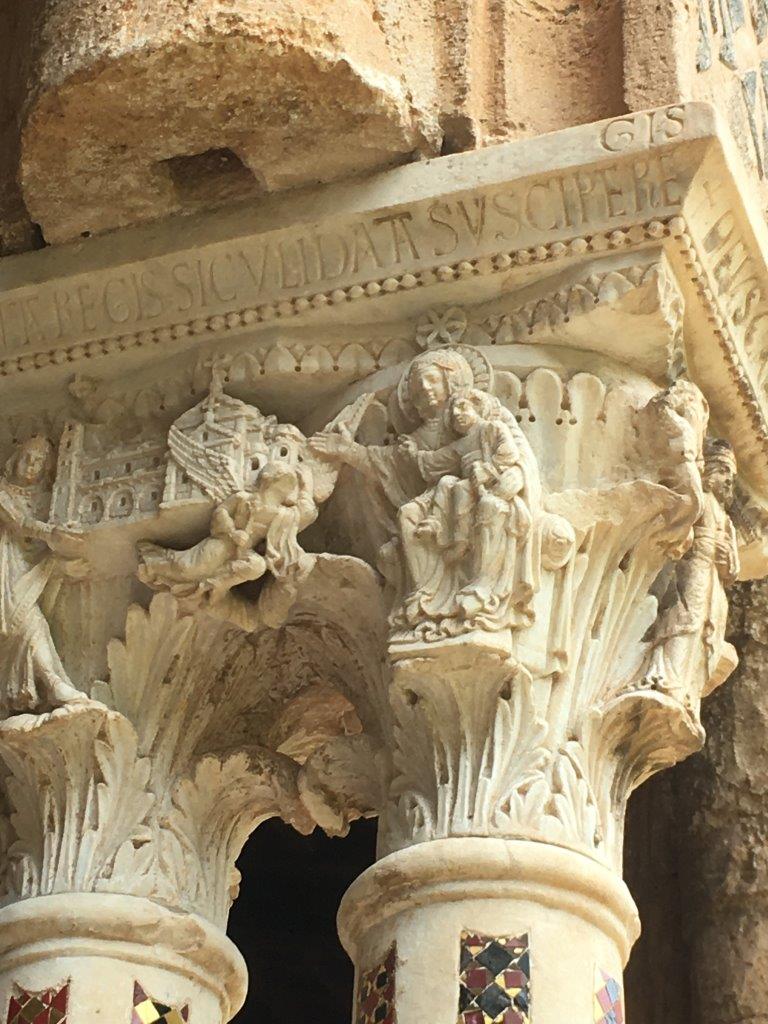
More interesting column tops! This time in the cloister walkway, giving the passerby something to ponder. This one actually has a small model of the whole church and is like a donation plaque.
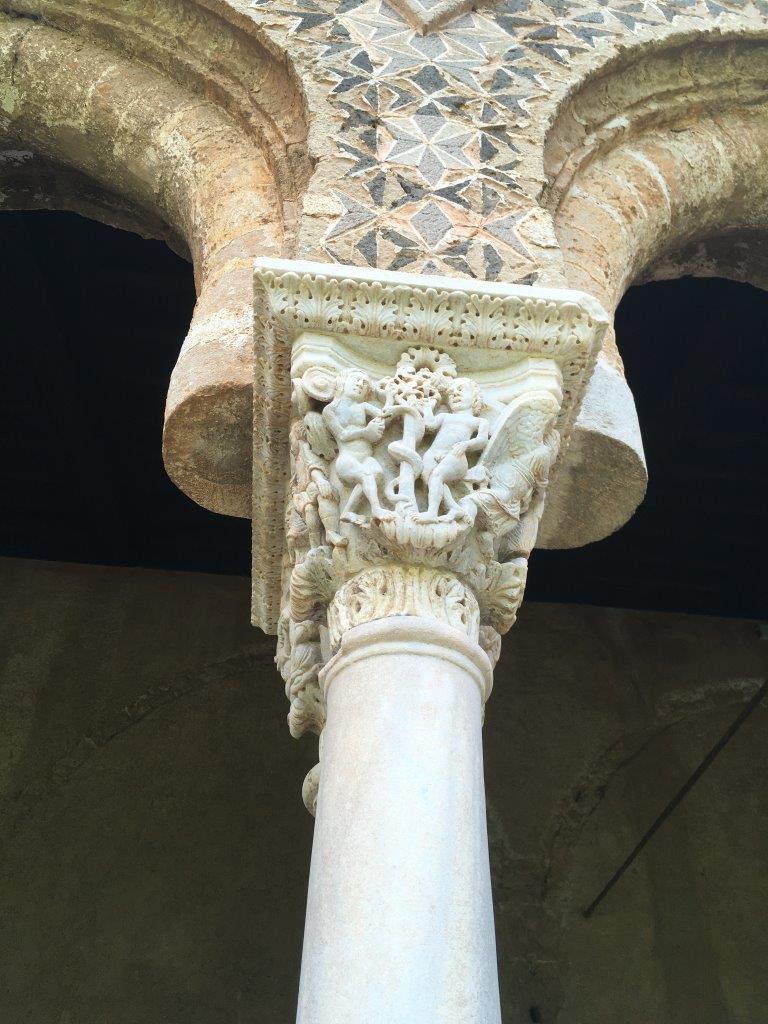
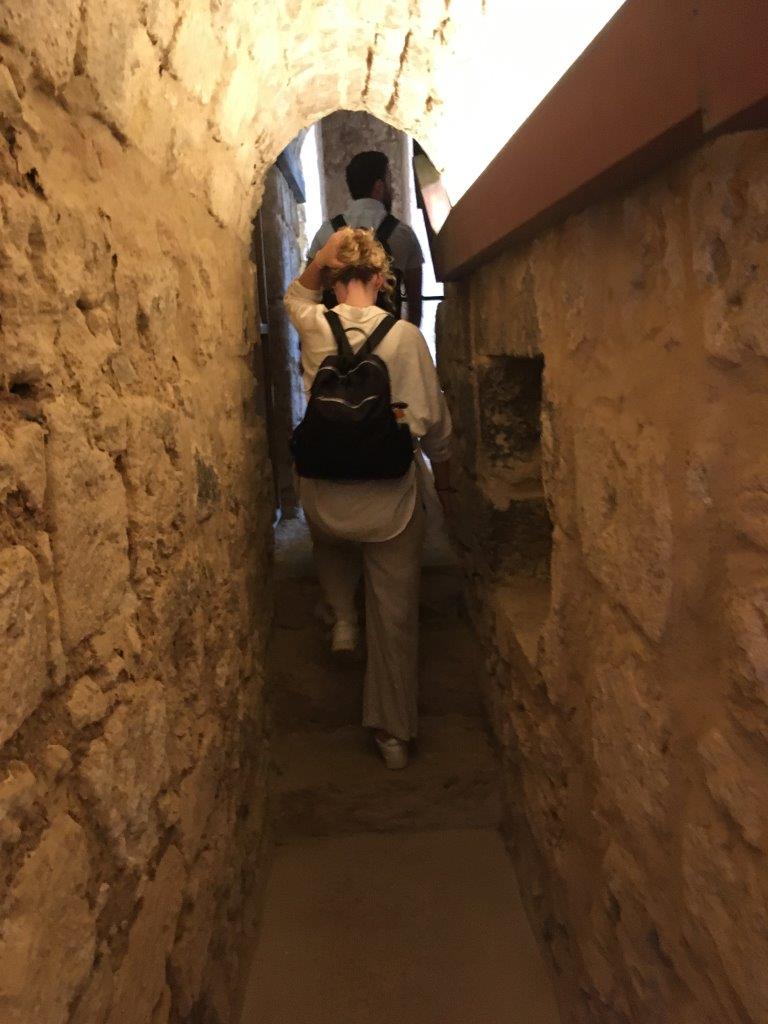
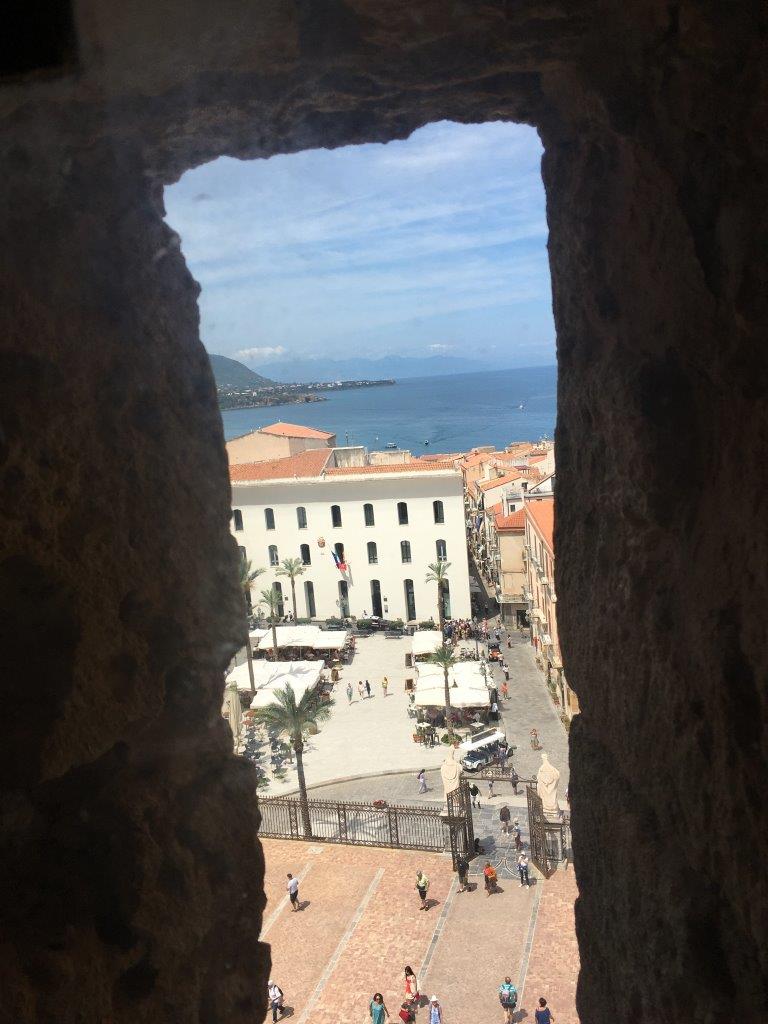
Ok now we're in Cefalù! Another Sicilian smaller town with a larger cathedral. This nun walkway had peep holes to the town below
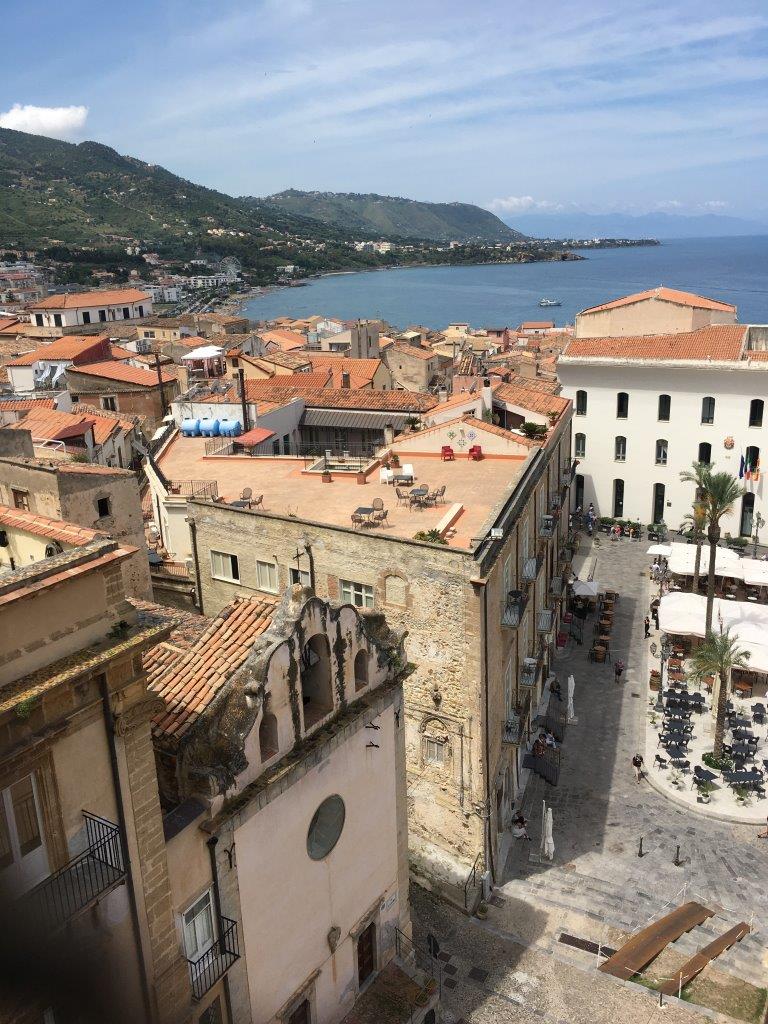
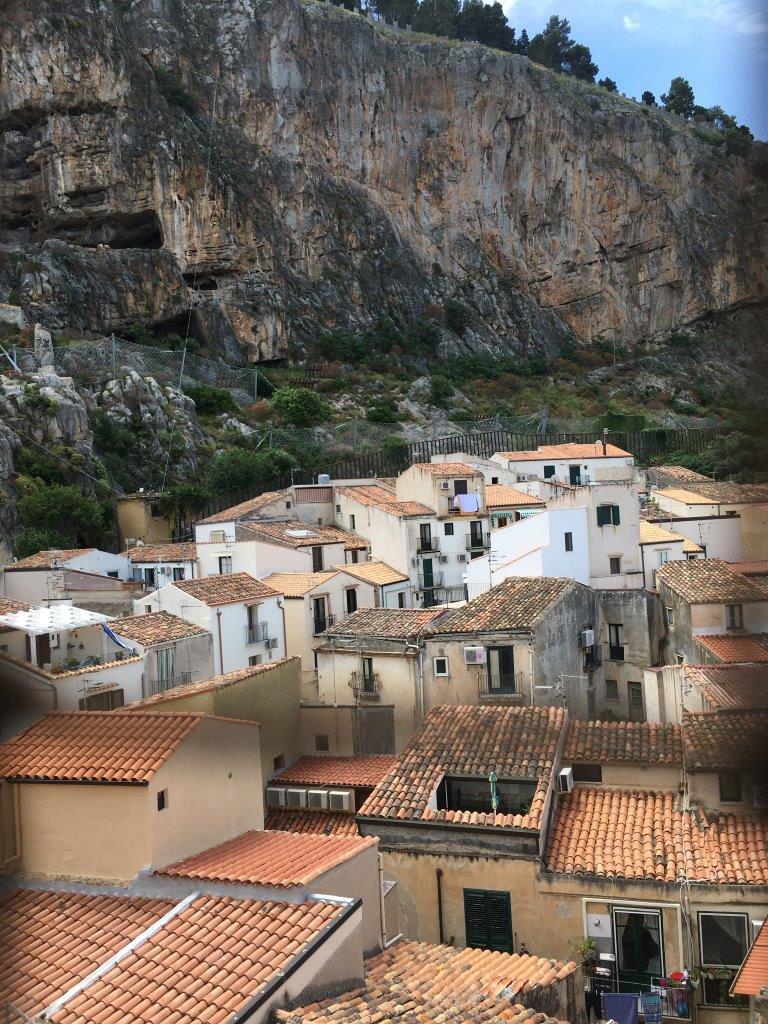
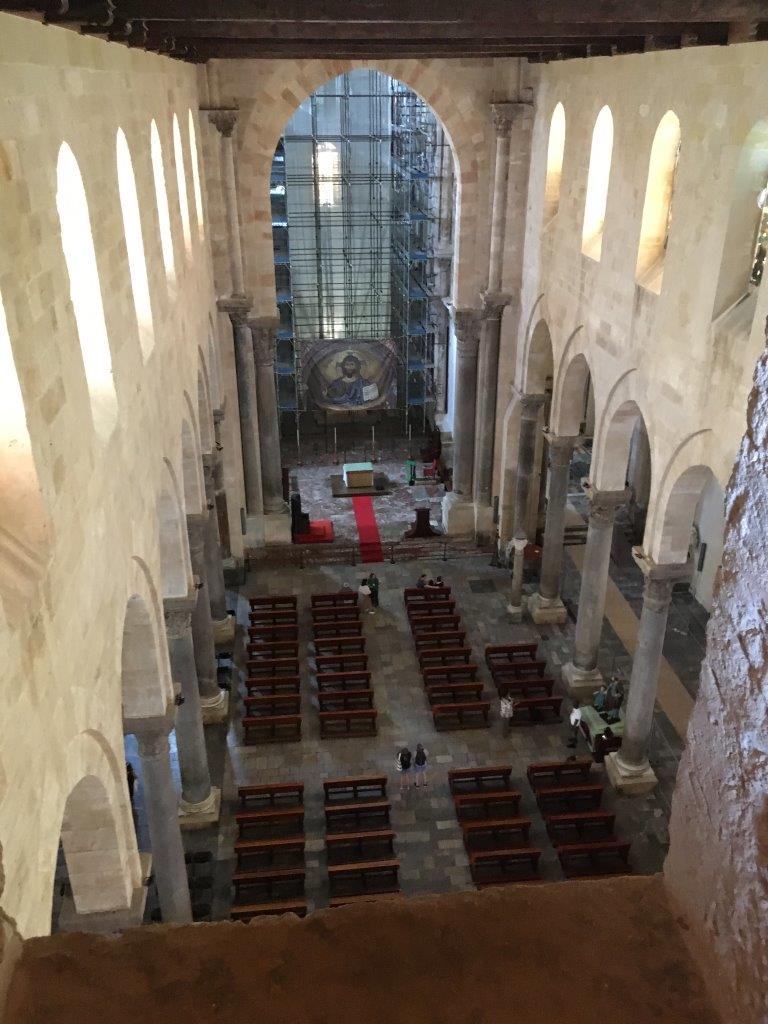
And over looking the inside! But no mosaics in this one? Lost to time or never finished...
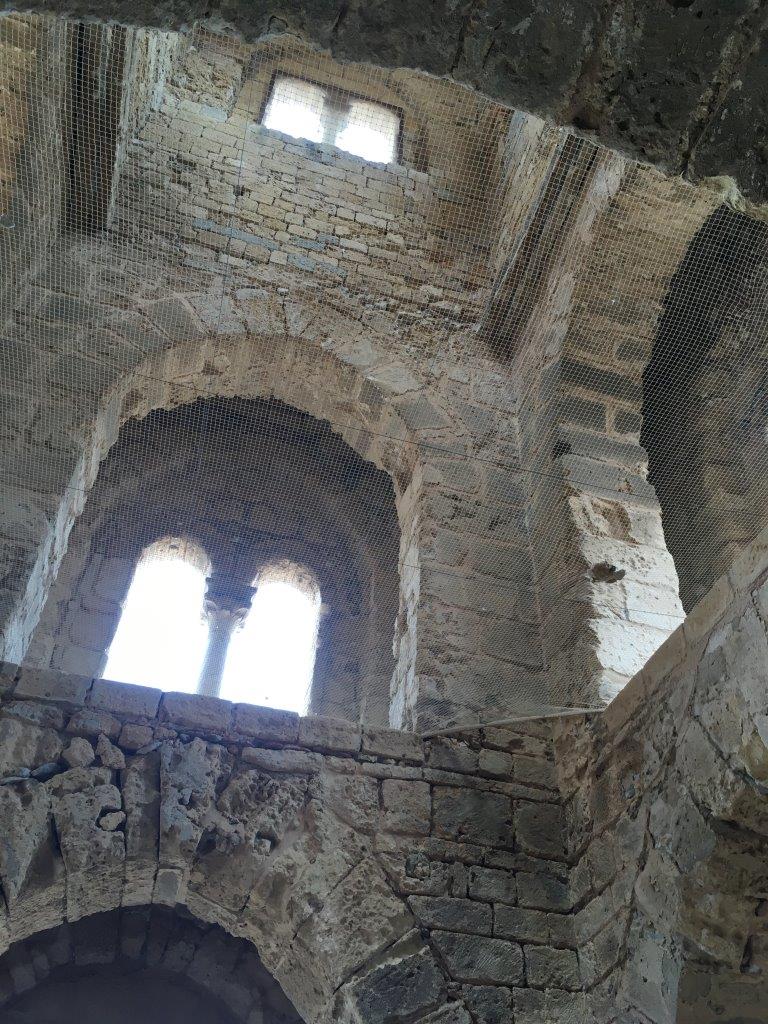
Still on the nun walkway, inside one of the towers
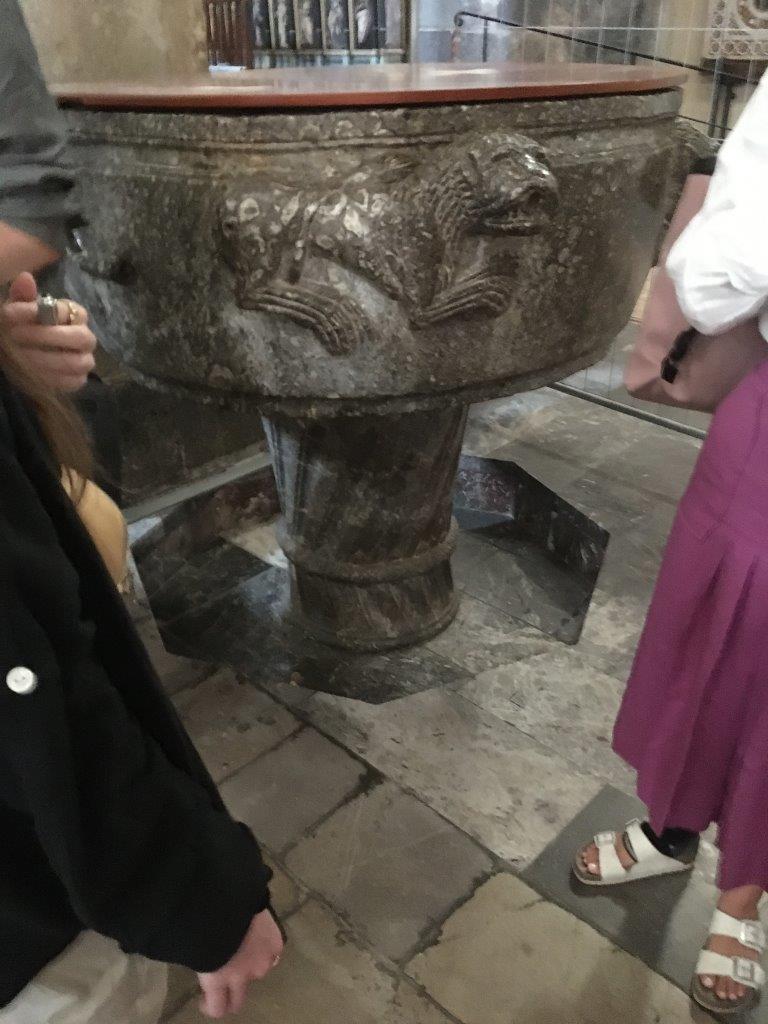
Where they would baptize people
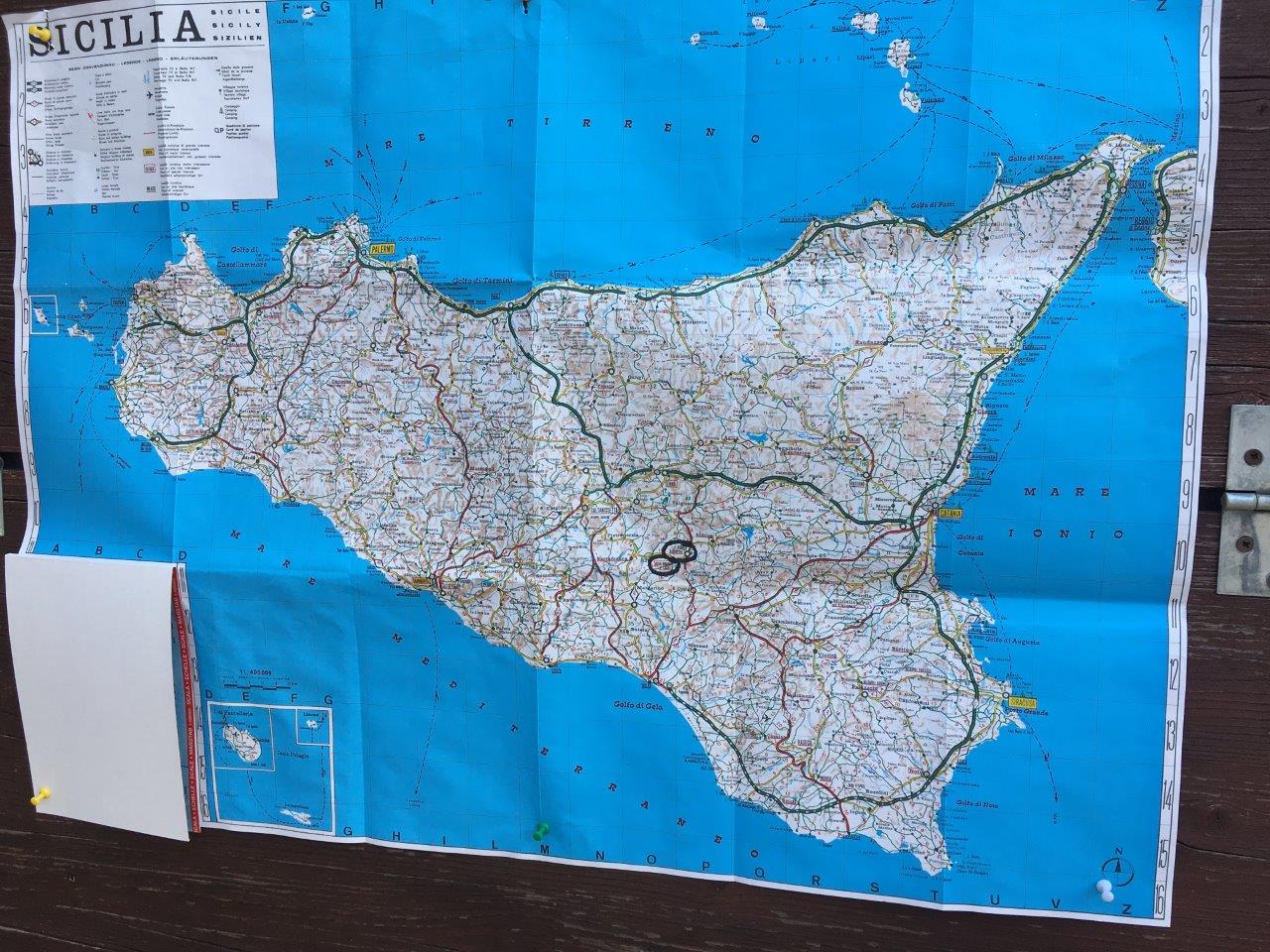
Map! Now we're in the middle of the island on a long day trip to see...
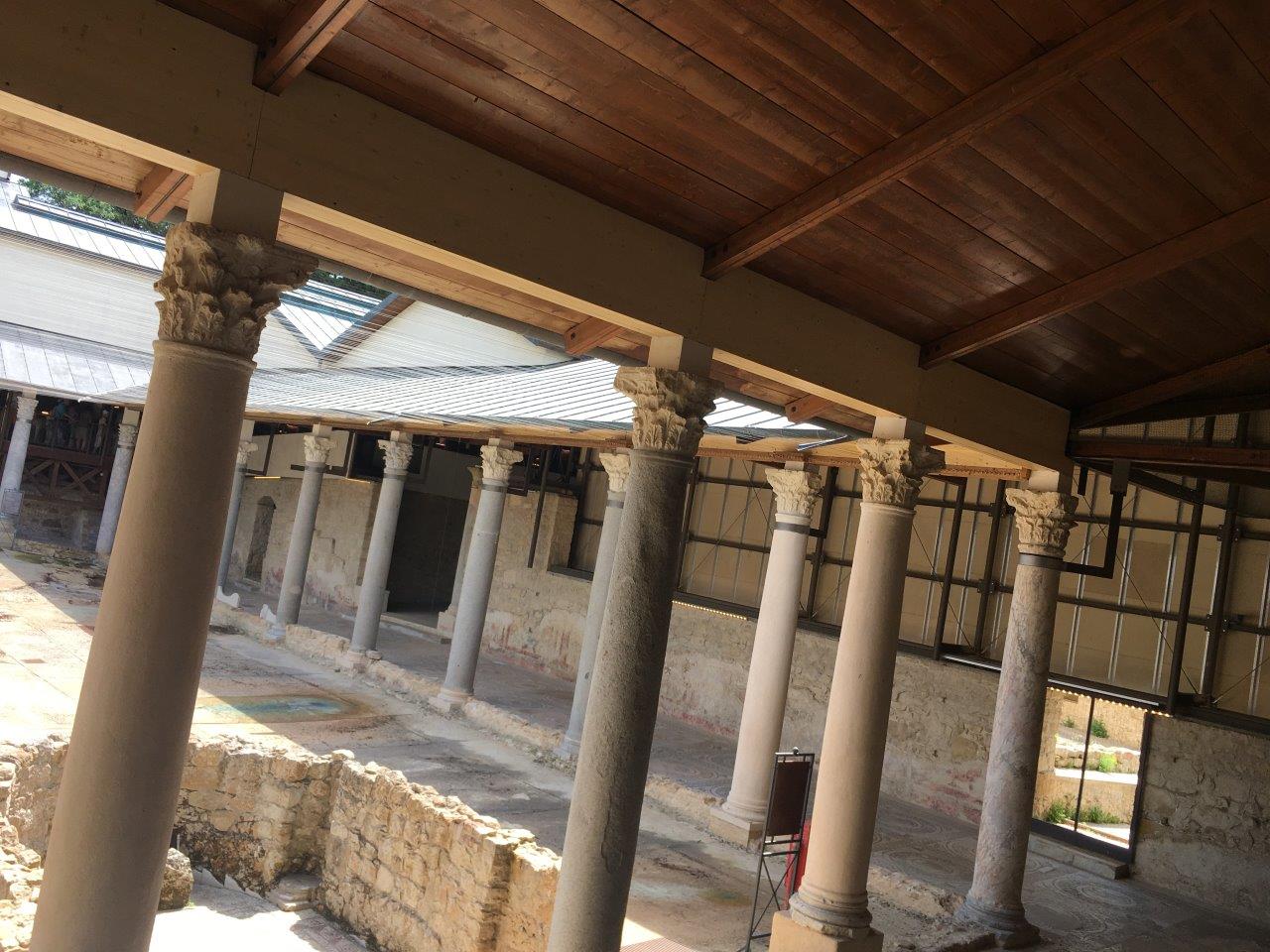
A Roman Villa, which was like a mansion. This would have been from around 600 C.E., so the roof is a modern addition to protect the remarkable floor! Tourists can't walk on it, we shuffled through elevated wood walkways
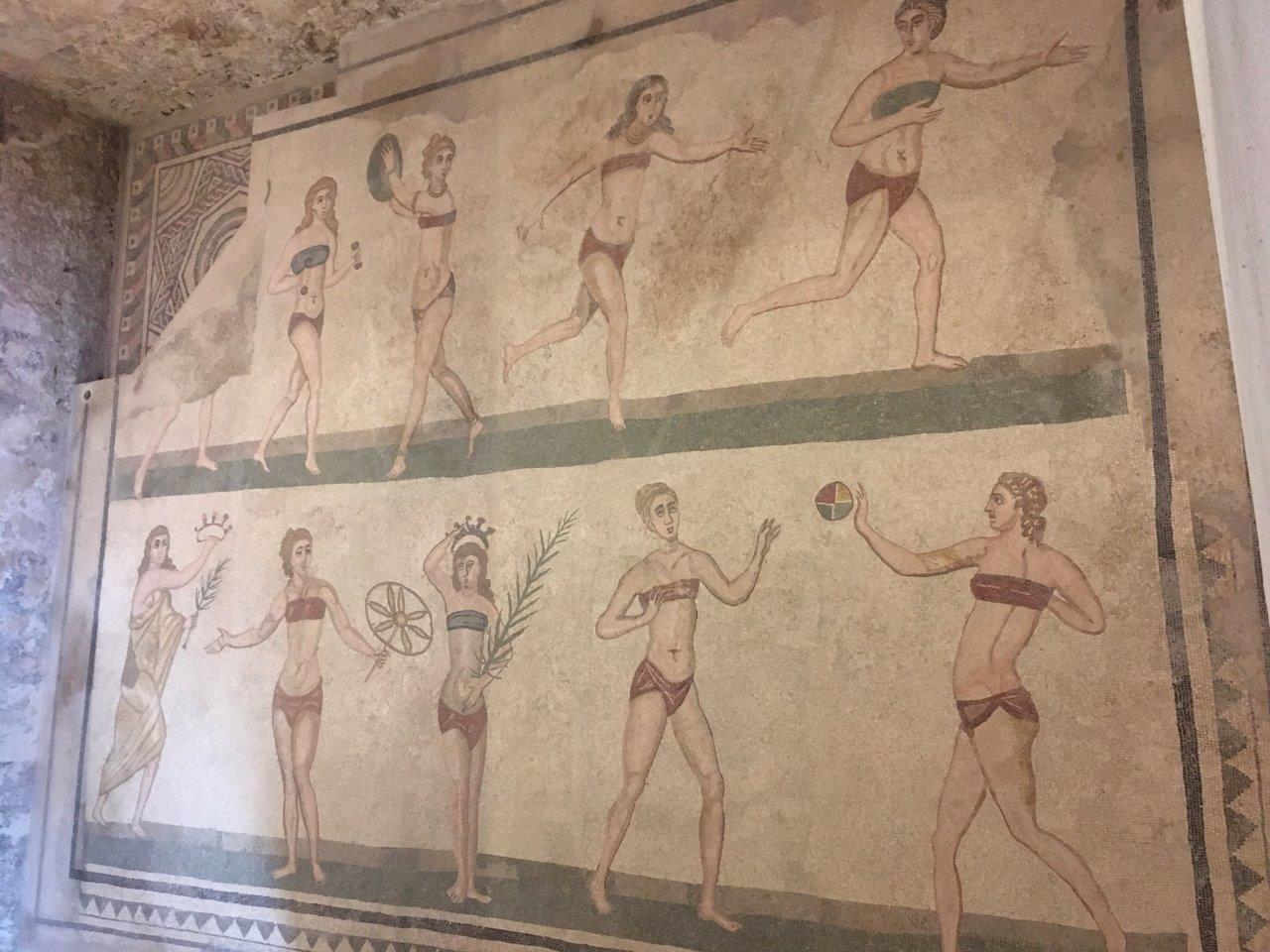
These floors were covered in mosaics, and this is the "Bikini Lady" room. But it's not a bathroom! They're elite women playing in the Olympics!!
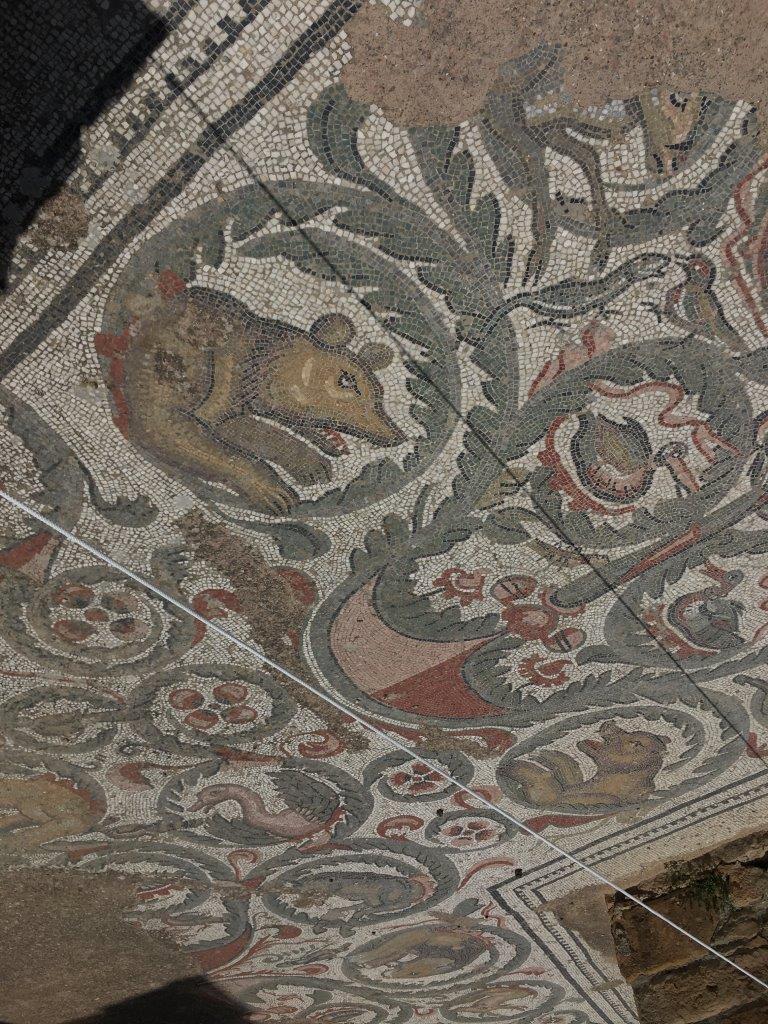
More wild, intimidating, hunted animals
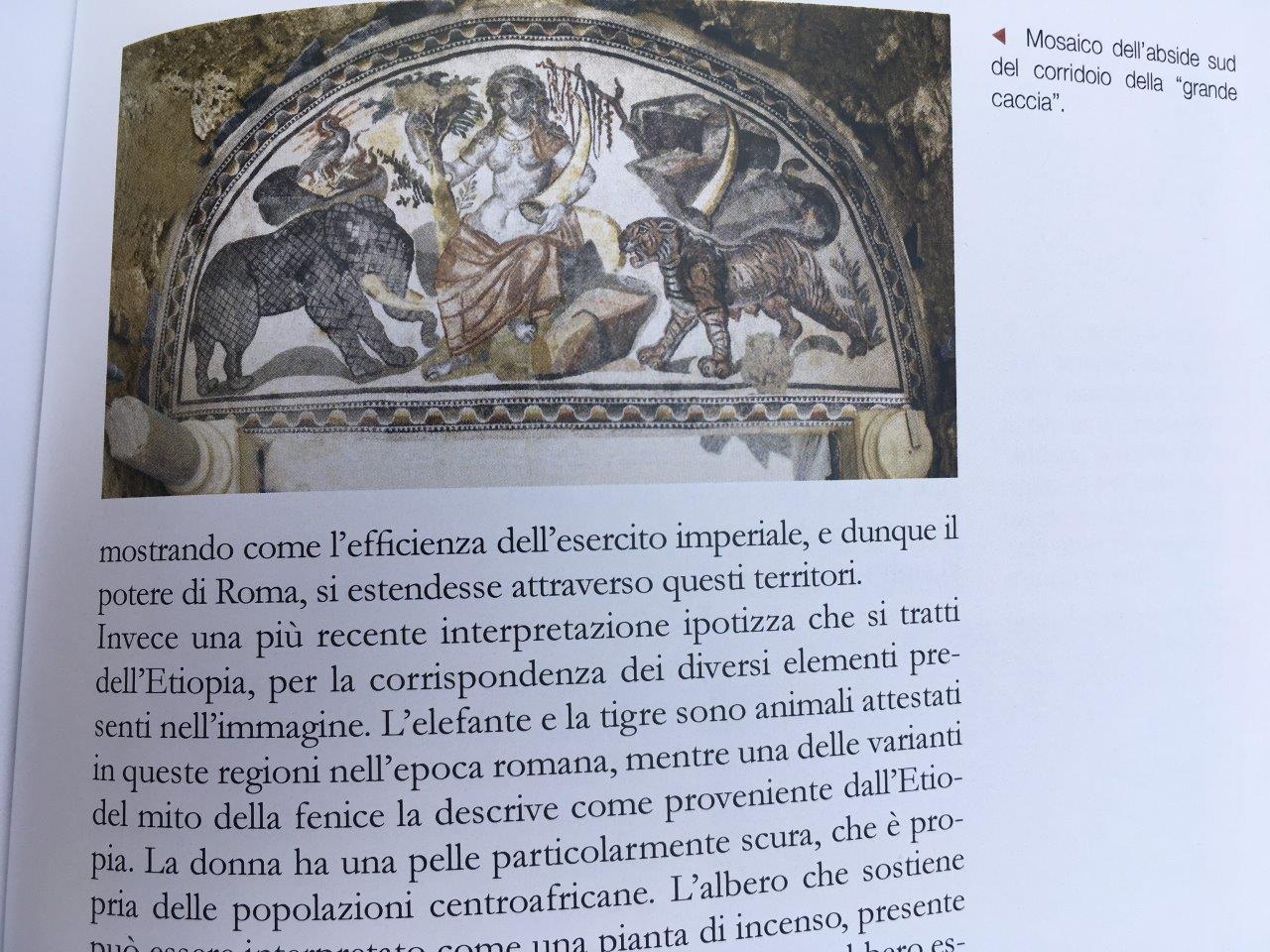
My picture of this part of the floor wasn't as clear as the guidebook. This woman represents Ethiopia, suggesting the Roman empire spread that far. But as my professors noted, these people weren't too familiar with black people, so she's kind of gray instead...
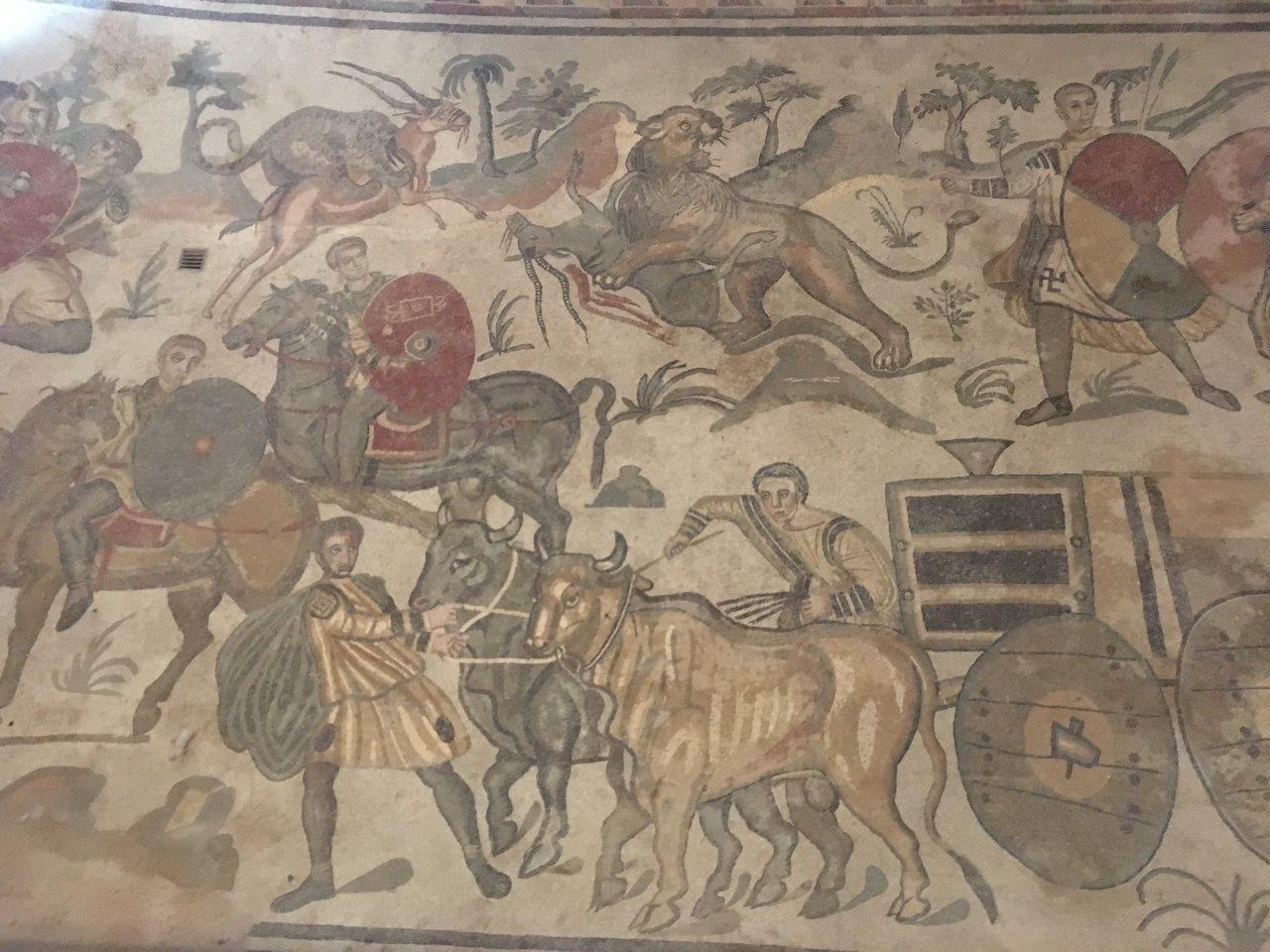
There is a SWASTIKA on that guy in the upper right?!?! But at the time this was made, way way way before WW2, it was a positive symbol from South Asia.
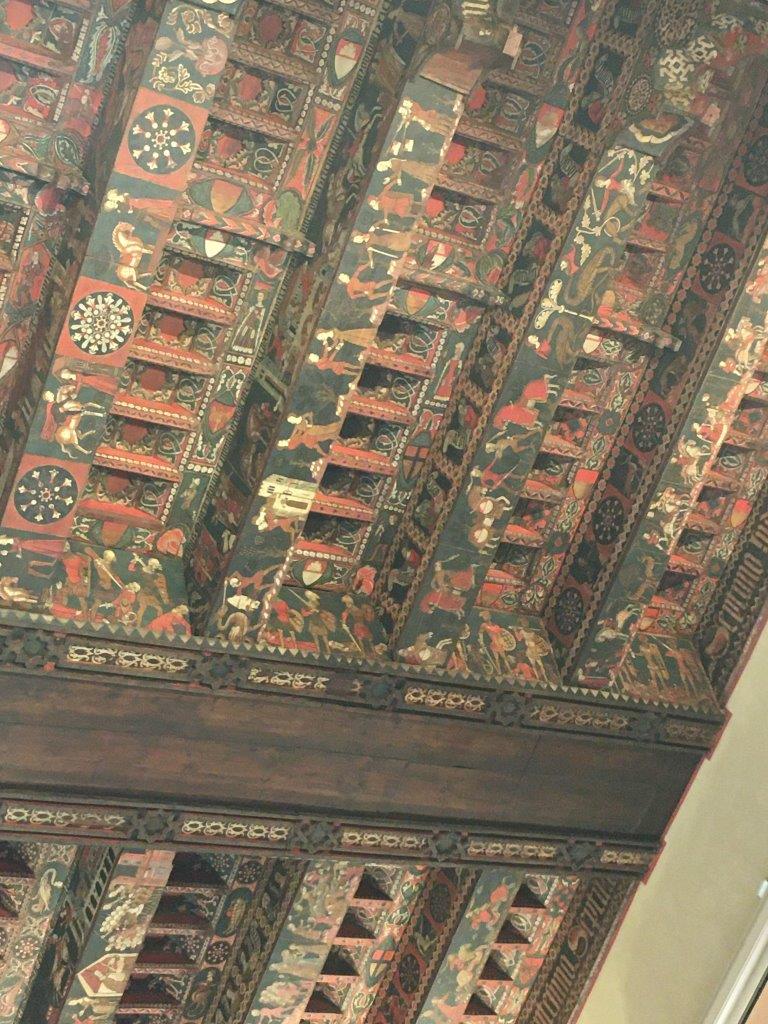
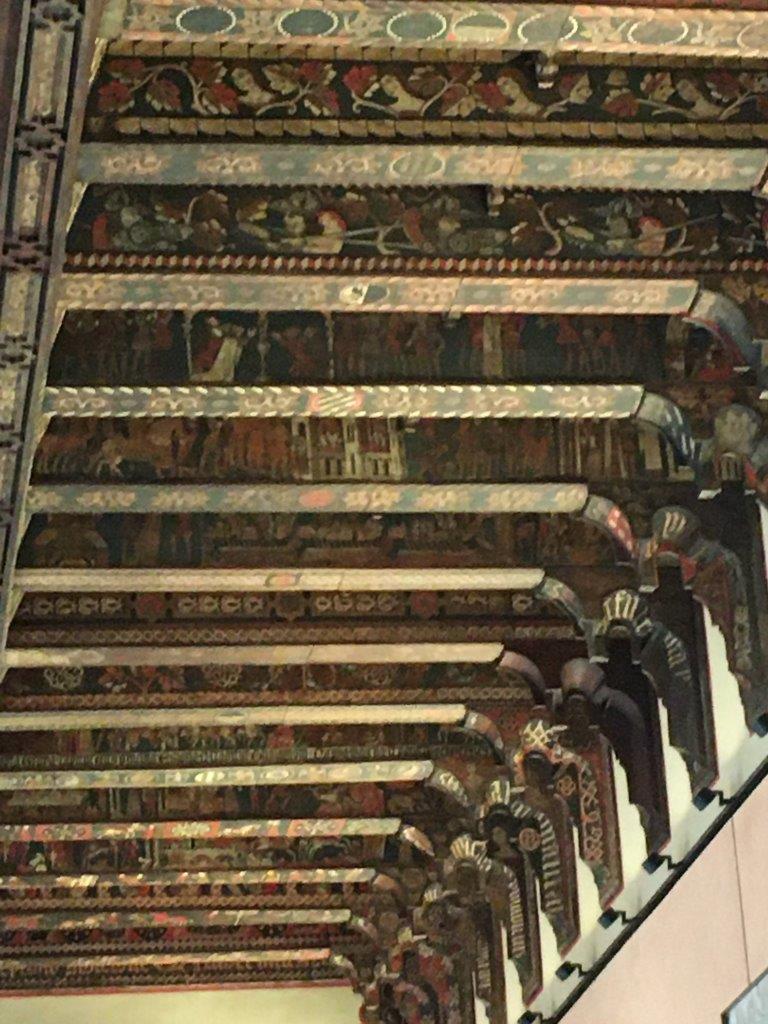
Back to the Steri, here's the Aragon rendition of the ornate Sicilian ceiling. But instead of Islamic figures, they painted Crusaders. Rewriting history, erasing the importance of the Islamic population and influence, because they were Spanish and imposed the Inquisition.
***End of Albums, would ya please use that Scroll to Top feature I worked so hard on***
Many thanks to:
— the James Madison University Honors College and its generous donors
— Dr. Maria Harvey & Dr. Cyril Uy II
— My family :)
— W3Schools, for its open-source coding tutorials
Project website by a James Madison University Honors student. Legal
Copyright 2023-2024 MCL, All Rights Reserved.